The Doctor-Waitlist Receipt: Big Claims, Long Waits, Guarded Data
If the primary-care numbers are as strong as the government says, B.C. should release the queue: wait times, net attachments and community-level results.
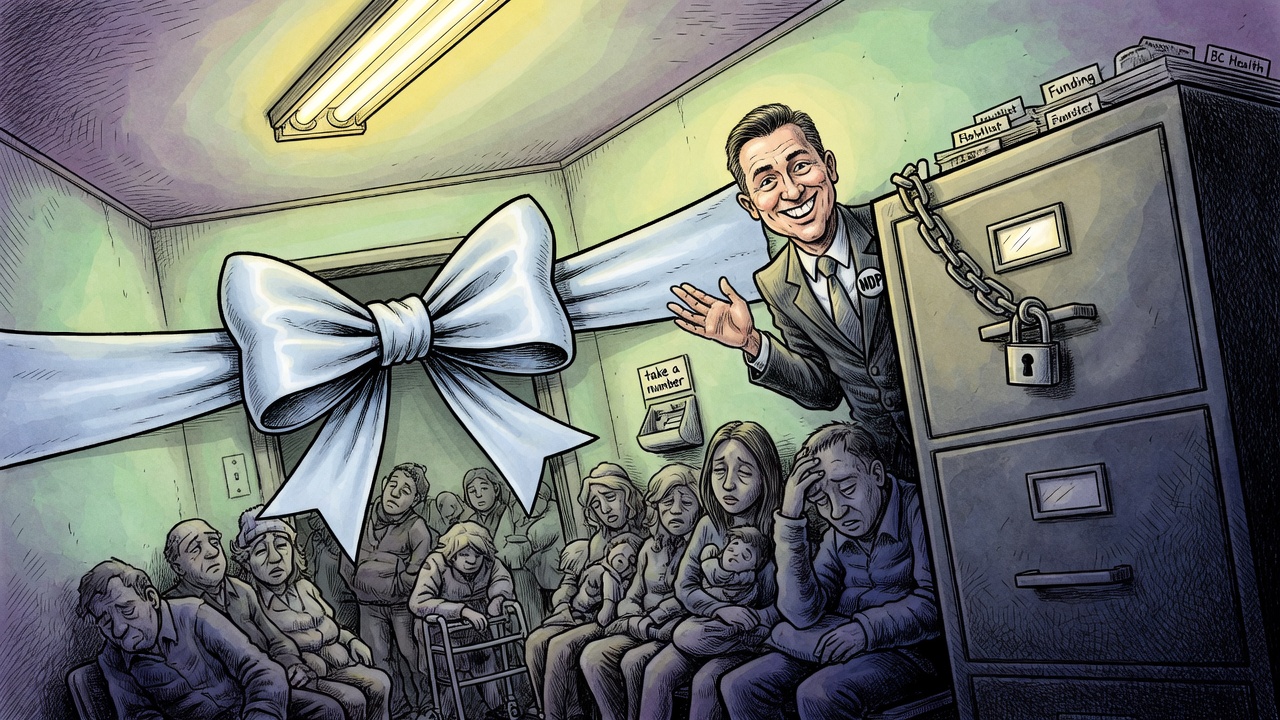
The B.C. government’s September health release led with the win: one million people connected to a family doctor or nurse practitioner since 2018, more than 700,000 over the past three years, and 4.47 million people — about 80% of the province — now attached to primary care.
That is the number the NDP wants voters to remember. The same release carried the receipt it would rather bury in the quick facts: as of September 2026, 323,000 people were registered with the Health Connect Registry. HealthLinkBC describes the registry as the route for British Columbians who need a family doctor or nurse practitioner. When people sign up, they are added to a community list shared with attachment coordinators, then contacted when a provider becomes available.
That is not instant care. It is a queue.
PressProgress examined registry data obtained through freedom-of-information records and reported that, based on that dataset, the average wait on the Health Connect Registry was 407 days. In some primary-care networks, including Gabriola and Thompson, some patients were waiting more than 2,000 days — more than five years — to be connected with a provider. PressProgress also reported that it requested updated August 2025 to July 2026 data from the Ministry of Health before the election and was denied, with a ministry representative suggesting a new FOI request instead.
That denial matters because the Legislature record already showed how carefully the headline numbers must be read. In April estimates, Health Minister Josie Osborne said about 345,000 people were registered on the HCR as of March 2026 and waiting for a primary-care provider. In the same exchange, she acknowledged that if 77% of British Columbians were attached, the math meant about 1.24 million people did not have an attached primary-care provider, while noting not every unattached person is seeking one.
The minister also clarified a key weakness in the attachment headline. Asked whether the government’s 600,000 attachments since 2023 were net new patients, Osborne said the number counted newly attached patients, but could include someone who moved from one community to another and was attached again. She said she could not break down how many were people who never had a doctor, how many had gone without one for two years, or how many had moved and needed a new provider.
That is exactly why the public needs the underlying table. B.C. should report Health Connect Registry wait-time percentiles by community, monthly additions and removals, net-new attachment, reattachment after a move, failed or temporary attachment, and the number still waiting after one, two, three and five years.
A press release can celebrate throughput. Patients live with access. Until the NDP releases the queue, the doctor-waitlist receipt remains open.
Sources and records
- B.C. Government: One million people connected to primary care in B.C. since 2018
- HealthLinkBC: Health Connect Registry
- PressProgress: some B.C. residents wait five years to get connected with a doctor
- B.C. Hansard: April 28, 2026 Health estimates exchange
- BC Health Data: Primary Care Attachment transparency analysis