Eby’s Day-One Health Promise Meets a 323,000-Person Waitlist
Recruiting clinicians is necessary. It is not the same thing as proving patients can get primary care when they need it.
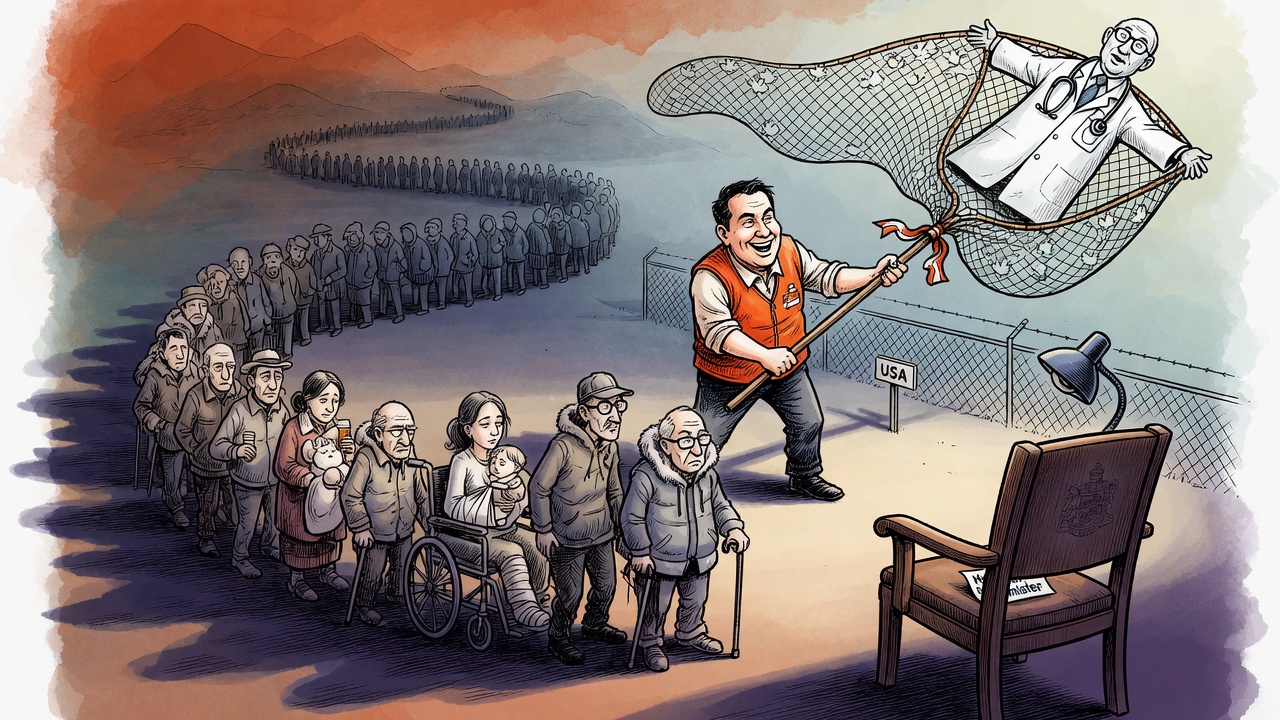
David Eby chose health care for a day-one campaign message. Global News reported September 23 that the BC NDP leader was in Surrey to expand the province’s targeted recruitment of U.S. health-care workers, including outreach to doctors and nurses in Republican-controlled states and to Canadian professionals currently working in the United States.
There is nothing wrong with recruiting more doctors and nurses. B.C. needs them. The problem is the gap between the campaign sales pitch and the patient outcome the public can measure.
Only one week before the campaign announcement, the province said about 4.47 million people — roughly 80 per cent of B.C.’s population — had a primary-care provider, and that one million people had been connected to a family doctor or nurse practitioner since 2018. Those are large numbers. But the same September 16 release also said 323,000 people remained registered with the Health Connect Registry as of September 2026.
That is the number Eby should not be allowed to campaign around. A person on the registry is not a press-release milestone. It is someone still waiting for attachment while the government advertises momentum.
The recruitment record is also more modest than the slogan sounds. In March, Global reported that more than 400 U.S.-trained health professionals had accepted B.C. job offers as of January 2026. That total included 89 doctors, and only 22 family doctors. At the time, Global said 352,000 people were registered and waiting through Health Connect.
By September, the registry number was lower, but still massive. Moving from hundreds of thousands waiting to fewer hundreds of thousands waiting is not a health-care victory lap. It is a reminder that the system is still short of the promise voters keep hearing.
The government’s broader licensing numbers show real activity: more than 1,200 internationally trained doctors received licences from the College of Physicians and Surgeons of BC in 2025, more than 6,000 internationally trained doctors were licensed in B.C. as of July 2026, and more than 4,400 internationally educated nurses had received full or provisional licences since 2023. Those facts strengthen the accountability question, not weaken it. If recruitment and licensing are working so well, why are so many people still waiting for basic attachment?
Then came the political signal from inside Eby’s own team. Global reported September 22 that Health Minister Ravi Kahlon would not seek re-election, making him the third Eby cabinet minister to step aside, after Kelly Greene and Lana Popham. Kahlon’s personal decision deserves basic fairness. But voters are entitled to notice the timing: the premier is asking for a new mandate while the minister responsible for health is not staying to defend the file at the ballot box.
The fair test is simple. Count clinicians recruited. Count licences processed. Then count patients who can actually get a family doctor or nurse practitioner. On that last number, the government’s own file still shows 323,000 reasons for skepticism.
Sources and records
- Global News: B.C. election 2026 first full day of campaigning
- BC Government: 323,000 people remain on Health Connect Registry as of September 2026
- BC Government: internationally trained doctors and nurses licensing update
- Global News: B.C. recruited more than 400 U.S.-trained health professionals
- Global News: Health Minister Ravi Kahlon will not seek re-election