Colwood Had Zero Family Doctors. City Hall Had to Build the Clinic.
Colwood’s clinic may be a local success story. It is also a provincial failure marker when a city has to become the primary-care backstop.
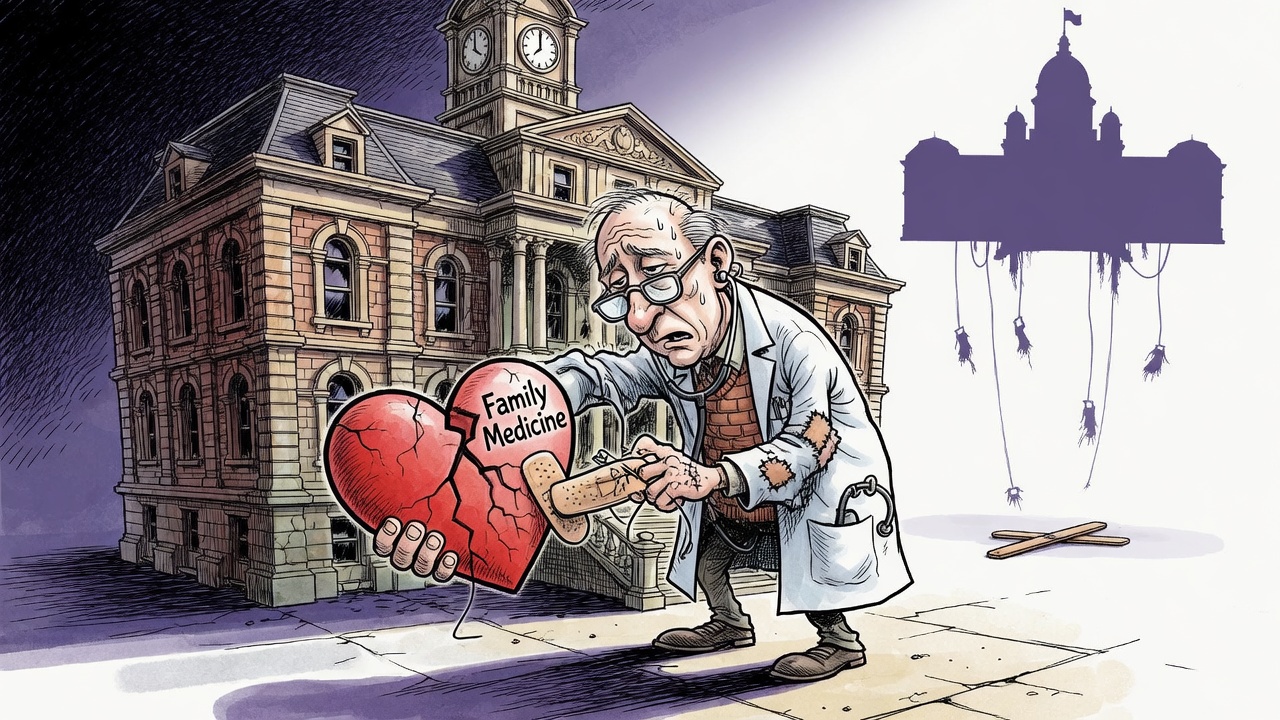
Colwood’s latest clinic update should stop the B.C. NDP from using primary care as another campaign slogan. The city says it opened the Colwood Clinic in January 2025 after a community of roughly 23,000 people found itself with zero family physicians offering care in the community.
That is the hard fact at the centre of the story. In Colwood’s 2023 Life in Colwood Survey, 69 per cent of residents identified having a family doctor as their highest priority. Council did not just pass a resolution and wait for Victoria. It worked with the Ministry of Health, Island Health and partners to create a municipal health-care model.
The model is unusual because city hall is doing work most voters would naturally expect the provincial system to handle. Colwood leases clinic space in Pure Pharmacy at Royal Bay Commons. It recruits family physicians as municipal employees. It manages clinic administration — finance, payroll, human resources, IT and communications — so doctors can focus on patient care.
That is a credit to Colwood. It is also an indictment of the status quo. When a local government has to lease space, hire physicians, expand internal administrative roles and use reserves to get primary care started, voters are entitled to ask what provincial delivery looked like before city hall stepped in.
The financial snapshot makes the risk plain. Colwood says the clinic had two doctors in 2025, four by September 2026, and projects six in 2027 and eight in 2028. It reports 1,185 patients in 2025, 2,355 projected by September 2026, and a path to 10,000 patients in 2028. But the city also says the business case did not anticipate all start-up costs, existing city reserves have been used, and reserve repayment is expected once the clinic becomes profitable, estimated by 2028.
The clinic is not private care. Colwood says physicians assign payment for services to the clinic, provincial revenues flow through existing Ministry of Health systems, and the municipality uses that revenue to pay doctors as employees with pension and benefits. Residents who need a doctor are still told to use the provincial Health Connect Registry and wait to be contacted as capacity becomes available.
A September city update says the clinic expanded to four physicians when Dr. Swathi Ravinuthala joined the team this summer. Colwood’s clinic page says the business case envisions connecting up to 10,000 Colwoodians with a family physician by the fifth year of operation, with no ongoing municipal tax impact.
Good. Residents need doctors, and Colwood found a practical way to add capacity. But David Eby’s government should not get to campaign as if the system is fixed when this example exists. A city of 23,000 had zero local family doctors, then had to become a health-care administrator to close the gap.
That is the accountability test. If the province wants applause for new payment models and registry promises, it must also answer why communities are building workarounds. Colwood’s clinic is a local solution. The failure it exposes is provincial.