B.C. Knows How to FireSmart Homes. Why Is the Prevention Program Running on Leftovers?
When experts say prevention works and local governments say the grant stream is being squeezed, Victoria cannot keep treating wildfire resilience as optional homework.
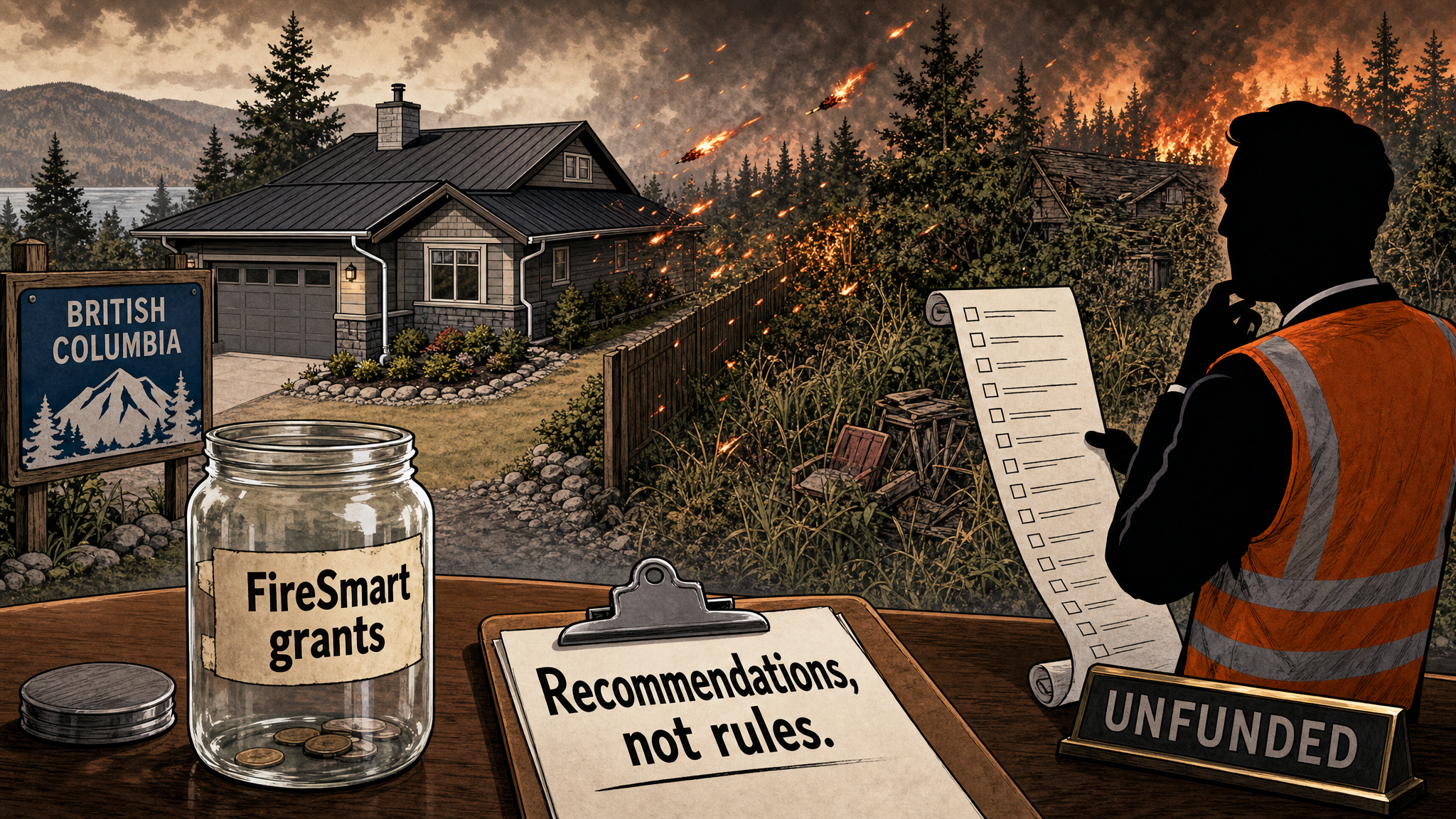
British Columbia already knows what wildfire prevention looks like. The question is whether Premier David Eby’s government is prepared to fund it and make the highest-risk rules clear before more families are told to evacuate.
CBC reported Sunday that, with weeks still left in peak fire season, hundreds of structures have burned across B.C. and experts are calling for FireSmart principles to become mandatory for homeowners and builders in high-risk locations. CBC quoted Thompson Rivers University wildfire expert Mike Flannigan saying some FireSmart principles should be rules in those places because wildfire resilience only works if neighbours do not leave ember fuel beside each other.
The practical steps are not mysterious. FireSmart guidance includes cleaning gutters, keeping roofs clear of debris, managing landscaping, moving fuel sources away from buildings, spacing and pruning trees, and choosing less flammable materials where possible. Those measures will not stop every wildfire, and no honest government should pretend they will. But they can reduce risk, and B.C. has examples to study.
CBC pointed to Logan Lake, which credited years of mitigation work with helping save homes when fire came close in 2021. It also pointed to Jasper, Alberta, where post-2024 rebuilding standards now require more fire-resistant choices such as non-combustible roofs and siding. The lesson is obvious: prevention is easiest to defend after a disaster, but it has to be organized before the flames arrive.
That is why the funding squeeze matters. On Jan. 28, 2026, the Union of B.C. Municipalities said the FireSmart Community Funding and Supports program was closing its current intake because of a lack of funding, then reopening under a competitive adjudicated process. UBCM said the Province had provided more than $175 million since 2018, but only an estimated $25 million remained for the February intake and those funds were expected to be fully committed once adjudication was complete.
UBCM also listed the new limits: fuel management and impacts from wildfire would no longer be funded, eligible activities were modified, and funding requests were limited to one-year projects. That is a serious constraint when wildfire risk reduction is long-term work involving local governments, First Nations, homeowners, contractors and emergency planners.
The NDP cannot keep celebrating emergency response while leaving prevention to uncertain grants and voluntary compliance. Victoria should publish three things now: a long-term FireSmart funding plan, a high-risk-area rules framework, and a public cost table showing what homeowners, local governments and the Province are each expected to pay. If FireSmart works, B.C. should stop running prevention on leftovers.