Summerland Wineries Took the Hit. Victoria Owes Them a Recovery Plan
Community stepped up when the Bald Range wildfire emptied tasting rooms and farms. Now the NDP government needs to show the measurable business recovery plan.
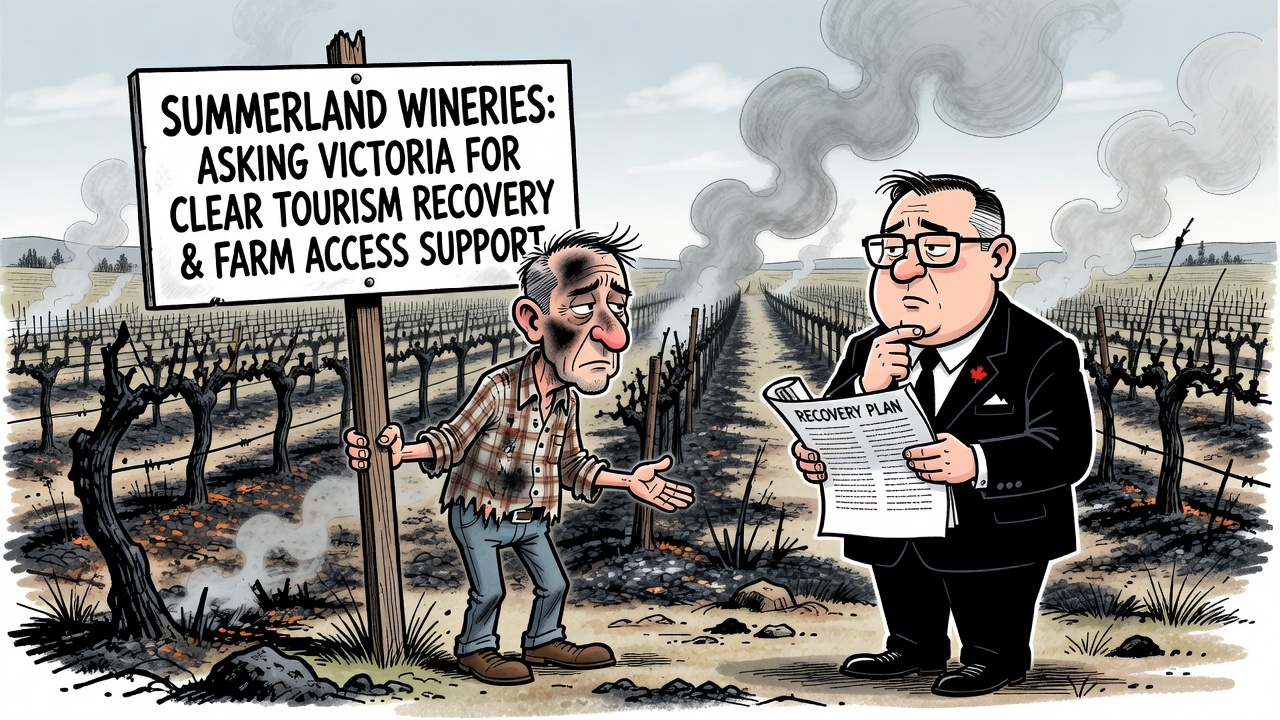
The Bald Range wildfire story is rightly about safety first. But once the evacuation orders ease, B.C. cannot pretend the economic damage ends when the highway opens for limited hours or a tasting room gets permission to check the property. Summerland’s wine and farm economy just absorbed a peak-season shock, and the NDP government owes more than sympathetic statements.
Vancouver Sun reported that owners and employees of about 24 wineries in and around Summerland were among residents forced to flee the Bald Range wildfire, which the report said pushed more than 20,000 people from their homes and prompted a provincial state of emergency. Wine Growers B.C. CEO Jeff Guignard told the paper that two dozen of more than 300 B.C. wineries were closed during what should be their busiest tourism season.
The community response deserves credit. According to the same report, industry members offered accommodation, refrigeration, storage and livestock help. Christine Coletta said Andrew Peller winery took in nine temporary foreign workers and helped handle paperwork so they would not be left without work during the crisis. That is the kind of practical solidarity governments like to praise after the fact.
But private goodwill is not a recovery program. The Sun reported that Garnet Valley Ranch lost one of two houses, outbuildings, fencing and irrigation infrastructure. It also reported that Dirty Laundry Winery’s buildings and cellars survived, but general manager Paul Sawler described the interruption to winery-gate sales as a massive hit during one of the busiest three weeks of the year. Those are business-continuity facts, not partisan talking points.
The Province did issue traffic advisories. On Aug. 13, it said Highway 97 through Summerland would open from 7 a.m. to 7 p.m. daily, subject to fire behaviour, with no stopping and no access to exits or side roads. That may be necessary for safety, but it also shows why “the road is partly open” is not the same as farms, workers, suppliers and customers being back to normal.
Coletta told the Sun the next need is better tourism marketing support to extend the season into May and June and into September and October. That is a specific ask Victoria can answer. Which ministry owns the Summerland recovery file? What farm-access rules apply? What repair supports exist for fencing, irrigation and outbuildings? What worker-continuity help is available? What marketing dollars and timelines will help businesses recover lost peak-season traffic?
Disaster response cannot stop at evacuation logistics. If the NDP wants to be taken seriously on rural jobs and small business, it should publish a Summerland and Okanagan recovery plan now: access, repairs, workers, tourism marketing, and a public scoreboard showing what has been done, what is pending and who is accountable.