Businesses Asked for Street Safety. The NDP Left Them a Fragmented Mess
After years of announcements, business groups are still saying the same thing: workers and storefronts are carrying the cost while government responsibility is split into pieces.
The campaign is over. The storefront receipt is still sitting on the counter.
CityNews reported that business and advocacy groups are pressing the incoming B.C. government for action on street safety. That demand did not appear out of nowhere. It follows years in which the NDP government announced public-safety programs, repeat-offender initiatives and community-safety tables — while many workers, customers and small businesses kept describing the street-level reality as unsafe and unresolved.
Patricia Barnes of Business Improvement Areas of B.C. told CityNews that the cost of doing business and street disorder remain key challenges for Vancouver small businesses. CityNews described the concerns as including retail crime and drug addiction. Those are serious social and public-safety problems, not slogans. They require housing, treatment, mental-health capacity, policing and prosecution systems that actually work together.
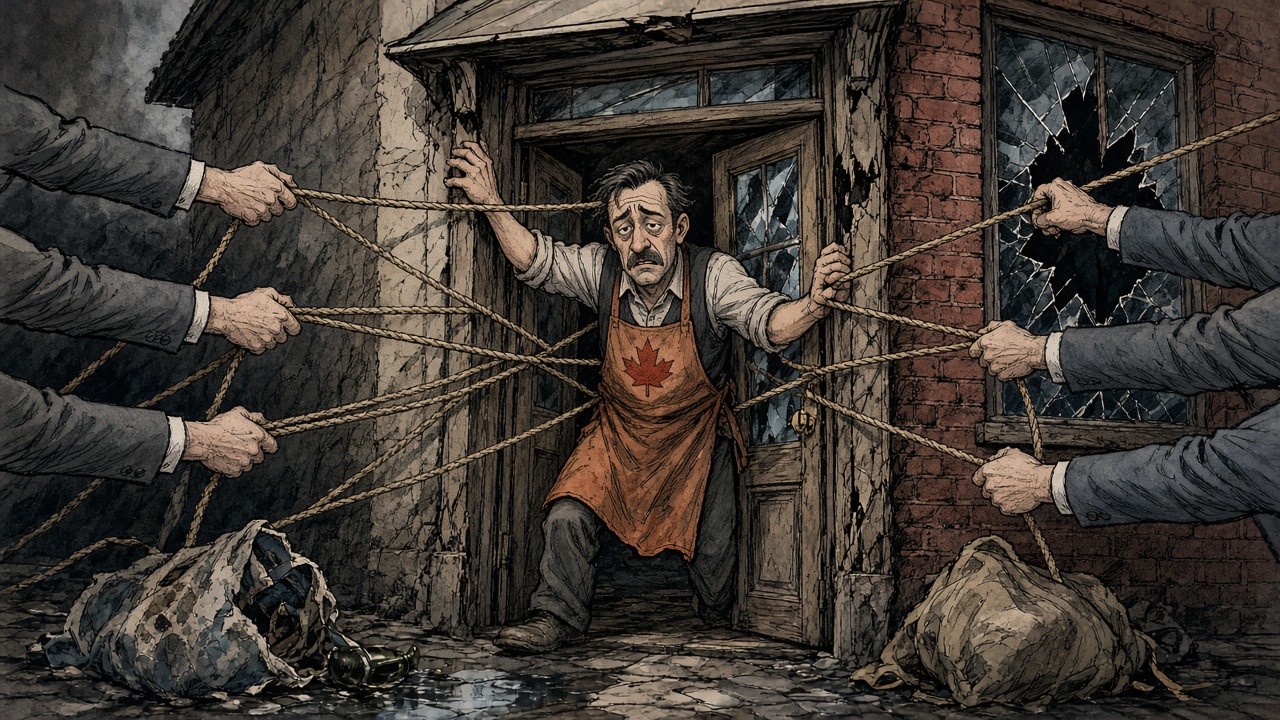
The accusation from business advocates is that the system still does not work together. Save Our Streets Coalition co-founder Jess Ketchum argued to CityNews that responsibility for public safety should not be split across competing government portfolios. That is an allegation about governance, and it lands directly on the NDP’s record: if every ministry owns a slice of the problem, nobody is clearly accountable for the whole file.
The numbers reported before the election were just as blunt. In September, CityNews reported on a Business Improvement Areas of B.C. survey in which 65 per cent of respondents identified public safety and street disorder as significant concerns. The same report said 63 per cent believed operating conditions had worsened over the previous year, and 89 per cent believed governments were not doing enough on repeat offending, retail crime and public-safety issues.
Those are survey findings, not a court verdict. But they are still a warning from the people paying leases, hiring staff, cleaning entrances, replacing stolen goods and trying to keep doors open. They also undercut the NDP habit of treating announcements as outcomes. A web page about safe communities is not the same thing as a safe shift for a cashier closing a store at night.
The former NDP government’s own public-safety material points to a patchwork of initiatives: situation tables, community safety and targeted enforcement programs, and provincial work on repeat violent offending. Some of that may help. None of it excuses the result described by business groups after years of NDP control: fragmented responsibility, persistent disorder and a feeling that small operators are still begging government to listen.
The hard question for the post-election legislature is simple. If the NDP’s public-safety model was working, why are business groups still pleading for a government that can coordinate the basics?