Eby’s Snap Election Hit One Day After the Pension Clock Ticked Over
The calendar does not prove motive. It does prove the public deserves a straight answer about one very convenient date.
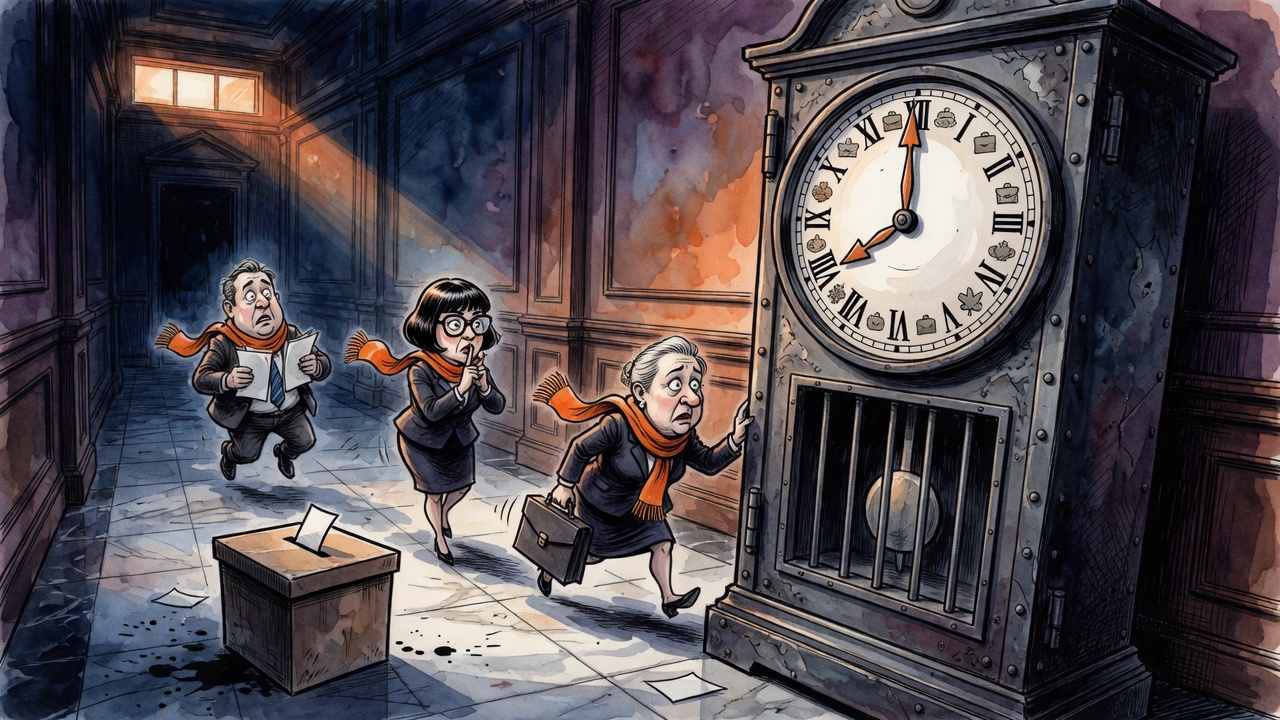
The cleanest fact in the newest snap-election story is the date. Elections BC lists final voting day as October 24, 2026. Canadian Press reports that the legislature clerk’s office said MLAs first elected on October 24, 2020 had their pensions vest on Friday, October 23, 2026 — one day before voters went to the polls.
That does not prove David Eby chose the election date for pensions. It does not prove every MLA even thought about the clock. But it does put a hard accountability question on the table: why did the NDP leader’s snap election land exactly after a six-year vesting threshold that benefited a dozen legislators, including nine NDP MLAs?
The Legislative Assembly’s own members’ guide says an MLA is not eligible for a pension unless they have served at least six years. It also says members contribute 11% of pensionable earnings, and that members with six or more years of Legislative Assembly service are “vested.” That is not a rumour or a partisan attack line. It is the plan rule.
Canadian Press named the NDP members who crossed the threshold: Brittny Anderson, Jennifer Whiteside, Niki Sharma, Josie Osborne and Grace Lore were re-elected; former ministers Brenda Bailey and Kelly Greene did not seek re-election; and Susie Chant and Harwinder Sandhu lost their re-election bids. CP also reported that Conservatives Lorne Doerkson, Bruce Banman and Trevor Halford crossed the same threshold.
That broader list matters. This is not a claim that only NDP MLAs benefited. It is a claim that the premier who called the early election owed voters a fully transparent explanation for the timing — especially after the campaign rationale already shifted under scrutiny from outside political turbulence to a mandate argument.
CP reported that former Conservative leader John Rustad said the pension timing might not have played a role in Eby’s thinking, while adding that caucus members could have urged him not to call it too early. CP also reported that the BC NDP caucus did not immediately respond to a question about whether the vesting date played any role in the timing.
That unanswered question is the point. B.C. voters were asked to accept an early election as a public necessity. Now the public record shows the vote came one day after a private-benefit threshold for multiple politicians. The NDP does not get to wave that away with silence. If pensions had nothing to do with the timing, say so plainly, put the decision record on the table, and let British Columbians judge the calendar for themselves.