Vancouver Voted Two-to-One for Safer Public Spaces. Eby Should Hear It.
The plebiscite is advisory, not binding. But the numbers are a direct political signal to Victoria.
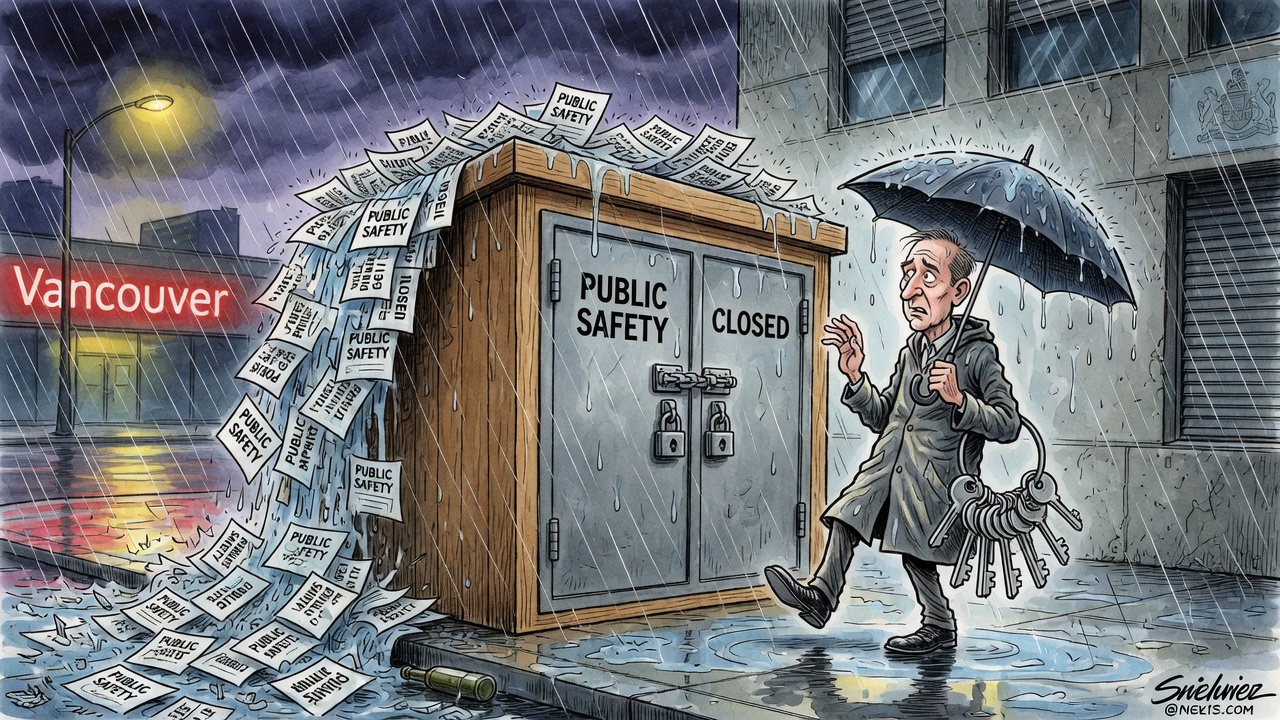
Vancouver’s public-safety plebiscite was non-binding. It did not rewrite a bylaw overnight, and it did not legally order the Province of B.C. to build anything. But politics is not only about legal force. It is also about democratic signal. On that front, the message was hard to miss.
The City of Vancouver’s official 2026 election results show 137,178 Yes votes and 62,880 No votes on whether the city should strengthen laws to forbid open-air hard-drug use in public spaces. Daily Hive calculated that as 68.6% support. A second question — asking the city to formally request provincial action to convert parts of the old St. Paul’s Hospital, or a similar site, into a secure medical facility with acute voluntary care and 100-plus involuntary care beds — drew 135,509 Yes votes and 63,722 No votes, about 68% support.
Those numbers matter because the second question points straight at Victoria. The wording does not pretend Vancouver can solve complex addictions, mental health, hospital capacity and secure-care policy by itself. It asks the City to press the provincial government. That makes this a David Eby accountability story, not just a municipal election footnote.
There are important limits. The plebiscite was advisory. Daily Hive reported that the new council majority opposed the vote and that Mayor-elect Pete Fry described it as closer to an opinion poll than a binding mandate. Fair enough. No serious person should claim one ballot question is a complete treatment plan.
But dismissing nearly 200,000 votes across the two questions would be its own kind of arrogance. Residents are not asking for slogans. They are asking for public spaces where families, seniors, workers and small businesses are not left to absorb the visible fallout of policy failure. They are also asking for care options for people whose severe addictions and mental-health disorders create serious risks to themselves or others.
The NDP record has been years of reversals, pilots, announcements and jurisdictional finger-pointing. Eby’s government cannot say public drug use is a health issue when defending its policy, then treat the public-safety consequences as someone else’s problem when voters demand action.
The humane answer is not stigma. It is not pretending enforcement alone is treatment. And it is not leaving vulnerable people, neighbourhoods and first responders in the same loop. The humane answer is capacity, clear rules, timely intervention and political accountability. Vancouver has now put that demand in numbers. Eby should answer it with more than another press conference.