If Eby Already Agrees, Where Are Vancouver’s Care Beds?
Vancouver is asking voters to press for care beds the province says it already supports. That is the accountability gap.
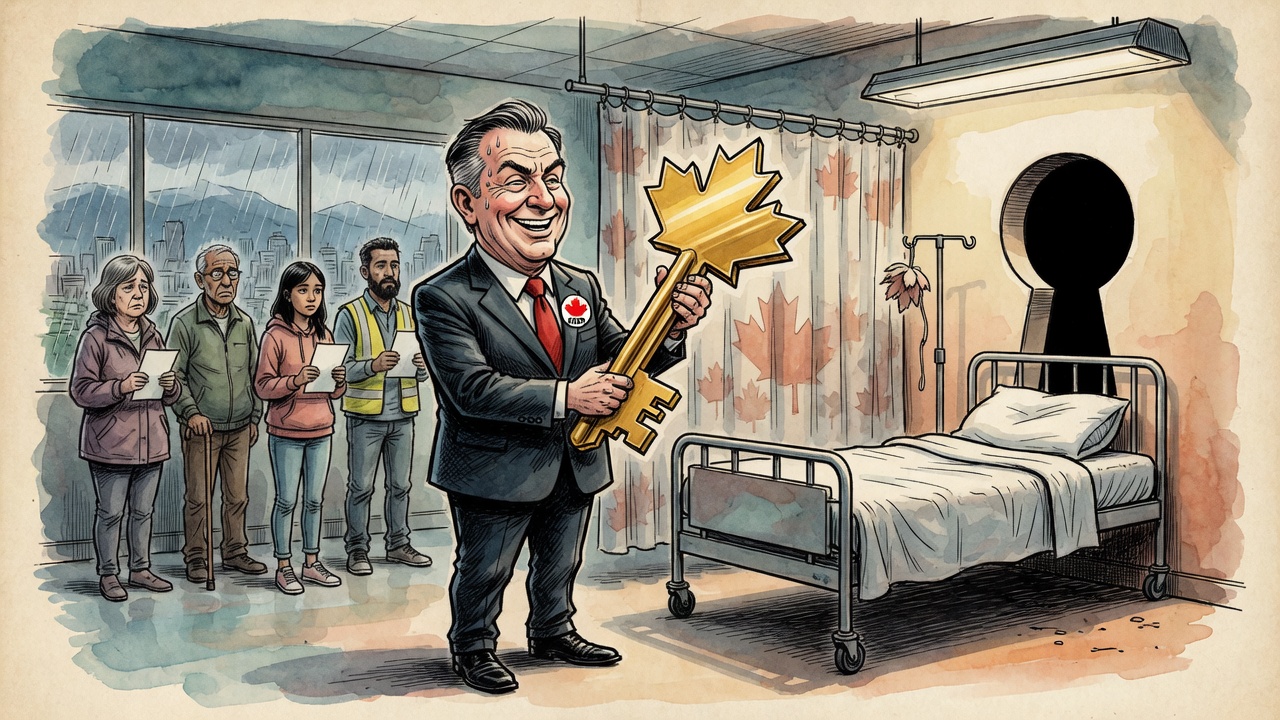
Premier David Eby’s response to Vancouver’s public-safety plebiscite raises the obvious question: if his government already supports the goal, why is the city still turning to voters to force the issue?
Daily Hive reports that Eby said Friday morning he was surprised Vancouver would put the matter on the civic-election ballot because the province already agrees Vancouver needs this kind of care. The same report says Eby told reporters the mayor knows the province has been looking for a Vancouver site and that Vancouver requires it, especially because of the Downtown Eastside.
That is not a rejection of the need. It is an admission that the need is real. The accountability problem is what comes next: after years of visible disorder, addiction, mental-health crisis and pressure on residents, businesses and first responders, agreement is not a bed, a ward, a clinician, or an opening date.
Vancouver council has approved two advisory public-safety plebiscite questions for the October 17, 2026 civic election, according to Daily Hive. One asks whether the city should strengthen bylaws to forbid open-air hard-drug use in public spaces. The other asks whether Vancouver should formally call on the B.C. government to convert part of the old St. Paul’s Hospital, or another similar site, into a secure medical facility with acute voluntary care and 100-plus involuntary care beds for people posing a serious risk to themselves or others because of severe substance-use and mental-health disorders.
The vote would not by itself create a provincial facility. Daily Hive reports the result would be advisory and would not compel B.C. to establish the beds. But that limitation is exactly why the premier’s reaction sounds so thin. If Victoria and Vancouver are already aligned on the broad objective, then the missing piece is not public permission. It is provincial delivery.
Health Minister Ravi Kahlon also said the province supports this type of care in Vancouver and wants to work with the city, Daily Hive reported. Good. Then British Columbians should see the work: the site options, the operating plan, the staffing assumptions, the capital costs, the timeline, and the legal safeguards for any involuntary-care capacity.
This issue does not require caricaturing people in crisis or pretending one ballot question can solve a complex health emergency. It requires judging government by outputs. The province says it agrees. Vancouver says it has been asking. Residents are now being asked whether the city should press harder.
Eby can question the plebiscite as politics. But he still owes Vancouver a practical answer. Where is the site? How many beds are funded? When do they open? And if the old St. Paul’s proposal is not workable, what is the government’s alternative?
Until those answers are public, the plebiscite is not the real embarrassment. The empty-bed gap is.