Nurses Gave Eby a Checklist. Slogans Are Not an Answer.
BCNU is not asking leaders for a bumper sticker. It is asking for commitments voters can measure: ratios, ER staffing, private agency nursing, recruitment and workplace violence.
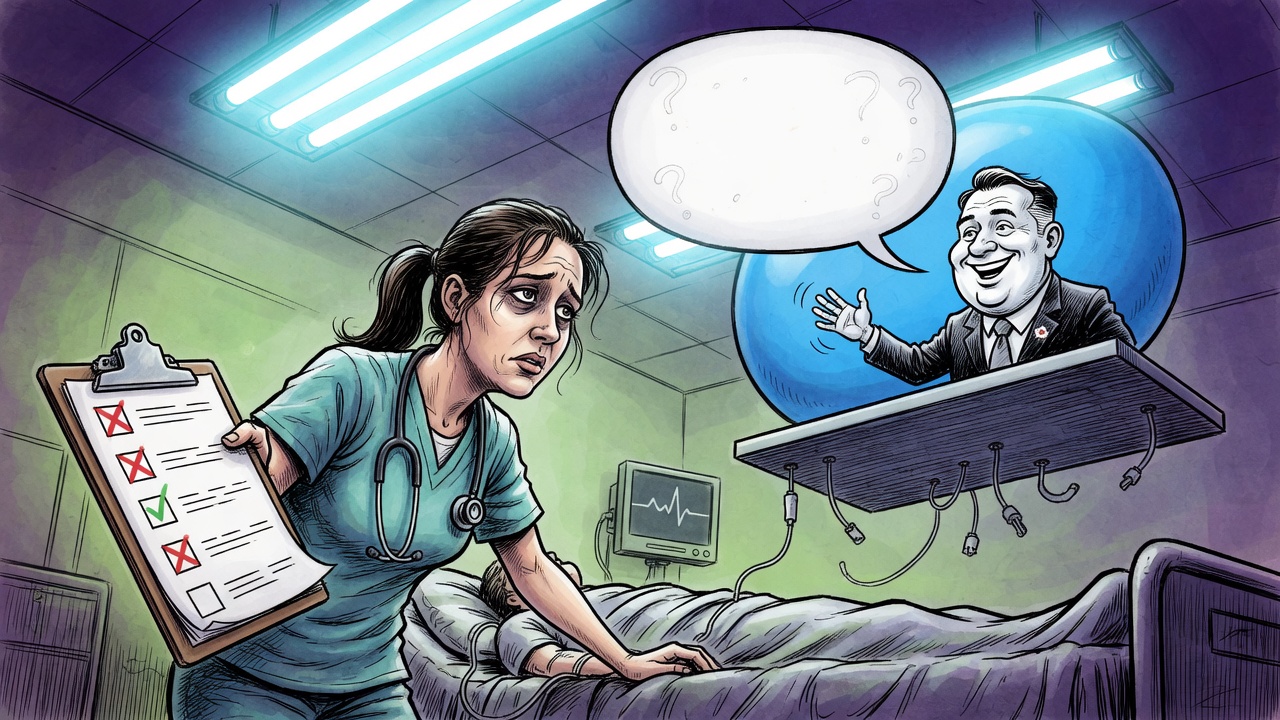
British Columbia’s nurses have done voters a favour. They have taken the soft campaign phrase “protect health care” and turned it into a checklist.
On October 7, the BC Nurses’ Union called on all election candidates to protect and expand minimum nurse-to-patient ratios. BCNU says ratios are now activated at 96 sites across the province, with the 1:4 medical-surgical standard beginning to change floor-level care. That is real progress, and the NDP will naturally try to claim it. But BCNU’s message was not a victory lap. It said emergency-room implementation is still next, after years in which dozens of ERs have gone on diversion or closed because there were not enough nurses to staff them safely.
The union’s 2026 provincial election page sharpens the test. It says BCNU sent the leaders of the BC NDP, BC Conservatives, BC Greens, CentreBC and OneBC questions on five issues: full ratio implementation, safe workplaces, recruitment and retention, private nursing agencies, and whether leaders will reject privatization and strengthen public health care. The page says responses are displayed “as they are received.” On the page reviewed October 17, the detailed answer set visible in the text was from CentreBC. If Eby’s campaign has sent its answers, voters should be able to compare them directly, question by question.
This is not an attack on nurses. It is the opposite. Nurses are telling voters exactly where slogans collapse into operational reality: How many nurses? In which units? By what date? With what security and incident reporting? How quickly will costly private agency nursing be reduced, and what public staffing model replaces it?
The workplace-violence file makes the question urgent. BCNU’s “Violence. Still Not Part of the Job” campaign says violence against nurses is intensifying, with health-care workers facing physical, verbal and emotional abuse more often in workplaces already stretched by understaffing and higher patient acuity. It says nurses have called for measures including fully implemented ratios, stronger relational security, better alert systems, improved data collection and completion of the government’s 2016 promise to deliver a violence-prevention framework.
BCNU also points to a 2024 member survey in which 81 per cent reported monthly verbal or emotional abuse, 93 per cent reported working short-staffed at least once a month, and 50 per cent reported physical violence at least once a month. Those are not abstract labour-relations numbers. They are bedside safety warnings.
So the election question for Eby is not whether he can say “health care” often enough. It is whether he will put his answer beside nurses’ checklist: full ratios, ER staffing, agency-nurse reduction, retention targets, violence prevention and dates voters can hold him to after October 24.