Nurses Say ER Closures Need Staffing Ratios. Eby Is Selling Scanners.
Equipment can help. But BCNU’s election message says the next health-care test is staffing ratios in emergency rooms, safer workplaces and less reliance on expensive private agency nursing.
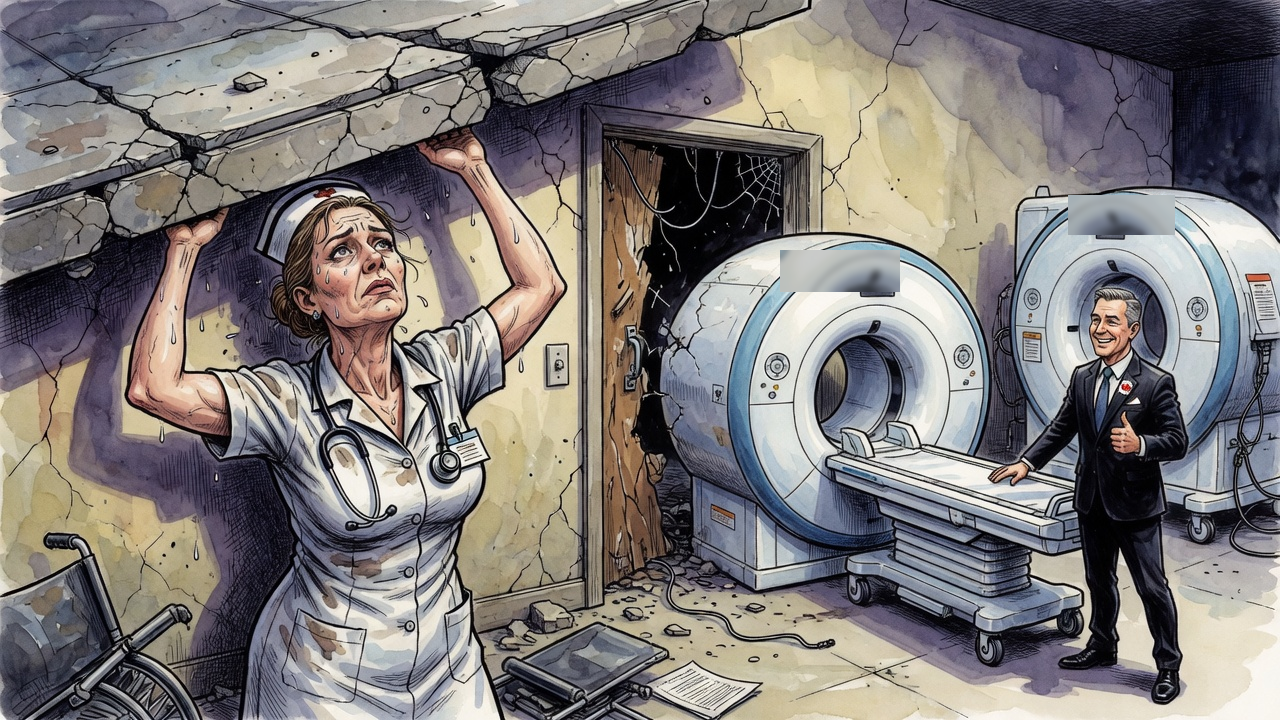
David Eby wants voters to see new machines. Nurses are asking whether anyone will be there to safely staff the system around them.
On October 6, the BC NDP promised eight new MRI machines, 10 CT scanners, coordinated regional surgical waitlists, robotic-assisted surgery investment, a health-passport app for referral tracking, and more specialist recruitment. The pitch is designed to sound concrete: more equipment, shorter waits, faster scans, better information on a phone.
None of that is automatically bad. A patient waiting in pain for imaging or surgery does not need another slogan. But the British Columbia Nurses’ Union’s 2026 provincial election page puts a harder operational test in front of every candidate: staffing shortages, minimum nurse-to-patient ratios, private agency reliance, recruitment and retention, and workplace violence.
BCNU says staffing shortages have put B.C.’s health-care system under “immense strain.” It says minimum nurse-to-patient ratios are a proven solution that improves care for nurses and patients, reduces preventable harm, and can save more than twice the cost of the additional nurse staffing. It also says B.C. is the first province in Canada to establish those ratios and that implementation is now taking place across the province.
The most important line is the one Eby should be forced to answer before election day: BCNU says emergency-room implementation is next and will help prevent temporary ER closures experienced by communities across B.C. That is not a vague labour talking point. It is a direct warning about the front door of the hospital system.
The union’s election page then lists three government actions to support ratio implementation: reduce reliance on expensive private agency nursing, continue investing in nurse retention and recruitment, and take action on workplace violence. Those are BCNU’s claims and demands, and they should be treated as frontline accountability markers, not campaign background noise.
Eby’s scanner promise may buy attention. It does not answer whether emergency departments will have enough nurses on shift, whether rural communities will keep doors open, whether agency spending is being brought under control, or whether nurses are safe enough to stay. Even the NDP release admits waits can still run from 10 to 50-plus weeks for some surgeries. Global News reported the promise as part of Eby’s health-care focus as the campaign moved toward issues voters rank highest: affordability and health care.
So here is the fair test. Before asking voters to applaud 18 more machines, Eby should release the staffing ledger that makes the machines useful: the ER ratio timeline, vacancy numbers by region, agency-nursing costs, workplace-violence measures, and retention targets. If the answer to ER closures is ratios, then the premier should campaign on the plan to staff them — not just the machines waiting beside them.