Eby’s Red-Tape Spin Just Hit His Own Q1 Receipts
The government calls B.C.’s economy resilient. The first-quarter ledger says the deficit is bigger, growth is thin, jobs have softened and housing starts are down.
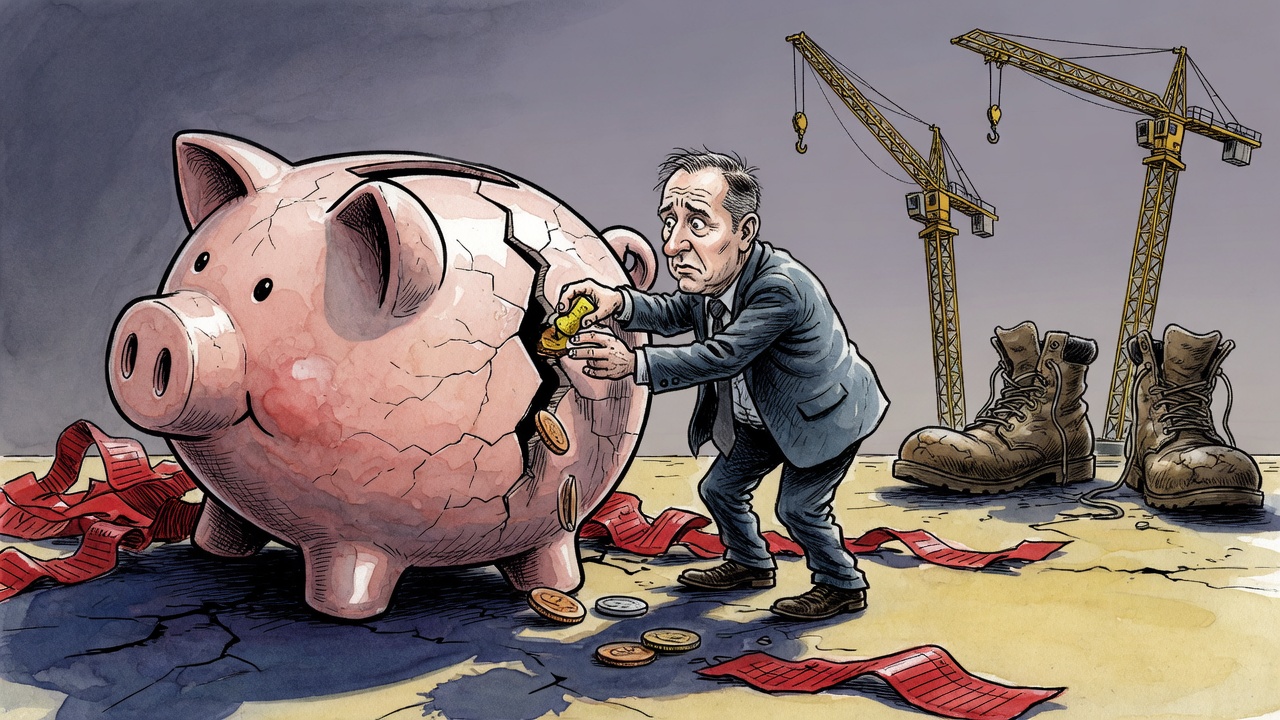
David Eby wants voters focused on his new “Built in B.C. and Canada” buying rules. The promise is simple: use public projects to favour B.C. and Canadian materials when suppliers can deliver on price and schedule. It is a campaign-ready message. It is not a full answer to the economic ledger his government is carrying.
On October 7, the Conservative Party of BC put that ledger at the centre of its attack, accusing the NDP of red tape, higher taxes and stalled investment. Its competing plan promises to cut red tape back to 2017 levels by the end of a first term, create a red-tape-reduction minister, scrap the PST on immediate investment in machinery, equipment and business software for three years, and set a 120-day permitting law for major projects over $250 million.
Those Conservative promises need costing and measurement. But Eby’s record can be measured right now, because the Province has released its First Quarterly Report. The report forecasts a $13.8-billion deficit for 2026-27, which is $450 million higher than Budget 2026. Revenue is up, but spending is up too, including wildfire costs and refundable tax-credit spending.
The growth picture is just as important. The report forecasts 0.9 per cent real GDP growth for 2026. It says economic performance has been mixed amid tariffs, geopolitical uncertainty and tighter federal immigration policy. That is far from a collapse, but it is also not the booming platform voters are being asked to imagine.
The labour and housing receipts make the resilience line even harder to sell. The candidate briefing drawn from the Q1 report flags employment down 0.6 per cent year-to-date to August and an August unemployment rate of 6.5 per cent. Housing starts were down 9.3 per cent year-to-date to July, while home sales were down 6 per cent. Total provincial debt is forecast at $180.9 billion by year-end, with taxpayer-supported debt at $141.1 billion.
So the fair question is not whether buy-local rules can help some suppliers. The fair question is why, after years of NDP management, British Columbia is entering an election with a larger deficit, weak growth, softer employment and fewer housing starts — while the government asks voters to treat procurement branding as an economic plan.
Voters deserve a ledger, not a ribbon. If Eby says red tape is not the problem, he should show the permit timelines, investment results, full-time job numbers and housing-start recovery that prove it. If he says B.C. is resilient, he should explain why the official receipts keep pointing the other way.
Sources and records
- Conservative Party of BC: Just the Facts — Eby and the BC NDP: Red Tape Creating Economic Chaos
- Conservative Party of BC: Supercharge British Columbia’s Economy
- Government of B.C.: First Quarterly Report 2026-27
- Government of B.C.: Budget 2026 fiscal plan release
- BC NDP: Eby pledges new Built in B.C. and Canada buying rules