Eby Says 800 U.S. Health Workers Accepted Jobs. The Job Boards Still Show the Hole.
Recruitment announcements are not the same as staffed shifts in rural emergency rooms.
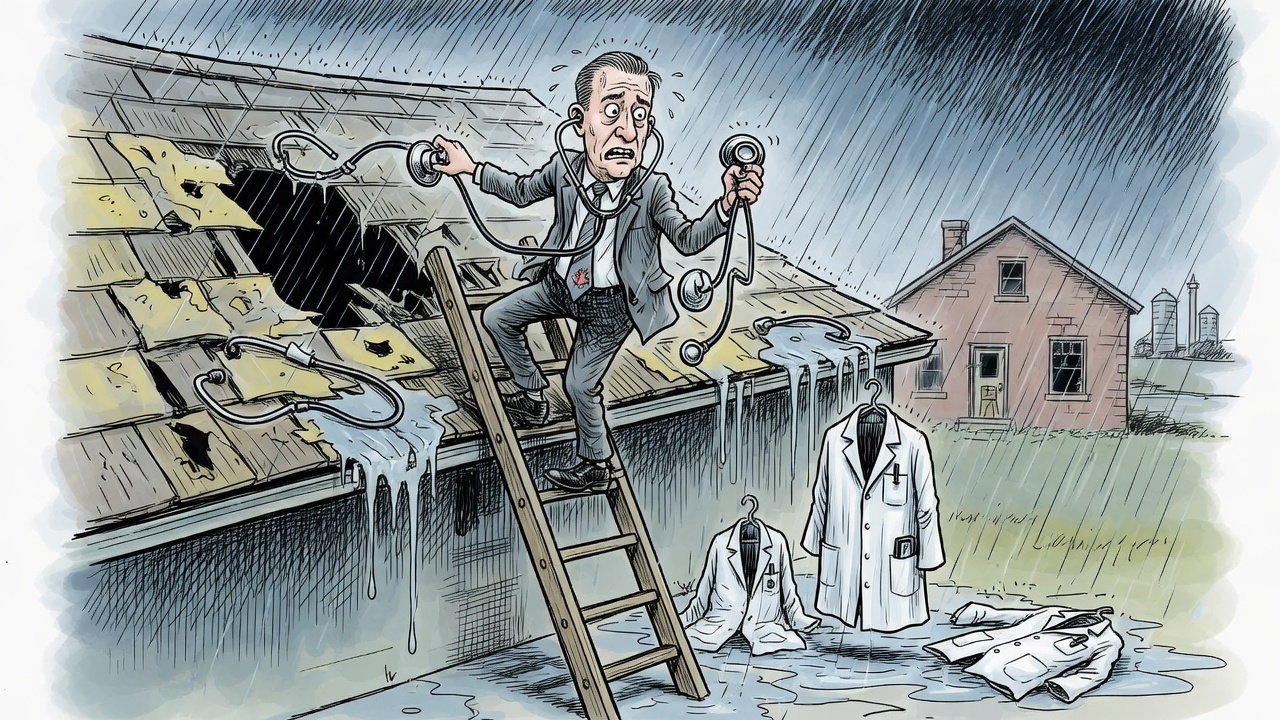
David Eby is selling a health-care recruitment number. British Columbians should ask for the staffing ledger behind it.
The BC NDP’s September 23 campaign release says Eby would “double down and then triple down” on recruiting U.S. health workers. It says the effort has already seen more than 800 health professionals accept B.C. jobs, and says recruiters would focus where workers are most needed: cancer care, emergency departments and rural communities.
That is a serious claim, and if those workers are starting, staying and landing in the hardest-hit places, voters should see the proof. But the current public record still shows the same stubborn problem: recruitment announcements do not automatically staff the next overnight shift in Bella Coola, Merritt, Tumbler Ridge or any other community that has learned to check whether the emergency room door will actually be open.
The Locums Rural BC job board checked September 27 showed 91 rural locum postings across the province. Visible Bella Coola listings included family-practice and emergency-coverage blocks stretching from August 14, 2026 through March 31, 2027, plus multiple one-week blocks in October, November and December. A job board is not the whole health system. It is still a practical receipt: somebody is trying to cover real shifts.
Global News covered the Surrey announcement as part of the first full campaign day, reporting that Eby promised to expand the U.S. recruitment campaign if re-elected, including Canadian health professionals currently working south of the border. Sitka Media’s video report captured the obvious follow-up: why recruit from the United States instead of focusing on retention here? Eby’s answer was that adding more workers is itself a retention strategy because it eases workload and burnout.
That logic only works if the numbers close the gap where patients feel it. In Hansard on May 28, Eby cited more than 700 U.S. health-care workers joining B.C. and more than 2,000 Americans applying. The new campaign number says more than 800 have accepted jobs. The missing details are basic: how many have started, how many are doctors, nurses or allied professionals, which communities received them, how many remain after six months, and how many rural emergency vacancies are still open by region.
The government’s own earlier recruitment material identified the pressure points as cancer care, emergency departments and rural communities. Those are exactly the places the campaign should measure, not blur into a single province-wide applause line. If Eby wants credit for recruiting across the border, he also owns the scoreboard that tells British Columbians whether the shortages are shrinking at the bedside.
Health-care staffing is not a ribbon-cutting category. It is a household test. When the shift is covered, a family gets care closer to home. When it is not, the promise becomes another drive down the highway.
Sources and records
- BC NDP: Eby to triple U.S. health-worker recruitment
- Global News: first full day of the 2026 B.C. election campaign
- Sitka Media: campaign video report on the Surrey announcement
- Locums Rural BC: rural locum job-board listings checked September 27
- B.C. Hansard: May 28, 2026 afternoon debate
- Government of B.C.: U.S. health recruitment focus areas, June 2025
- Government of B.C.: health recruitment update, 2026