Eby’s Snap Election Just Put an RCMP Watchdog Report Behind the Ballot Box
The careful point is not that Eby ordered a federal watchdog to wait. It is that his early election has become the stated reason voters will not see the report before they vote.
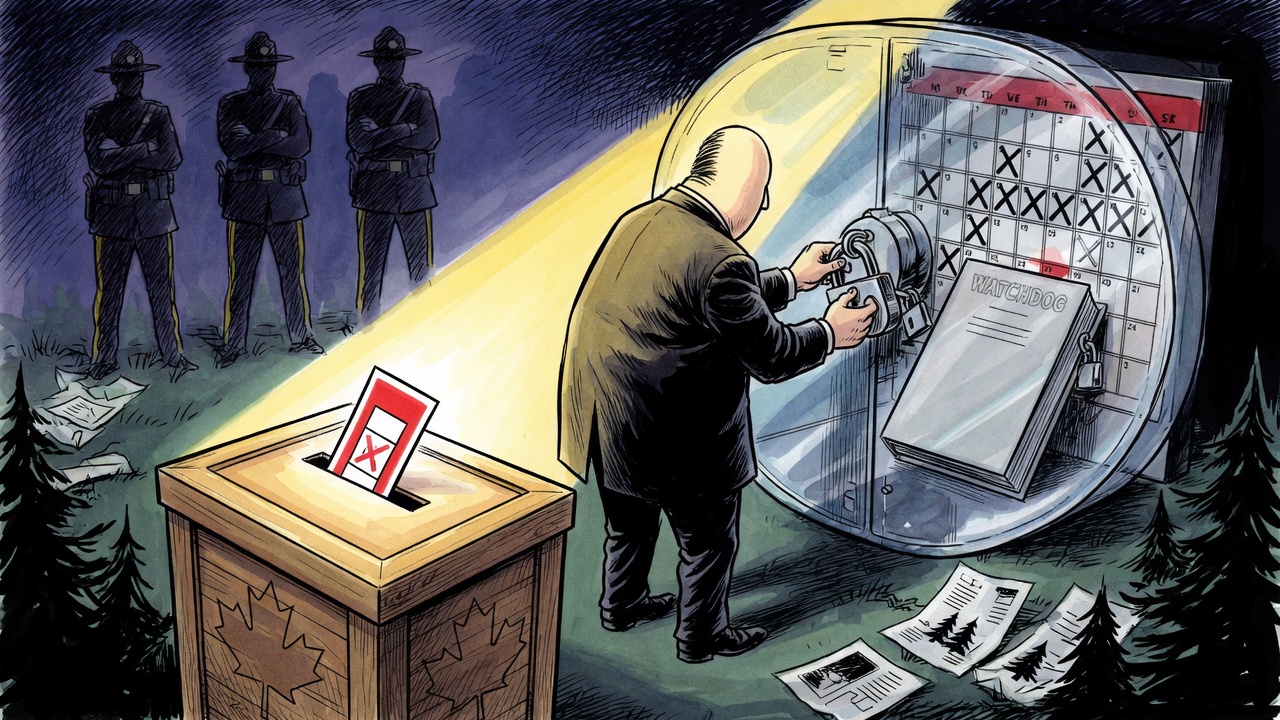
David Eby asked British Columbians for a snap mandate. Now a federal RCMP watchdog report that voters deserve to read before casting ballots is being held until after those ballots are counted.
The facts have to be stated carefully. APTN reported that the Civilian Review and Complaints Commission for the RCMP, not the provincial government, postponed the release. The reported explanation was the election period: according to APTN, the agency said caretaker conventions would limit provincial authorities’ ability to consider or respond to the findings and recommendations.
That does not make the delay harmless. It makes the timing more serious. The report concerns the RCMP response to civil injunctions at Wet’suwet’en, Fairy Creek and Argenta — some of the most contentious policing files in British Columbia. Those files involve public order, Indigenous rights, protest rights, resource conflicts and the way police power is used when governments and courts collide with people on the ground.
The CRCC’s own public update says it received 572 public complaints related to RCMP enforcement operations at Wet’suwet’en Traditional Territory, Fairy Creek Watershed and Argenta-Johnson’s Landing, with 123 meeting the complaint criteria. The same update says the RCMP renamed C-IRG as the Critical Response Unit – British Columbia effective January 1, 2024.
In other words, this is not a minor paperwork file. It is a major oversight record about a B.C. policing unit whose conduct has been the subject of hundreds of complaints and years of controversy.
The public-interest question is simple: why should an election period reduce what voters know about the record they are being asked to judge?
If the report contains criticism, British Columbians should know that before voting. If it clears certain decisions, they should know that too. If it recommends policy changes, voters should be able to ask parties whether they will implement them. Accountability loses value when it arrives after the decision it could have informed.
Eby did not have to call an early election for October 24, 2026. He chose that timetable. A federal watchdog has now reportedly pointed to the election period as the reason a public report on B.C. protest policing will wait.
The NDP can argue that caretaker rules matter. The CRCC can argue that governments need a fair chance to respond. But the voter is not a bystander in this process. The voter is the person being asked to renew power before seeing the watchdog file.
That is the hard accountability problem Eby’s snap election created: the ballot box is open, and the report is still behind the lock.