Eby’s Fixed-Date Problem Has Receipts
Legal is not the same as accountable. B.C.’s own democratic reform record explains why.
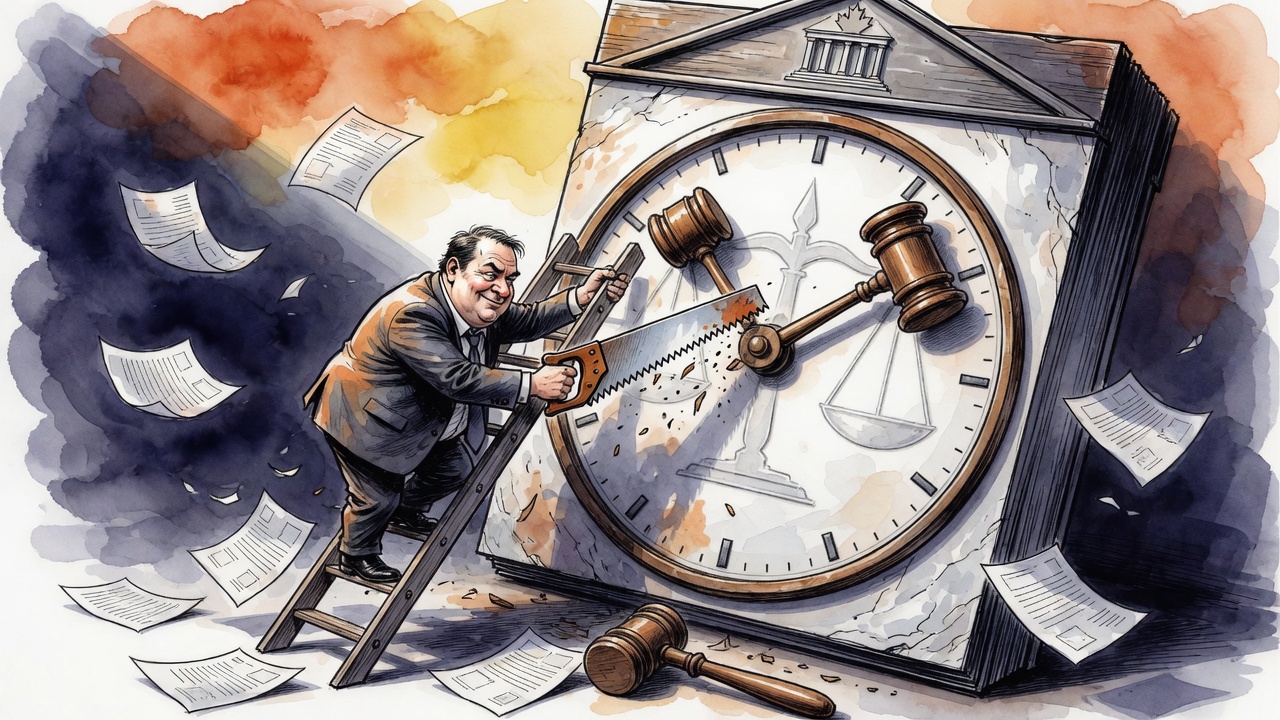
David Eby’s snap election may be lawful. That does not make it democratically clean.
The best witness against the timing is not an opposition slogan. It is the B.C. Legislature’s own explanation of why fixed election dates were created. The Legislature says the point is to ensure election timing cannot be manipulated for political or partisan reasons, to reduce uncertainty, and to improve public accountability.
B.C. was not a late adopter. The Legislature says British Columbia became the first province in Canada to adopt fixed election dates, with the first fixed-date election held in 2005. The current rule, updated in 2017, says general voting day must fall on the third Saturday in October in the fourth calendar year after the last general election.
The last provincial vote was October 19, 2024. A normal four-year clock points to October 2030. Elections BC now confirms the writs have been issued for the 44th Provincial General Election and final voting day is Saturday, October 24, 2026. That is roughly two years after the last election, not four.
There is an important legal caveat. The Legislature’s explainer also notes that fixed dates preserve the Lieutenant Governor’s prerogative to dissolve the Assembly, usually on the premier’s advice. So the question is not whether a snap election can be called. It can. Nor is this an argument that the writs are invalid. They are Elections BC’s official election record. The question is why a premier would use the very discretionary timing power fixed dates were designed to neutralize.
The NDP’s own history makes that question sharper. In 2015, Mike Farnworth described fixed election dates as a reform that removed a premier’s ability to manipulate events or trigger a snap election because the timing looked winnable. In 2012, John Horgan criticized treating a fixed election date as something that could be thrown “out the window” when a government wanted a new mandate. Those were accountability arguments then. They are accountability arguments now.
Angus Reid’s same-day polling shows voters understand the problem. Its September 24 survey found 62 per cent of British Columbians say it is too soon for an election, and 65 per cent say Eby is putting staying in power ahead of the province’s interests. That public reaction lines up with the democratic norm B.C. wrote into its own civic record.
Fixed-date laws are not handcuffs. They are promises about fair timing. Eby has chosen the escape hatch. British Columbians are entitled to judge the difference.