B.C.’s Justice Pipeline Is Backed Up — and Cities Are Pointing at Crown Counsel
Prince George’s UBCM resolution asks Victoria for sustained Crown Counsel resources after warnings about delays, adjournments and justice-access pressure.
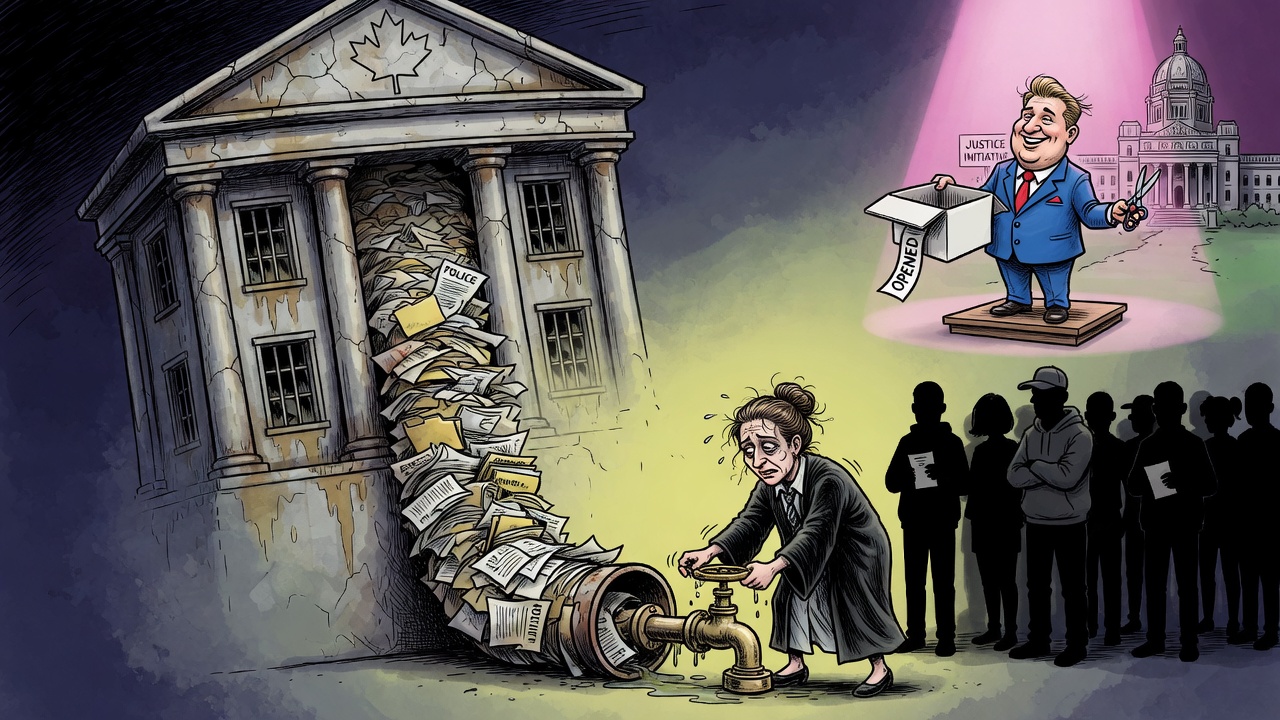
B.C.’s local governments are putting a plain public-safety question in front of Victoria this week: what good is more enforcement if the prosecution system does not have enough Crown Counsel to move files through court?
The 2026 UBCM Resolutions Book includes EB10 — Additional Resource Allocation for BC Crown Counsel, sponsored by Prince George and endorsed by the North Central Local Government Association. The resolution says Crown Counsel play a critical role in the fair, timely and effective administration of justice, then identifies the pressure point: insufficient staffing, workload pressures and resource limitations have resulted in delays, increased adjournments, burnout risk among prosecutors, and challenges ensuring timely access to justice for victims, accused persons and communities.
That is not opposition rhetoric. It is a municipal resolution package heading into UBCM’s September 16 resolution sessions. The UBCM Resolutions Committee recommends endorsement and notes that the membership supported a similar call in 2018. Its comment is important for taxpayers: the availability of Crown Counsel has a direct impact on the administration of justice and on protective services paid for by local governments.
In other words, cities can spend more on police, bylaws, downtown safety work and emergency response, but a bottleneck at Crown Counsel still pushes delay back into the community. Police reports, disclosure, witness time, court time and victim confidence all depend on a prosecution service with enough capacity to make decisions and advance cases.
The warning is backed by the prosecutors’ own public fight. The BC Crown Counsel Association said in May 2025 that it filed a formal workload grievance over inadequate staffing in Okanagan and Kootenay offices, saying workload and shortages were harming prosecutors’ ability to prepare and bring cases to court in a timely way. Castanet later reported that the association said a November 2, 2026 binding arbitration date had been set for the Southern Interior staffing grievance, and that the grievance sought more lawyers for Interior offices.
Attorney General Niki Sharma and Premier David Eby do not need another slogan about public safety. They need to show the staffing ledger. How many Crown Counsel positions are funded, vacant, backfilled and actually working by region? How many charge-assessment files are waiting? How many adjournments are linked to capacity limits? What is the plan for Interior communities, northern communities and fast-growing urban centres where policing costs are already a municipal flashpoint?
Public safety cannot be fixed only at the arrest stage. If Victoria asks communities to absorb rising policing costs while leaving the prosecution valve too narrow, residents pay twice: once through local budgets and again through a slower justice system. UBCM’s EB10 is a reasonable demand for sustained provincial resources. Eby’s government should answer it with numbers, timelines and region-by-region capacity — not another announcement box beside a clogged courthouse pipe.
Sources and records
- UBCM: 2026 Resolutions Book notice
- UBCM: 2026 Resolutions Book PDF, EB10 Crown Counsel resolution
- BC Crown Counsel Association: workload grievance over staff shortages
- BC Crown Counsel Association: May 22, 2025 media release PDF
- Castanet Kamloops: arbitration date set for Southern Interior staffing grievance