A 78-Year-Old Was Sent From Hospital to a DTES Shelter. Discharge Is Not a Housing Plan.
The issue is not whether shelter workers try to help vulnerable people. It is why B.C.’s system can leave a medically fragile senior moving from hospital care into emergency shelter space.
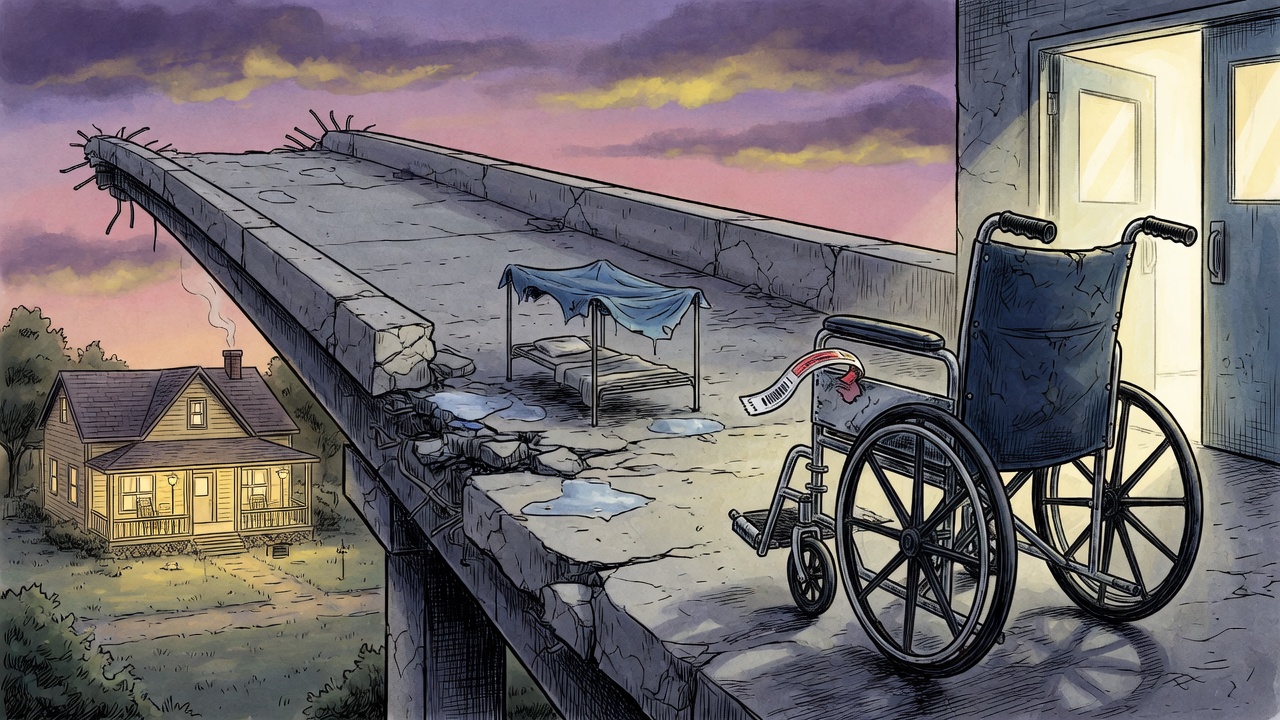
Elizabeth Davis’s case should cut through every soft-focus announcement about housing, health care and “wraparound” support in British Columbia. Postmedia reported that Davis, a 78-year-old New Westminster senior who uses a wheelchair and has chronic obstructive pulmonary disease, was discharged from Royal Columbian Hospital on August 18 and later texted family that she was at a shelter near Main and Hastings.
Her family’s allegation is direct and serious: Nathan Davis told Postmedia they were not told she had been discharged there or would be discharged there. The Tyee reported a similar account, saying the family was notified that Davis had been medically cleared and would be discharged once a safe place was located, but she was sent to a Downtown Eastside shelter roughly an hour later.
Davis herself gave The Tyee a humane and important detail: she said shelter staff were kind and the place was clean. That matters. This is not an attack on shelters or the Downtown Eastside. It is an indictment of a provincial system that can make a shelter cot the fallback for a medically vulnerable senior who needs stability, accessibility and care planning.
The facts reported by both outlets show why the public deserves answers. The Tyee reported Davis had been in and out of hospital eight times over three months, lost her apartment while hospitalized, and relies on a wheelchair. It also reported that by the time she was readmitted to St. Paul’s Hospital, her shoes and phone charger had been stolen, according to her grandson. She was later moved to a Fraser Valley hospital closer to family.
Fraser Health declined to discuss Davis’s specific case, citing privacy. But its general statement to The Tyee said that when a patient can live independently and does not qualify for subsidized long-term care or assisted living, the health authority may provide information about shelters, transitional housing and other housing options. Postmedia reported Fraser Health said such options may include shelters when someone has no home and the usual support network cannot take them in.
That policy answer is not enough. “Here are shelter options” is not a seniors-care pathway. It is a pressure valve for a clogged system.
The wider numbers make this more than one family’s ordeal. The Tyee reported that seniors made up 22 per cent of Metro Vancouver’s unhoused population in the 2025 count, and that about 45 per cent of seniors counted first became unhoused after age 55. B.C.’s seniors advocate, Dan Levitt, told The Tyee the province needs a cross-ministerial seniors plan covering housing, income, health care, transportation and community care.
Premier David Eby, Health Minister Josie Osborne and Housing Minister Christine Boyle should publish the safeguards. How many seniors are discharged from B.C. hospitals to shelters or transitional beds? How often is family notified? What accessibility checks are mandatory? How many are readmitted within 24, 72 or 30 days?
Discharge should mean a safe next step. In B.C. today, the government still has to prove it does.