A Border Sign Won’t Save a Paycheque
David Eby got the anti-Trump headline. The accountability question is what B.C. workers and small businesses get after the photo op.
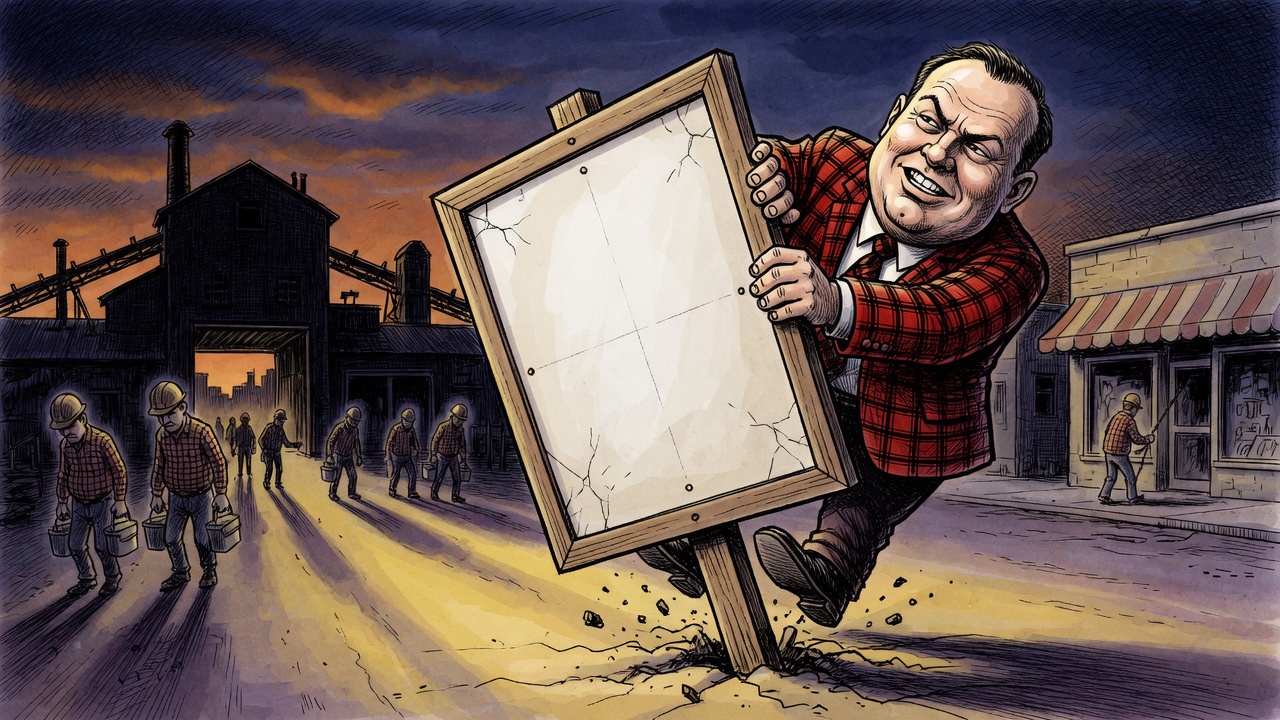
Premier David Eby chose a simple visual for September 8: a new B.C. border sign aimed at Donald Trump. Daily Hive reported the sign reads, “Welcome to British Columbia, Canada. Strong, proud, and will NEVER be the 51st state. Sorry!” Global News reported that Eby spoke as Canadian counter-tariffs took effect on billions of dollars’ worth of U.S. goods.
No serious British Columbian needs to be told that Canada is not for sale. The sovereignty point is easy. The governing test is harder: what concrete provincial plan protects the people who pay the price when a trade war hits forestry, mining, ports, farmers, manufacturers, tourism operators, truckers and border-community small businesses?
Daily Hive reported that Eby said there was “no getting around” the fact that people will lose jobs and businesses will close on both sides of the border. That admission should have been the headline. A premier who says job losses and business closures are coming should be able to show the public more than a communications prop.
Global News reported that Eby said the province would continue to work with Mark Carney’s federal government to support small businesses hit by tariffs, urged people to buy local or Canadian, and said B.C. would soon relaunch Buy BC to include more products. Those steps may help some producers. They are not, by themselves, a measurable rescue plan for an employer deciding whether to cut shifts next month.
Daily Hive also reported that Eby had no additional provincial countermeasures to announce that day. Instead, he said ministers and the public service had been asked to identify options to send a message, build up B.C. and Canada, and impose costs if necessary.
That is where accountability belongs. What options are on the table? Which sectors are exposed first? What cash-flow tools, procurement changes, tax deferrals, port measures, permit fast-tracks or market-access supports are being considered? Which ones have deadlines, budgets and named ministers responsible? Which communities are most at risk, and how often will Victoria update the numbers?
A sign can express public anger. It cannot replace payroll. It cannot reopen a shop, move a container, sign an export contract, keep a mill running, or tell an apprentice whether the next paycheque is safe.
If the NDP government wants credit for standing up for B.C., it should publish the tariff-impact ledger now: jobs at risk by sector and region, businesses seeking help, relief tools approved, timelines for decisions, and the measurable results of every “buy local” promise. British Columbians do not need less patriotism. They need more proof that Victoria is doing the hard work after the cameras leave.