B.C. Businesses Are Warning on Tariffs. Eby Should Stop Adding Costs at Home.
Washington created the tariff shock. Victoria still controls the provincial barriers that make it harder to survive.
The tariff fight is hitting B.C. employers from the outside. The warning from business groups is that Victoria is still adding pressure from the inside.
Canadian Press reporting carried by CFJC says B.C. business groups are sounding the alarm as Canada-U.S. trade tensions escalate with more tariffs and threats on Canadian goods. Greater Vancouver Board of Trade president Bridgitte Anderson said the measures unfairly target B.C. businesses and threaten jobs, investment and economic growth. That is not a partisan talking point. It is the basic operating reality for exporters, suppliers, retailers and communities trying to plan under a tariff shock.
But Anderson’s prescription was not simply to wait for Ottawa or blame Washington. She said B.C. should reduce internal trade barriers, build trade-enabling infrastructure, drive export diversification, and advance major resource and industrial projects. Those are provincial levers. They sit squarely in the lane of Premier David Eby and his cabinet.
Business Improvement Areas of BC executive director Jeremy Heighton made the small-business version of the same argument: governments should reduce the cumulative burden on small businesses and test procurement, taxation, regulation and economic-development decisions against whether they make it easier or harder for B.C. businesses to succeed. That test is overdue.
Global News and CityNews reported that trade talks broke down before 50 per cent U.S. tariffs took effect on Canadian goods. CP’s Aug. 24 report also said Donald Trump threatened to double tariffs on Canadian automobiles and auto parts to 50 per cent starting Jan. 1. B.C. did not create that instability. But instability is exactly why the province has to strip away avoidable costs at home.
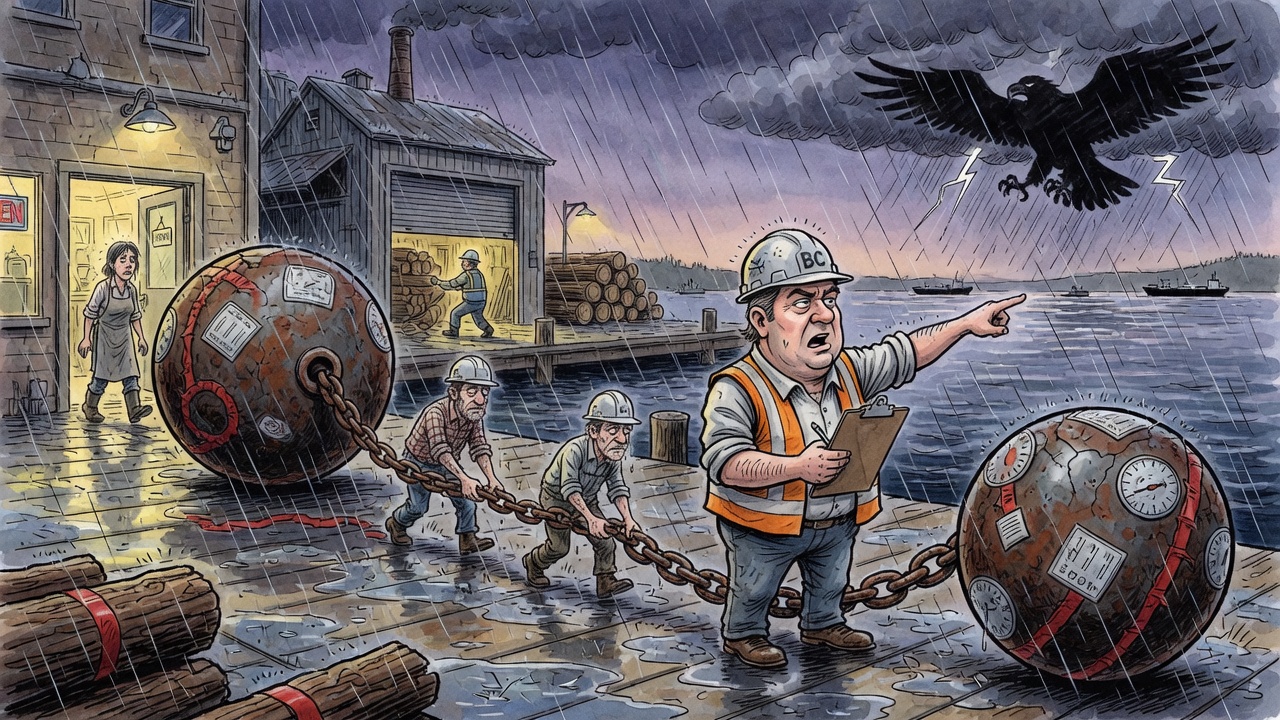
This is where Eby’s government should be judged by outcomes, not speeches. Permitting delays, taxes and fees, rising power costs, procurement rules, uncertain resource approvals and regulatory duplication all matter more when customers face tariff-driven price shocks. A business squeezed by Washington should not also have to drag a provincial ball-and-chain through every expansion, hiring decision or export opportunity.
There is a responsible way to respond: publish a sector-by-sector tariff impact ledger; identify the provincial charges and delays that can be paused, reduced or simplified; set timelines for permits tied to trade-exposed projects; and report monthly on export diversification, infrastructure bottlenecks and small-business cost relief.
Eby cannot blame every lost job on Washington while keeping B.C.-made barriers in place. If the premier wants British Columbians to believe his government is defending workers and businesses, the first proof is simple: stop making it harder to do business here.
Sources and records
- Canadian Press / CFJC Today: B.C. groups call for lower business costs, internal trade barriers as tariffs bite
- Canadian Press / Yahoo Finance: B.C. groups call for lower business costs, internal trade barriers as tariffs bite
- Global News / Canadian Press: Canada vows dollar-for-dollar response to Trump’s 50% tariffs
- CityNews Vancouver / Canadian Press: Canada vows dollar-to-dollar tariff retaliation, suspends trade talks with U.S.