When Firefighters Cannot Reach Seawatch, B.C. Needs an Accountability Ledger
A neighbourhood evacuated in 2019 is now producing smoke from structures firefighters cannot safely reach. That is not just a Sechelt story.
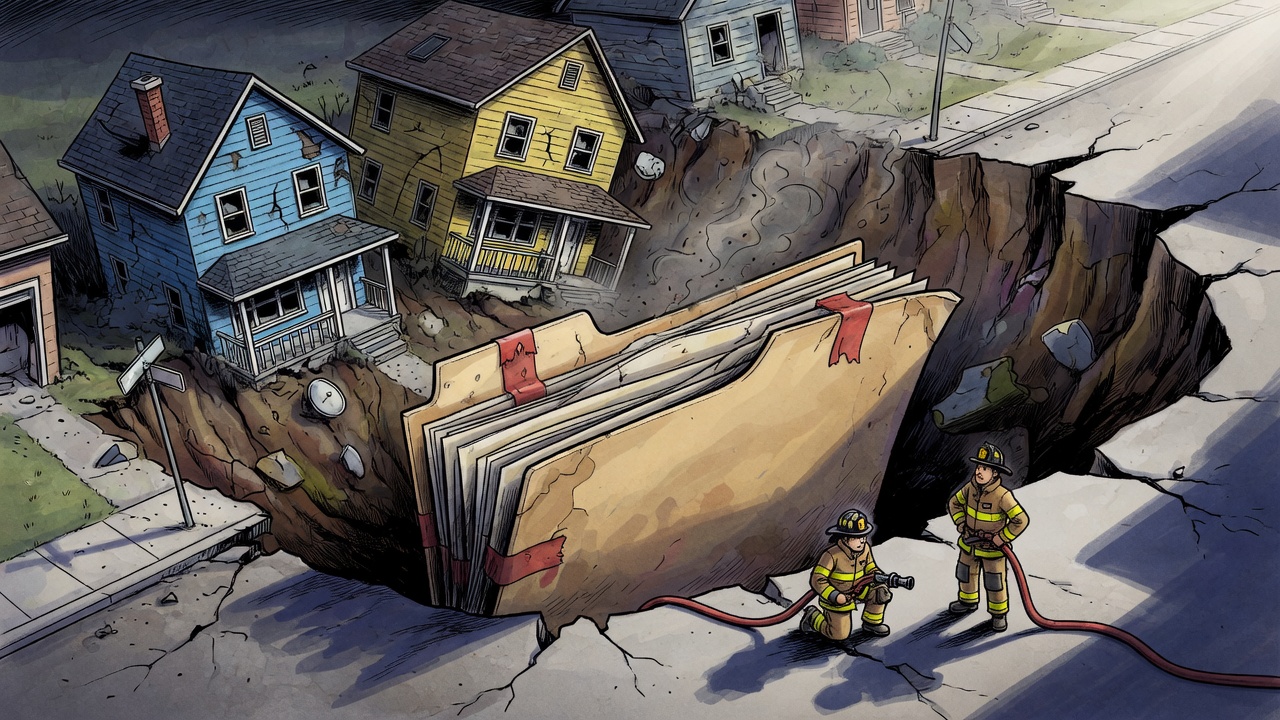
Seawatch is the kind of public-safety failure that gets worse when government lets it become background noise.
CityNews Vancouver reported on September 6 that an abandoned neighbourhood in Sechelt was on fire and that firefighters could not safely attack the blaze directly because of hazardous ground conditions. The report identified the site as Seawatch, the subdivision evacuated in 2019 after sinkholes and continuing geotechnical instability made the area unsafe.
This is not a normal structure fire. It is a fire in a neighbourhood where the public is not supposed to enter, where residents were forced out years ago, and where the terrain itself now limits the response. CityNews reported that the neighbourhood contains 14 homes and that the residents who left after the 2019 evacuation have never been permitted to return.
The District of Sechelt’s own Seawatch page is blunt. It says the Seawatch subdivision has been closed to the public since February 15, 2019, when a state of local emergency was declared and an evacuation order was issued. It also says the area is not expected to be serviced by emergency services such as police or ambulance.
That sentence should stop provincial officials cold. A developed B.C. neighbourhood has sat for more than seven years in a condition where even basic emergency access is not expected. Now smoke and off-gassing from burning structures have turned that long-running legal, property and safety problem into an immediate public-health concern for nearby residents.
No one should blame the Sechelt firefighters, police, local officials or BC Wildfire Service personnel monitoring the site. If the ground is unsafe, crews should not be ordered into it for a photo-op. The accountability question is higher and longer-term: how did a known hazard remain unresolved for so long that emergency response had to become watch-and-wait from a safe distance?
David Eby’s government should publish the Seawatch ledger: what provincial ministries and agencies have done since the 2019 evacuation, what legal or engineering barriers remain, what support has been offered to displaced owners, what environmental and smoke-risk monitoring is underway, and who is responsible for removing or securing structures that emergency crews cannot safely reach.
British Columbians do not need another round of vague sympathy after smoke is already in the air. They need names, dates, responsibilities and a route out of limbo. If a neighbourhood can be evacuated, abandoned and left beyond normal emergency service for seven years, then the province owes Seawatch residents and their neighbours a public accounting now.