Before Eby Declares Victory, Publish the North Coast Power Ledger
The North Coast power line may be important infrastructure. That makes the missing public ledger more important, not less.
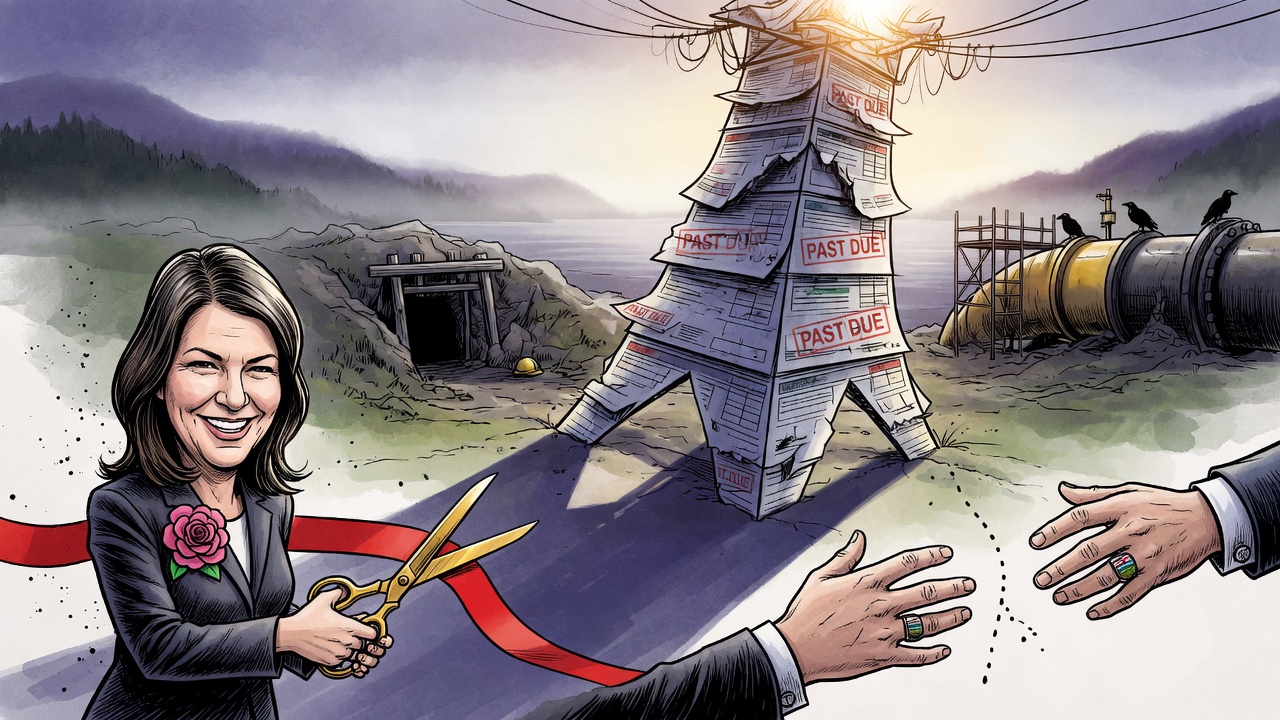
David Eby wants British Columbians to see the North Coast Transmission Line as a nation-building triumph. Fine. But if this is a generational power project, the public deserves a generational level of disclosure before the victory lap hardens into political marketing.
The Province announced September 3 that construction is underway on the line, saying it will create 9,700 direct full-time jobs once finished, employ up to 1,400 workers at peak construction, contribute nearly $10 billion annually to provincial GDP and generate about $950 million a year in provincial and municipal revenue.
Those are big claims attached to an even bigger public decision. The same release says demand from mining, LNG, ports and emerging industries already exceeds the existing 500-kilovolt Prince George-to-Terrace line. Phase 1, from Prince George to Glenannan, is expected by mid-2030. Phase 2 toward Terrace is expected to start in 2027 and finish by winter 2032.
That schedule alone should end the easy slogans. British Columbians are being asked to accept years of construction risk, future load assumptions and ratepayer exposure while the government still has not put the full ledger in one place: capital cost, federal contribution, BC Hydro borrowing, rate impacts, customer commitments, off-ramps if major industrial loads slip, and the cost consequences if the project changes.
BC Hydro’s own project page says Phase 1 is roughly 165 kilometres, Phase 2 roughly 275 kilometres, and a future Phase 3 north of Terrace remains in early planning. It also says additional expansion will depend on customer projects that advance. That is the crucial line. If the business case depends on mines, LNG plants and other major customers arriving on time and at scale, taxpayers and ratepayers should be shown who is committed, who is conditional and who is still theoretical.
First Nations partnership is also not a box Eby can simply tick from a podium. The Province says co-ownership agreements are still being finalized for the end of 2026. Its own backgrounder includes Stellat’en Chief Robert Michell saying not all Crown conditions to build have been addressed, and Nadleh Whut’en Chief Beverly Ketlo saying concerns still need to be addressed and accommodated in Phase 1 and Phase 2. CBC reported affected First Nations issued a non-opposition letter while expecting a final agreement in the near future.
None of that means the line should not proceed. It means the public should not be sold only the upside. A government serious about accountability would release a plain-language North Coast power ledger now: what is signed, what is forecast, what is at risk, what ratepayers carry, and what conditions remain unresolved.
Ribbon-cuttings are easy. The bill, the timeline and the commitments are the hard part. Eby should show them.