The 100 Mile House ER Closure Count Is Still Climbing
Victoria was warned about rural emergency access. The 100 Mile House closure tally has climbed again.
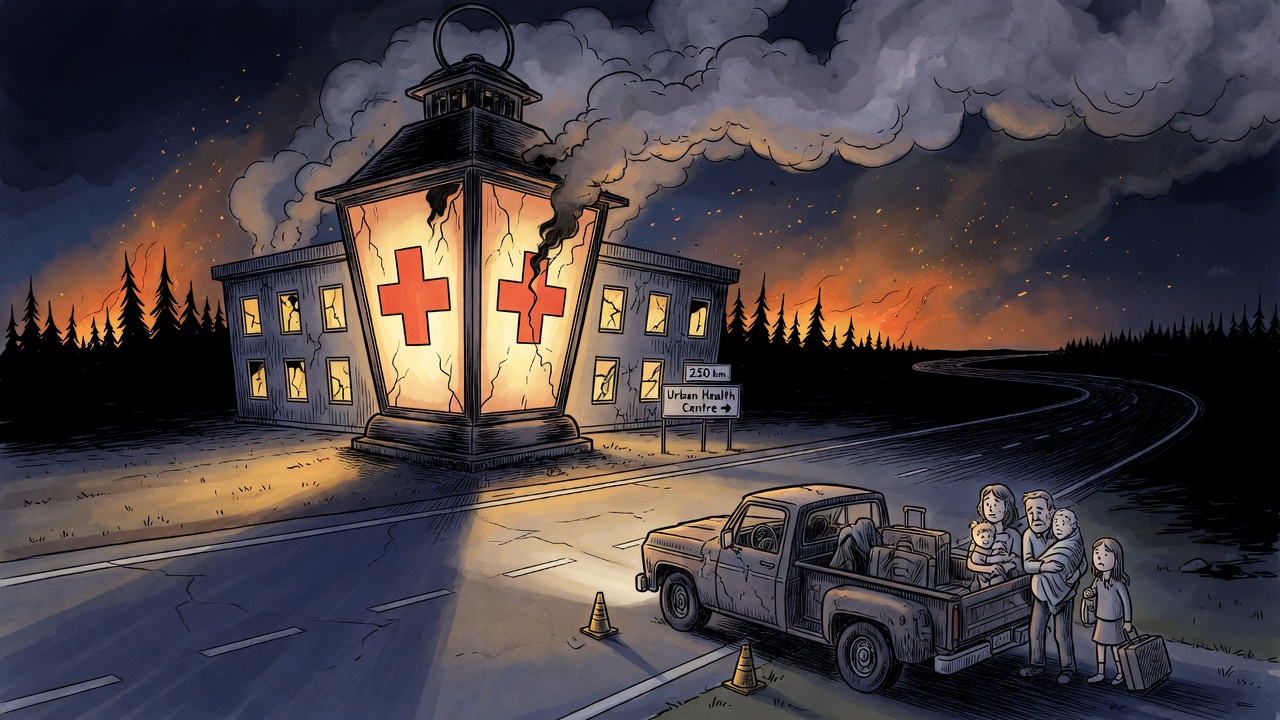
The emergency room at 100 Mile District General Hospital is back in the closure ledger. Castanet reported that Interior Health advised residents the emergency department would be unavailable from 7 a.m. to 8 p.m. on Monday, Aug. 24, sending patients needing emergency care to Cariboo Memorial Hospital in Williams Lake while other inpatient services continued at 100 Mile House.
The number matters. Castanet described the Monday disruption as the 38th closure at the 100 Mile House facility this year, following another closure from Friday night into Saturday morning. Earlier this month, Global News reported the site had already reached 36 closures in 2026, compared with 27 in 2025. In other words, after the warnings became public, the count kept rising.
This is the part that should concern every rural community in B.C. Global reported on Aug. 7 that patients were being directed to Williams Lake, about 95 kilometres away. Mayor Maureen Pinkney told Global that no time is a good time for an ER closure, and noted the local service-area population can rise from about 20,000 to 40,000 in summer.
Those are not abstract numbers. The same Global report described wildfire conditions and smoky travel routes in the region. Pinkney warned that the drive to Williams Lake is about an hour in good road and weather conditions, and that closures, smoke or detours can make the trip harder. For a family facing chest pain, a crash, a serious infection or a child in distress, “go somewhere else” is not a health-care plan. It is a risk transfer from the system to the patient.
Interior Health is responsible for making safe operational calls when staffing is not available. Nobody should want an emergency department open without the people needed to run it safely. But that does not absolve the provincial government of accountability. The public question is not whether one Monday notice was necessary. The question is why a rural ER can hit 38 temporary closures in one year while residents are repeatedly told to travel a long highway for emergency care.
Premier David Eby’s government often speaks about recruitment, training seats and health-care rebuilding. Rural residents are entitled to measure those promises against open doors, not announcements. If 100 Mile House can move from 36 closures to 38 after the community’s wildfire-season concerns were already laid out, the province should stop treating each interruption like an isolated bulletin.
B.C. needs a public rural ER stabilization plan that names the communities, counts the closure hours, identifies the missing shifts, explains what recruitment tools are being used, and sets measurable timelines for reliable coverage. Residents of 100 Mile House should not have to keep a running tally to prove the obvious: emergency care that closes again and again is not emergency care people can count on.