Hudson’s Hope Lost Its ER Again. One Part-Time Doctor Is Not a Rural Health Plan.
Another temporary closure shows the gap between Victoria’s health-care promises and rural emergency access on the ground.
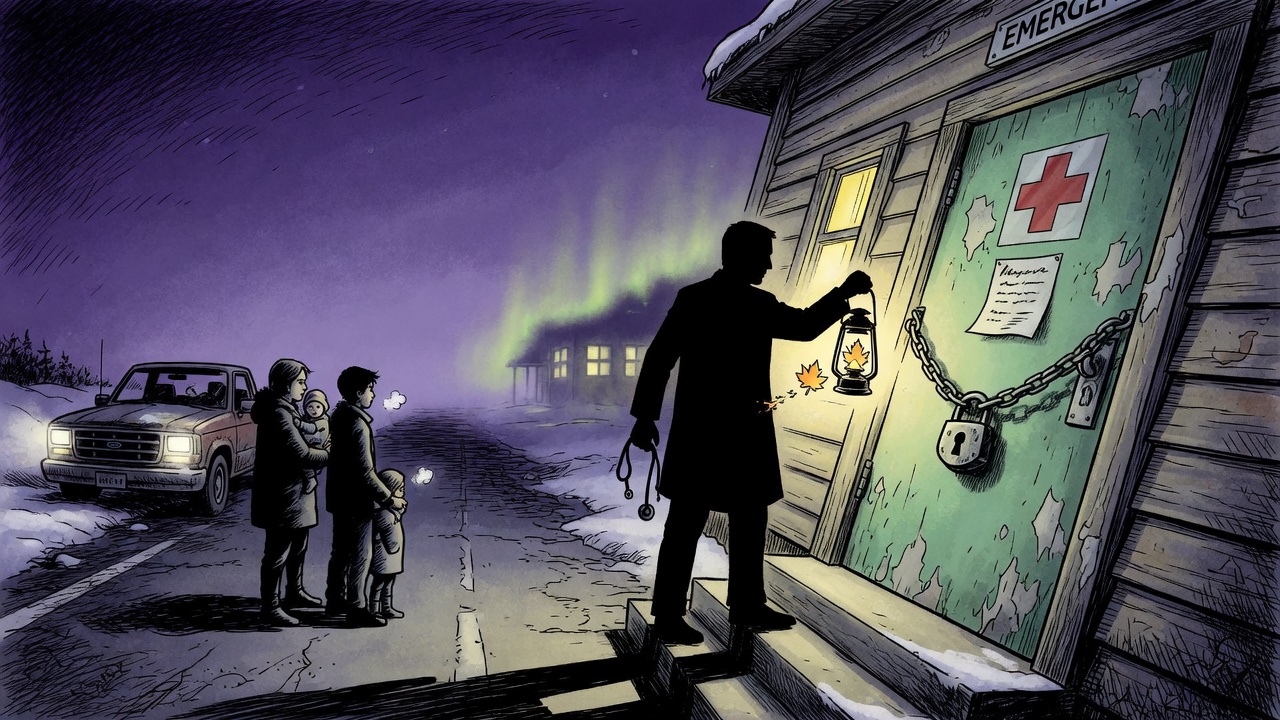
Hudson’s Hope has become a test of whether B.C.’s government can keep basic rural emergency care from blinking on and off like a weather-dependent service. On Friday, CJDC reported that the emergency department at Hudson’s Hope Health Centre had been temporarily closed again, with Northern Health indicating it would reopen Monday at 8:30 a.m.
The official explanation is painfully familiar. CJDC says Northern Health has previously linked Hudson’s Hope interruptions to difficulty maintaining physician coverage, and that the health authority has said the community is being served by just one part-time physician while recruitment continues. Read that again: a northern community’s emergency access is being balanced on one part-time doctor.
This is not a one-off inconvenience. CJDC described the latest closure as another disruption in a community that has faced repeated emergency-department shutdowns throughout 2026. Energeticcity reported in July that Hudson’s Hope’s emergency department was unavailable for the rest of that month, with services expected to resume Aug. 4, after another July interruption. Earlier reporting also pointed to staffing challenges and residents being told to call 911 or seek the nearest available emergency department during closures.
For people in Victoria, “nearest available emergency department” can sound like a tidy fallback. In rural B.C., it can mean distance, winter roads, wildfire season, delayed transport, and families making frightening decisions while a local ER door is shut. Northern Health is right to avoid operating an emergency department without safe staffing. But that only sharpens the accountability question: why is safe staffing still so fragile after years of provincial promises to repair health care?
Premier David Eby’s government often talks about recruitment, new training seats and health-system rebuilding. Those efforts matter. But rural residents are entitled to judge the plan by what happens when someone has chest pain, a farm injury, a crash, or a child in respiratory distress. If the local answer is “call 911 and hope the next available hospital can take you,” then the system has not been stabilized where it counts.
The province should publish a plain rural ER staffing ledger: how many closure hours each community has faced in 2026, how many physician shifts went unfilled, what recruitment incentives were offered, what worked, what failed, and when each site is expected to have reliable coverage. Communities such as Hudson’s Hope should not have to piece together their health-care reality from recurring closure notices.
No one should pretend a doctor shortage can be solved overnight. But it is fair to expect honesty, timelines and measurable results. A rural emergency room that repeatedly disappears from the map is not merely a Northern Health operations problem. It is the clearest possible measure of whether the NDP’s health-care promises are reaching the people farthest from the press conference.