Eby Can Toast Free Trade — Or Turn It Into Another Liquor-Board Toll Booth
B.C. wineries do not need another press-conference promise. They need direct-to-consumer rules that actually let small producers sell across Canada without a new maze of provincial fees, markups and paperwork.
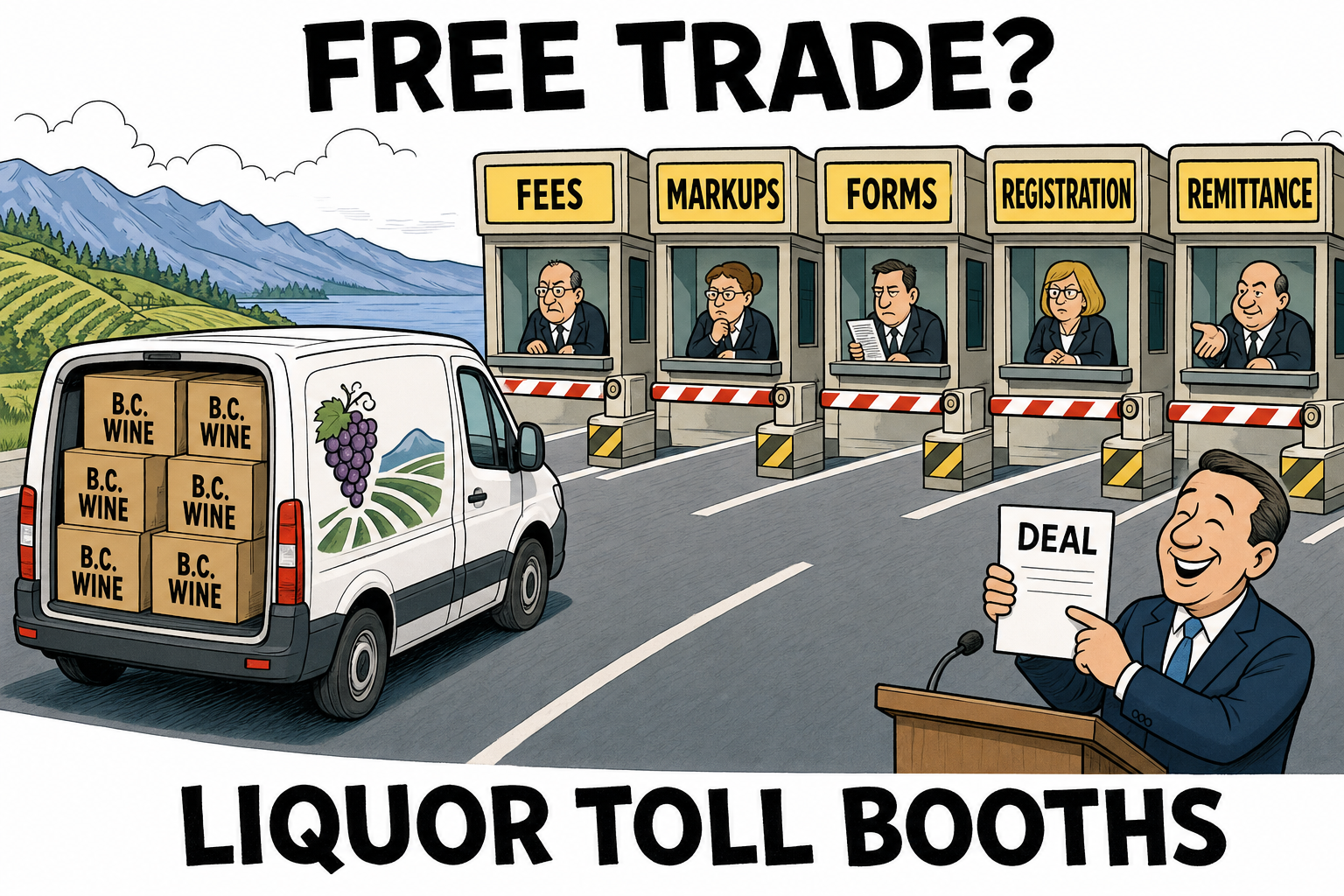
Business in Vancouver’s Aug. 17 RSS feed carried the blunt headline: “Premiers’ alcohol deal may add red tape for B.C. wine.” That is the right warning. A free-trade announcement means little if the implementation turns into nine different permission slips, nine different reporting systems and another round of liquor-board charges.
The underlying agreement is real. The Canadian Free Trade Agreement site says premiers signed a July 21, 2026 agreement to implement direct-to-consumer alcohol sales. Wine Growers Canada says the premiers of Alberta, British Columbia, Saskatchewan, Manitoba, Ontario, New Brunswick, Nova Scotia, Prince Edward Island and Newfoundland and Labrador signed it. For B.C. wineries, that should be good news: sell directly to Canadian consumers, build rural tourism relationships and keep more margin in the hands of the people growing grapes, bottling wine and hiring local staff.
But Wine Growers British Columbia’s response shows why Victoria cannot declare victory. The association welcomed the framework, then immediately warned that participating provinces still have to decide how they will implement it. It says governments may adopt separate registration, authorization, reporting and remittance requirements, and that the agreement allows provinces to impose liquor-board markups, fees and other charges on direct shipments.
That is not a small footnote. It is the accountability test. If direct shipping is covered in markups and compliance hurdles, small B.C. wineries will not experience free trade; they will experience a more complicated version of the same controlled market. A large producer can absorb consultants, remittance calendars and province-by-province compliance. A family winery in the Okanagan, Similkameen, Vancouver Island, Fraser Valley or Gulf Islands may simply decide the new channel is not worth the administrative cost.
B.C. already has a practical benchmark. Wine Growers BC says B.C. allows Canadian wineries to ship wine directly to B.C. consumers, and that B.C. has committed to extending that approach to all beverage-alcohol categories by February 2027. That standard should guide Premier David Eby’s government now: preserve existing access, insist on reciprocity, and do not let the Liquor Distribution Branch or any other provincial system turn direct sales into another revenue trap.
The stakes are broader than one industry press release. Wine Growers BC says B.C. wine contributes about $3.75 billion annually, more than $440 million in federal and provincial tax revenue, and more than 14,000 full-time jobs. Those numbers are rooted in farms, tasting rooms, restaurants, trucking, hospitality and rural main streets. After years of wildfire, smoke, tourism disruption and cost pressure, B.C. producers deserve a government that removes barriers instead of renaming them.
The NDP should answer plainly: will B.C. support a national direct-to-consumer system with no duplicate registration maze, no new liquor-board markup on direct shipments, no hidden handling charge, and clear mutual recognition for approved Canadian producers? If the answer is yes, say it publicly. If the answer is no, then the “free trade” toast is premature.
Sources and records
- Business in Vancouver RSS feed, Aug. 17, 2026 item: “Premiers’ alcohol deal may add red tape for B.C. wine”
- Wine Growers British Columbia: Premiers Open the Door to Direct Wine Sales. Now Governments Must Finish the Job
- Canadian Free Trade Agreement: Trade in Alcoholic Beverages
- Wine Growers Canada: Canadian wine industry welcomes direct-to-consumer alcohol sales agreement