Eby’s Deficit Leaves B.C. Planning for Disasters, Not Preventing Them
The warning is not abstract. Canada says adaptation work must accelerate, Postmedia reports B.C. prevention funding is stuck, and the province is carrying a deficit that leaves communities exposed.
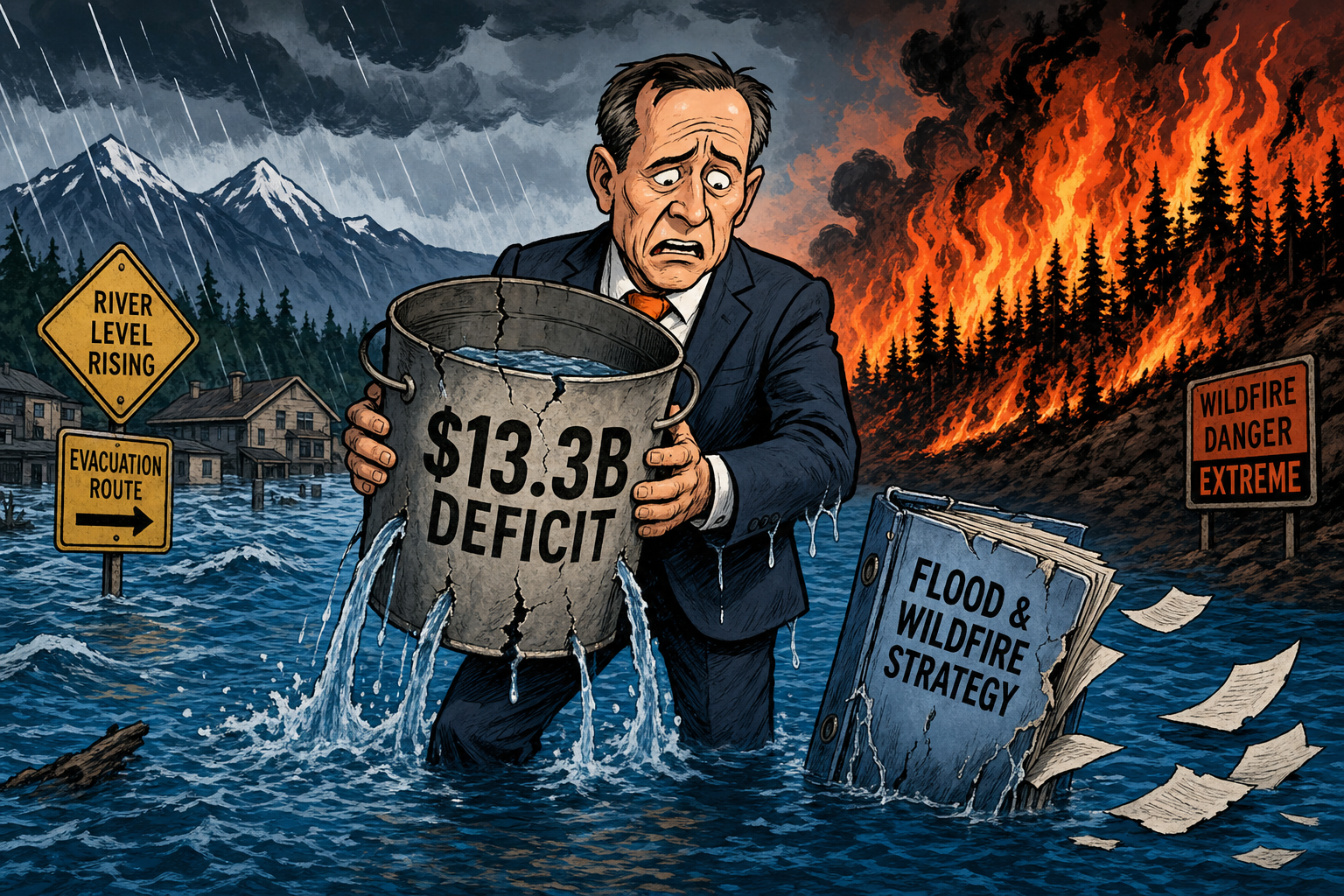
The Vancouver Sun’s Aug. 17 report should make Victoria uncomfortable. Canada’s own climate-adaptation update says risk reduction is increasingly part of emergency planning, but also says current efforts must expand and accelerate to keep pace with growing impacts. That is bureaucratic language for a simple public-safety problem: planning is not the same as protection.
The newspaper reported that the new federal progress report points to adaptation spending through the Green Municipal Fund, with $530 million set aside over six years. But its review of B.C. spending found money going to climate planning and emissions reduction, and “no major initiatives” to reduce wildfire or flooding risks. For communities that have watched smoke, evacuation alerts and flood maps become routine, that distinction matters.
Dylan Kruger, a Delta councillor and former chair of a Metro Vancouver flood task force, told the Sun that after B.C.’s extreme 2021 flood and wildfire seasons, not enough has been done to identify priority risk areas and properly fund wildfire, flood and drought protection. His verdict was blunt: plenty of words and commitments, then a bunch of nothing.
That is where Premier David Eby’s fiscal record meets the emergency file. The Sun reported that B.C. ministers Kelly Greene and Randene Neill told Metro Vancouver representatives in September there would be no new funding for B.C.’s flood strategy because of the province’s tight fiscal position. The same story noted the projected deficit for the fiscal year ending in March 2027 is $13.3 billion.
This is not an argument against climate adaptation. It is an argument for measurable adaptation instead of announcements that do not harden a dike, clear a fuel break, protect a neighbourhood or move a road out of a floodplain. The federal report itself says further implementation is required and warns that gaps remain between planning and implementation, with uneven capacity and access to tools and resources across regions and communities.
B.C. has already paid the price for underestimating these risks. The Sun reported more than 950 fires had started this year, burning nearly 4,200 square kilometres, and said more than 20,000 people had to evacuate as wildfires destroyed homes and buildings in the southern Interior. It also pointed back to the 2021 floods, when torrential rains caused billions of dollars in damage to homes, farms, roads, bridges, railways and pipelines.
The NDP owes British Columbians a ranked prevention list: which flood corridors, wildfire-interface zones, drought risks and critical transport routes are first in line, what each project costs, what has funding, and what has been delayed by the deficit. Without that ledger, “strategy” is just a binder on a shelf while local governments wait for the next emergency order.