Palantir’s B.C. Health-System Lobbying Shows Why Patient-Data Guardrails Must Be Public
The registry does not prove a contract. It does prove B.C.’s health system was on the lobbying target list for data analytics and potential provincial procurement.
B.C.’s Lobbyists Registry identifies the organization as Palantir Technologies Canada Inc., with Sameer Vadera listed as president, an initial registration start date of December 3, 2021, and a current registration status of inactive. The file describes the company’s activities as providing data integration and analytics software.
The health-system entry is direct. The registry says Palantir identified areas where the company’s capabilities and experience in “improving patient care while optimizing limited health system resources” matched the needs and objectives of the B.C. public health system. The intended outcome attached to that subject matter was the awarding, amendment or termination of a contract, grant or financial benefit by or on behalf of the B.C. government or a provincial entity.
That does not establish that Palantir received a B.C. health contract. It does not establish that any patient record was shared. It does establish that B.C.’s health system and health authorities were named in an official lobbying registration tied to potential public-sector procurement. For a government already asking British Columbians to trust massive digital systems with sensitive information, that is enough to require clear answers.
The named public bodies include the Ministry of Health, Fraser Health, Interior Health, Northern Health, Provincial Health Services Authority, Vancouver Coastal Health, Vancouver Island Health and BC Hydro. The registry also lists six lobbying activity reports. One August 30, 2022 activity names senior officials from the Ministry of Health and multiple health authorities, including executives responsible for clinical policy, digital health, pandemic response, operations and health-authority leadership.
Those titles matter because health data is not ordinary government paperwork. It can include deeply personal information about diagnoses, treatment, family circumstances, location and vulnerability. The Office of the Information and Privacy Commissioner for B.C. says FIPPA regulates the privacy practices of public bodies, including ministries and hospitals, and requires privacy management programs and reporting of breaches that might reasonably be expected to cause significant harm.
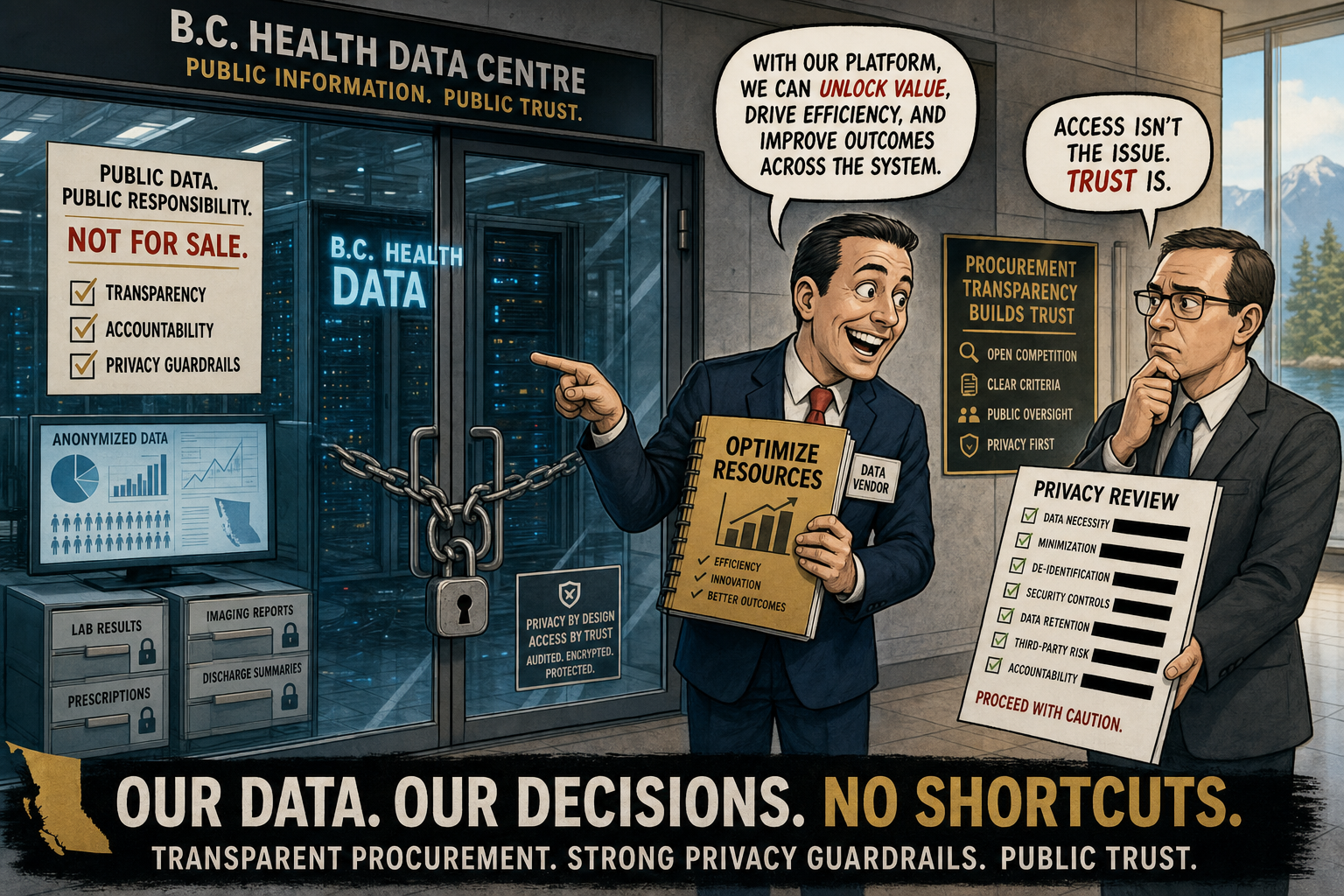
The accountability question is therefore simple: before any vendor is allowed near health-system analytics, decision support or resource-optimization work, what is the public standard? Were privacy impact assessments required? Were procurement records proactively disclosed? Were de-identification, access controls, audit logs, data residency and subcontractor rules set before meetings advanced? If officials rejected the pitch, that should be easy to say. If discussions continued, the guardrails should be visible.
David Eby’s government cannot ask for trust while leaving the health-data procurement ledger opaque. The public does not need slogans about innovation. It needs documented safeguards, clear contract records, and an assurance that patient privacy is not an afterthought in a sales conversation about optimizing scarce health resources.