B.C.’s FOI Watchdog Found the Transparency Gap the NDP Still Hasn’t Closed
After the Bill 9 backlash, the independent commissioner says B.C. still lacks basic public data on whether FOI is working.
Update — July 29, 2026
Current status: this remains an FOI accountability watch. July 29 review did not find a newer OIPC metrics report displacing the June 24 warning; Bill 9-related wording should be read as a legislative/status watch rather than proof that every proposed change has taken final legal effect.
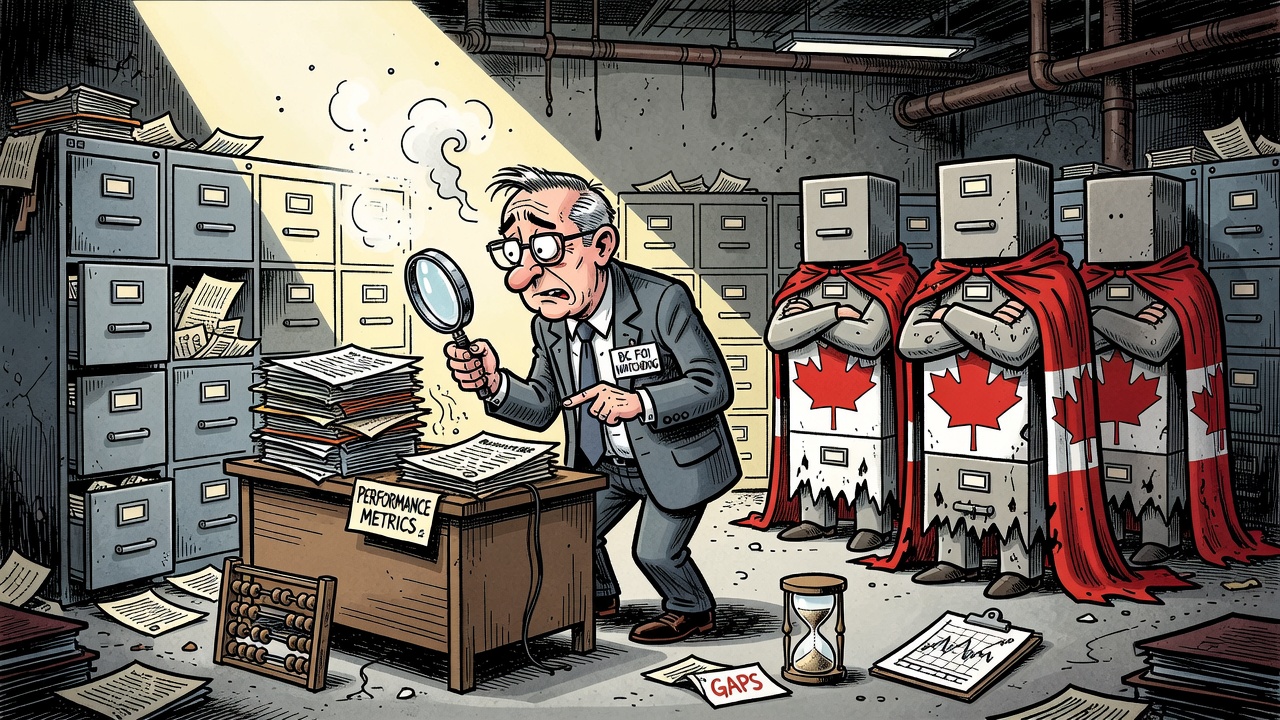
B.C. cannot fix a transparency system it refuses to measure.
B.C.’s independent privacy watchdog has delivered a simple warning to David Eby’s government: freedom-of-information accountability still has a hole in the middle of it.
On June 24, Information and Privacy Commissioner Michael Harvey called on the province to require public bodies to track and report FOI performance metrics. His office said a new report found gaps in FOI accountability across British Columbia. The point is not abstract. If the public cannot see how quickly agencies respond, how often deadlines are met, how many records are processed, how extensions and fees are used, and how many staff are assigned, voters cannot tell whether the system is improving or being quietly starved.
Harvey put the problem bluntly in his release, saying it is hard to improve on a question mark. That is the line the NDP should be forced to answer. After years of promises about openness, and after this year’s Bill 9 fight over FOI changes, B.C. still does not have mandatory, consistent, public reporting for more than 2,900 public bodies.
The commissioner’s research found 32 national and subnational jurisdictions outside B.C. that require public bodies to track and report FOI statistics. Thirty of those 32 have requirements embedded in legislation. B.C., by contrast, has no equivalent requirement across its broader public sector.
In a June 23 letter to Citizens’ Services Minister Diana Gibson, Harvey said his office’s pilot test revealed significant gaps in FOI data collection across B.C. public bodies. He warned that, without a legislative foundation and standardized tracking practices, public bodies are unlikely to consistently record or report the information needed to judge the health of FOI.
This is where the politics matter. Earlier this year, the NDP defended Bill 9 as an improvement to the FOI system while critics argued it gave public bodies more power to delay or deny access. Separately, theBreaker reported this spring that the government’s Open Information system had stopped publishing current top-official calendars and no-bid contract lists during a technology transition, with the latest available records then from December 2025.
The commissioner is not accusing the government of a cover-up. His finding is narrower, and that makes it harder to dismiss: B.C. lacks the basic measurement rules that would let citizens, journalists, MLAs and the OIPC compare performance across agencies and over time.
If Eby’s government believes its FOI system is working, it should publish the scoreboard. Mandatory metrics would not solve every secrecy fight. But refusing to require them leaves British Columbians with slogans, anecdotes and delays where public accountability should be.
The NDP’s transparency test is now straightforward: amend FIPPA, require consistent FOI reporting, and let the public see whether the system is serving citizens or protecting government from scrutiny.
Sources and records
- Office of the Information and Privacy Commissioner for B.C., June 24, 2026: Commissioner calls for mandatory reporting of public body FOI metrics
- OIPC letter to Citizens’ Services Minister Diana Gibson, June 23, 2026
- OIPC investigation and audit reports page: Collecting and Reporting Public Body FOI Metrics
- theBreaker.news, spring 2026: David Eby’s NDP and Open Information delays