Surrey’s Police Handoff Is Now Eby’s Governance Receipt
A permanent chief was appointed at the municipal handoff. Surrey residents deserve the full public-safety ledger, not another closed-door transition fight.
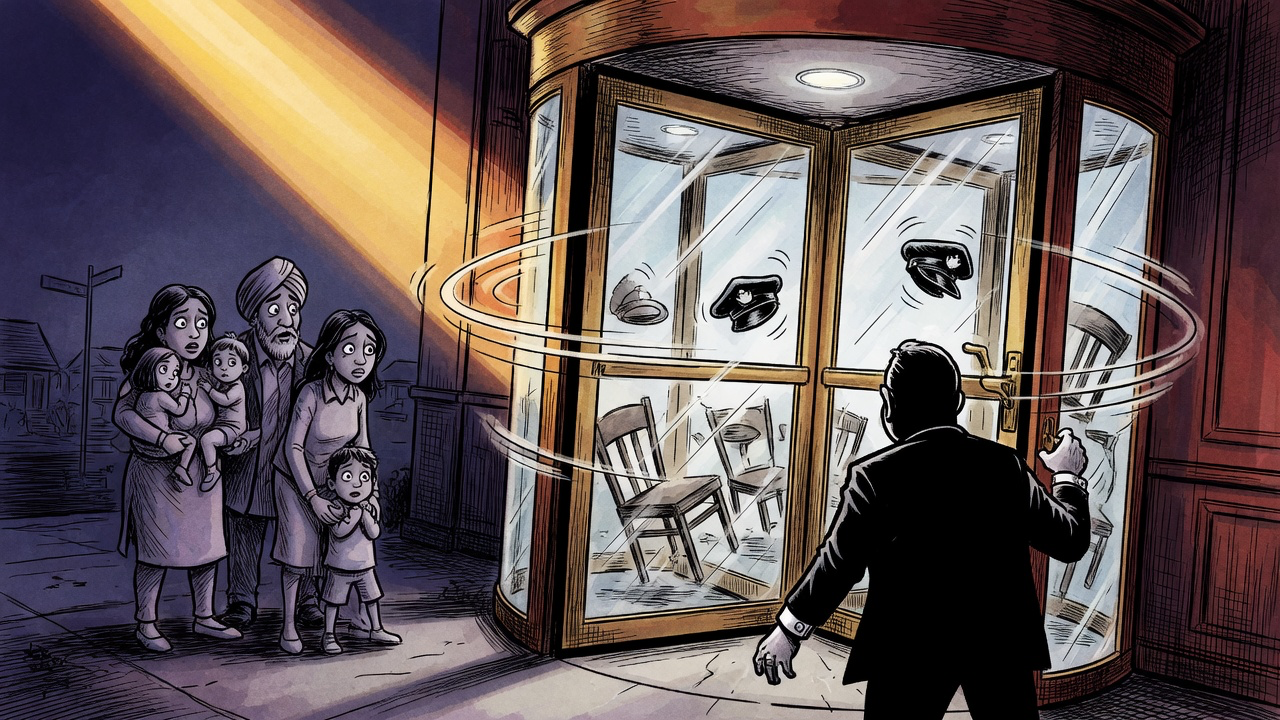
Surrey’s policing transition has produced another governance receipt. On October 30, the Surrey Police Board appointed Todd Matsumoto as permanent chief constable of Surrey Police Service, effective immediately. The board said the decision followed a national search led by an executive search firm, with community and stakeholder engagement.
Matsumoto may be qualified. The board says he has more than three decades of municipal-policing and public-safety experience, and the Surrey Police Union publicly supported the appointment. That is not the problem.
The problem is timing, process and accountability. The appointment landed days before mayor-elect Doug McCallum was to assume office with a new council. The Times Colonist reported that McCallum criticized the timing, called for the appointment to be reversed, and urged the province to remove the current police board and appoint a new one through a public process. Those are political claims, not court findings, but they underline the civic problem: a permanent appointment was made at the edge of a democratic handoff.
This did not come out of nowhere. In June, the police board announced that founding chief Norm Lipinski had left SPS and that Matsumoto would serve as interim chief. The same Times Colonist report says Lipinski later filed a B.C. Supreme Court petition alleging his termination was unlawful and politically motivated; the allegations have not been tested in court. That alone should have made public explanation, minutes and appointment rationale more important, not less.
Then there is the provincial layer. In February, CityNews reported Premier David Eby’s response to the south-of-Fraser extortion crisis included allowing provincial Surrey Police Board appointments to lapse, with vacancies to be filled only by mutual agreement between the mayor’s office and the provincial government through the public-safety minister. Days later, an SPS statement said Eby had announced the lapse of four board appointments as part of the government’s extortion-crisis response, while defending the outgoing directors’ community credentials and board work.
CityNews also reported on February 19 that the province created an extortion advisory group while denying SPS’s request to delay the next RCMP-transition phase. Then-chief Lipinski said more than 40 SPS officers had been redeployed to specialized investigative teams for extortion-related work, and the Director of Policing and Law Enforcement Services instructed SPS to assume Cloverdale responsibility by April 1.
Put the pieces together: provincial board intervention, an extortion crisis, a denied transition delay, a chief out in June, and a permanent chief appointed at the municipal changeover. That is not a clean accountability chain. It is a public-safety file run through overlapping political, provincial and board decisions.
Surrey residents do not need another round of slogans over RCMP versus SPS. They need a public dashboard: transition costs, staffing levels, vacancies, redeployments, response metrics, board minutes, search criteria and the appointment rationale. If the appointment was the right call, the record should be able to stand in daylight.
Eby’s government touched this file repeatedly. It cannot now pretend the handoff mess belongs to someone else.
Sources and records
- Surrey Police Board / SPS: Todd Matsumoto appointed Chief Constable
- Surrey Police Board: June leadership transition
- SPS statement: police-board appointments
- CityNews: Eby’s February extortion-crisis response and board changes
- CityNews: extortion advisory group and denied transition-delay request
- Times Colonist: McCallum criticism of Matsumoto appointment timing