Crown Land, Private Gate: The Access Questions the NDP Left Behind
This is not an anti-reconciliation argument. It is a pro-disclosure one: parcel maps, access rules, tenure impacts and compensation terms belong in public view.
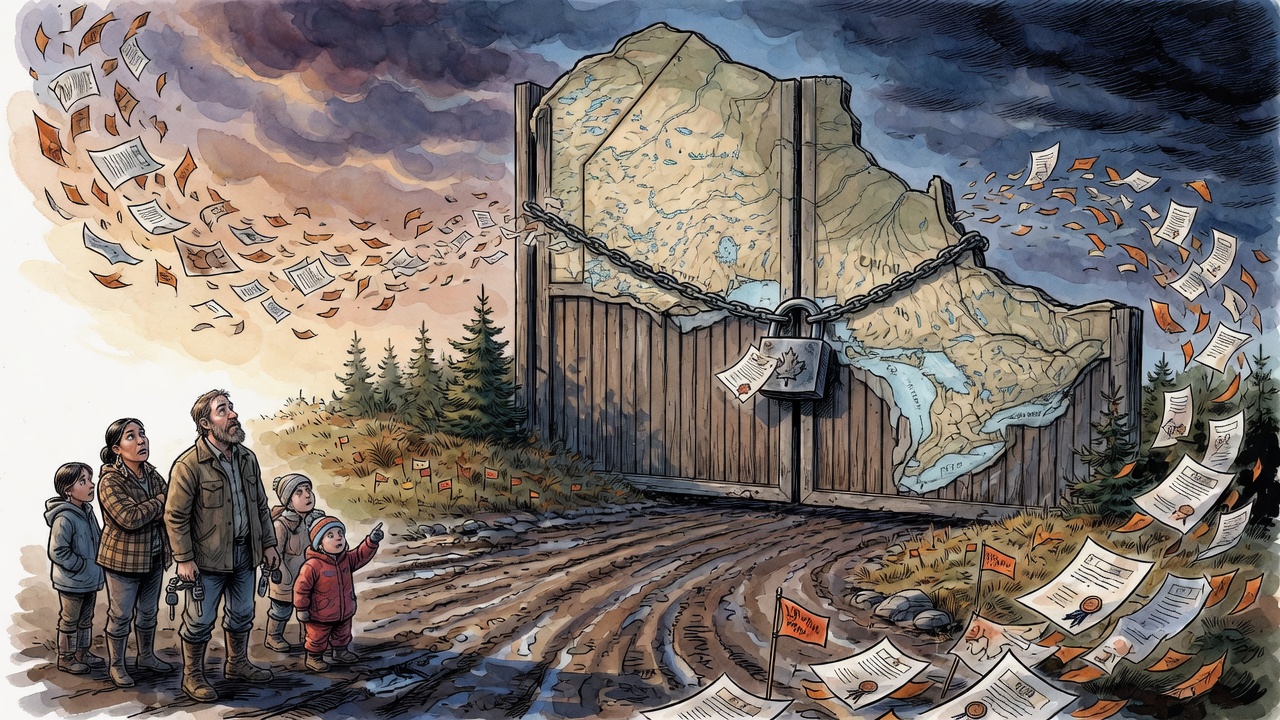
The NDP spent years telling British Columbians to trust the process on Crown land, DRIPA and reconciliation. The public record now says the next government inherits a very practical question: when public Crown land becomes private or reserve land, who still gets access, on what terms, and where is that written down before the transfer happens?
The Province’s Treaty 8 land-transfer engagement page is clear about the basic mechanics. B.C. is transferring Crown lands in northeast B.C. under Treaty Land Entitlement settlements and Site C Tripartite Lands Agreements. The page says proposed parcels are selected from Crown lands, not privately owned fee-simple lands, and says private fee-simple property rights are protected through the process. That distinction matters and should not be blurred.
But the same official page also gives the accountability line: after a transfer is complete, access to the land will require permission from the respective First Nation, because the lands will be private or federal reserve lands. The Province says it works with First Nations to help ensure reasonable public access through or around transferred parcels, and that key routes such as highways, Forest Service Roads and access to surrounding Crown lands are reviewed and may be excluded where appropriate.
That is exactly why disclosure matters. “May be excluded where appropriate” is not the same as a public ledger showing which roads, trails, tenures, recreation routes, grazing interests or forestry licences are affected parcel by parcel. In June, the Province said 14 parcels had already been successfully transferred under Treaty Land Entitlement and Site C agreements, with more expected in 2026 and 2027. It also invited public comment on 13 additional West Moberly First Nations parcels.
The political controversy is separate but relevant. Global News reported that confidential documents obtained by Northern Beat described a proposed change to compensation rules for some of roughly 400 Crown-land parcels being transferred to First Nations ownership. Global reported the BC NDP said cabinet had not approved legislation and had authorized engagement on options for potential legislation, focused on compensation in limited cases where transfers affect land with tenure licences. Global also reported forestry companies were briefed under non-disclosure agreements, the policy was not in the NDP platform, and the plan was put on hold when the election was called.
Those are reported claims and government responses, not proof of wrongdoing. But they are enough to demand sunlight. Eby defended the transfers as treaty and reconciliation obligations and said the proposal was about reducing costs for taxpayers. Critics called the secrecy disturbing. The fair test is simple: publish the maps, tenure impacts, access rules and compensation framework before more land leaves the public ledger. Reconciliation is stronger when British Columbians can see the terms.