Valemount’s Sawmill Is Waiting for Freeze-Up. That Is the Forestry Ledger.
This is not a permanent closure claim. It is a small-town warning about how fragile value-added forestry becomes when fibre access and mill economics are left to the weather.
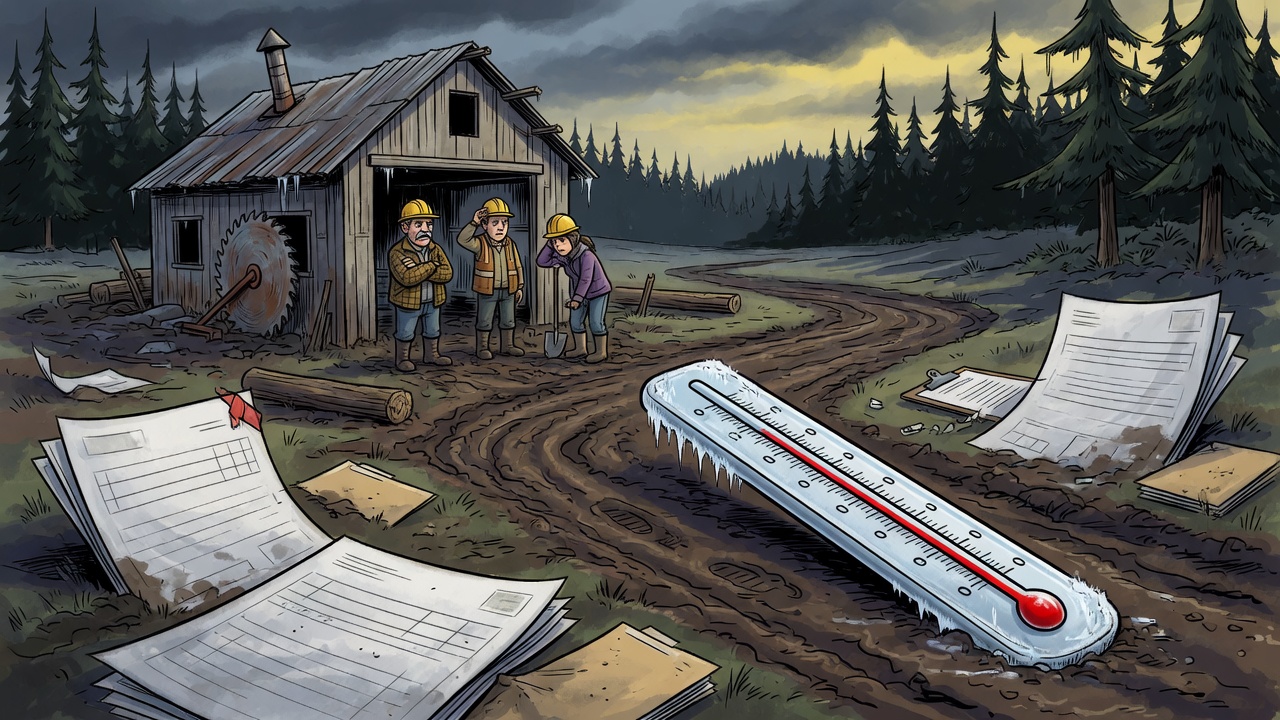
Valemount’s latest forestry story is not a grand announcement from Victoria. It is a small sawmill waiting for the ground to freeze.
The Rocky Mountain Goat reported October 23 that Valemount Specialty Mill had entered a temporary closure expected by mill manager Andy Hubbell to last about two months, depending on weather. The reason was blunt: the ground was too soft for trucks to reach the timber the mill needs. The last timber was cut October 8, and the mill hopes freeze-up will let crews reach hemlock in December.
That detail matters because this is exactly the kind of value-added, local-employment forestry model governments love to praise. Valemount Specialty Mill says it is a subsidiary of the community-run Valemount Industrial Park, provides local employment, uses locally sourced raw materials, and mills species including Douglas fir, hemlock, western red cedar, pine and spruce. In other words, this is not a distant corporate abstraction. It is the sort of rural operation that turns local fibre into local work.
The careful point is also the hard point: the current pause is described as seasonal and weather-dependent, not as a permanent shutdown. But the timing lands on top of a wider viability question. In September, The Goat reported that the Valemount Industrial Park board had set its October 22 meeting as the target for actual production, cost and revenue figures to determine whether the sawmill was selling lumber profitably or continuing to operate at a loss. The board was told improvements in equipment, production, log supply and sales interest still did not settle the central question: whether lumber revenue covers production costs.
That is the ledger the NDP leaves behind in forestry towns. Press releases can talk about innovation, value-added wood and rural diversification. A mill manager still has to find accessible fibre, get trucks to it, keep saws running, cover labour and equipment costs, and sell lumber at a price that pays the bills. When one link breaks, the whole community model feels it.
The Lesprom Network, citing The Goat, described the Valemount operation as a publicly owned mill and reported that it had run out of hemlock in mid-September before sawing its last logs on October 8. It also noted the board was preparing to review financial performance while questions remained about profitability. That is not a partisan slogan. It is a local balance sheet meeting a muddy road.
B.C. needs a forestry policy that can survive outside Vancouver podium lines. If small specialty mills are supposed to be part of the answer after years of NDP forestry disruption, then the public deserves more than another fibre-plan headline. It deserves a clear accounting of whether community mills can get logs when they need them, process them affordably, and keep local jobs attached to local forests.
Valemount’s sawmill may restart when winter does its work. The accountability question is why rural forestry keeps having to wait for the weather to do what policy promised to deliver.