DRIPA Repeal Just Moved from Protest Issue to Government Agenda
The NDP made DRIPA part of the governing architecture. Voters have now handed power to a party that campaigned on taking it apart.
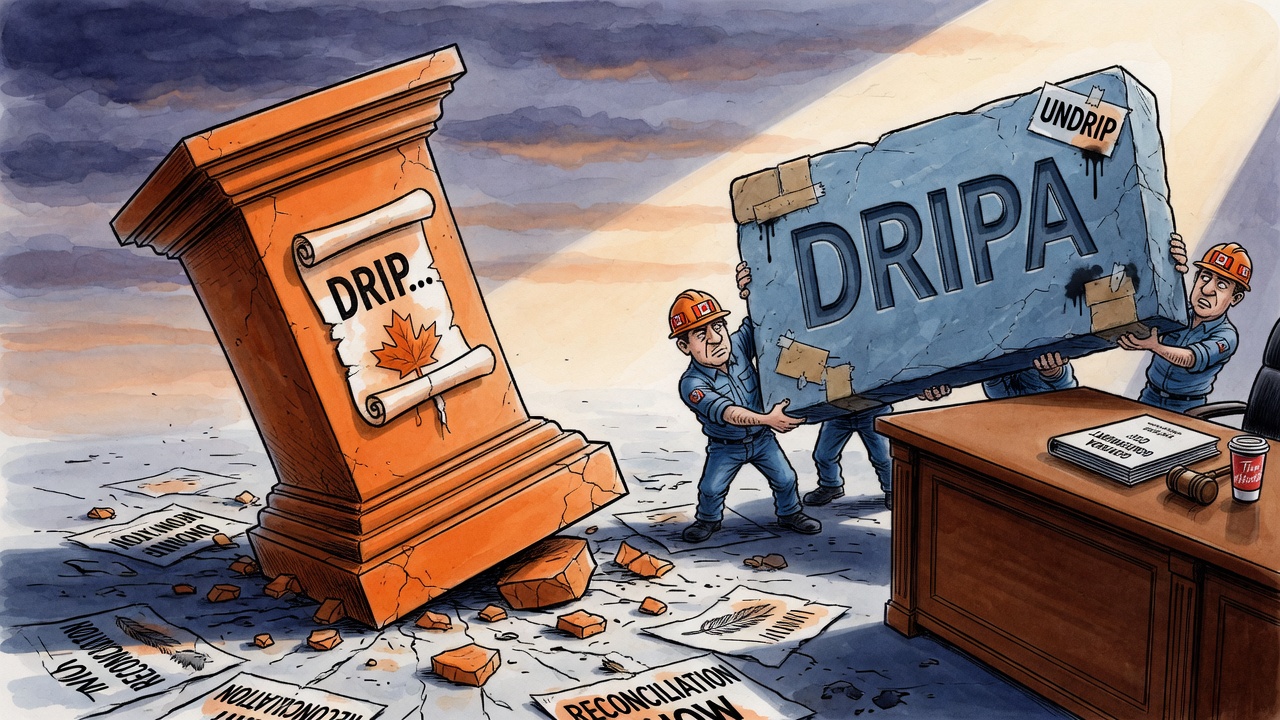
For years, David Eby’s NDP treated the Declaration on the Rights of Indigenous Peoples Act as a one-way ratchet: align provincial law, expand implementation machinery, and tell British Columbians to trust the process. The election result changes the question. DRIPA repeal is no longer only a protest sign, a town-hall demand, or an opposition talking point. It is now attached to the agenda of an incoming majority government.
The Conservative BC plan page is titled “Repeal DRIPA, Promote Economic Reconciliation.” It argues that DRIPA has not produced the certainty it promised and says the party wants a different model built around economic partnerships with First Nations. That is a campaign claim and a governing promise; it still has to be tested in legislation, consultation, and the courts. But the political shift is real.
Elections BC’s preliminary party report shows why the NDP cannot wave this away as a fringe complaint. As of the October 25, 5:04 p.m. snapshot, Conservatives had 862,317 votes, 48.05 per cent of the province-wide vote, and 63 districts leading or elected. The BC NDP sat at 28 districts. Those results are still preliminary until the official process is complete, but they are enough to show the mandate question has moved.
Global News reported that premier-designate Lorne Doerkson said British Columbians chose change and that his focus would be to supercharge the economy. The same report said he remained firm when asked about repealing DRIPA, while also saying he was committed to working with First Nations. That distinction matters: repeal of a provincial statute would not erase Aboriginal rights, title, treaty rights, or section 35 of the Constitution. It would, however, mark a major reversal of the NDP’s chosen framework for aligning B.C. law with the UN Declaration.
The NDP’s problem is that it spent years asking the public to accept sweeping legal and administrative change while concerns about land, permitting, project certainty, housing, forestry, and private-property anxiety kept building. Some of those concerns were precise; some were overstated. Either way, the NDP never won broad enough public confidence to keep DRIPA politically untouchable.
The serious path now is not chest-thumping. It is receipts. British Columbians deserve to see exactly what the incoming government proposes to repeal, what replaces it, how First Nations are consulted, how constitutional rights are respected, and how ordinary citizens get clearer rules than they received under the NDP.
That is the accountability line Eby’s government left behind: if DRIPA was as settled and successful as the NDP claimed, repeal would not be walking into the premier’s office with a majority mandate behind it.