Eby’s Last-Minute Election Explanation Is Its Own Accountability Problem
The premier began the snap-election pitch with Trump. By the final bus run, he was explaining voter frustration and a stalled legislature.
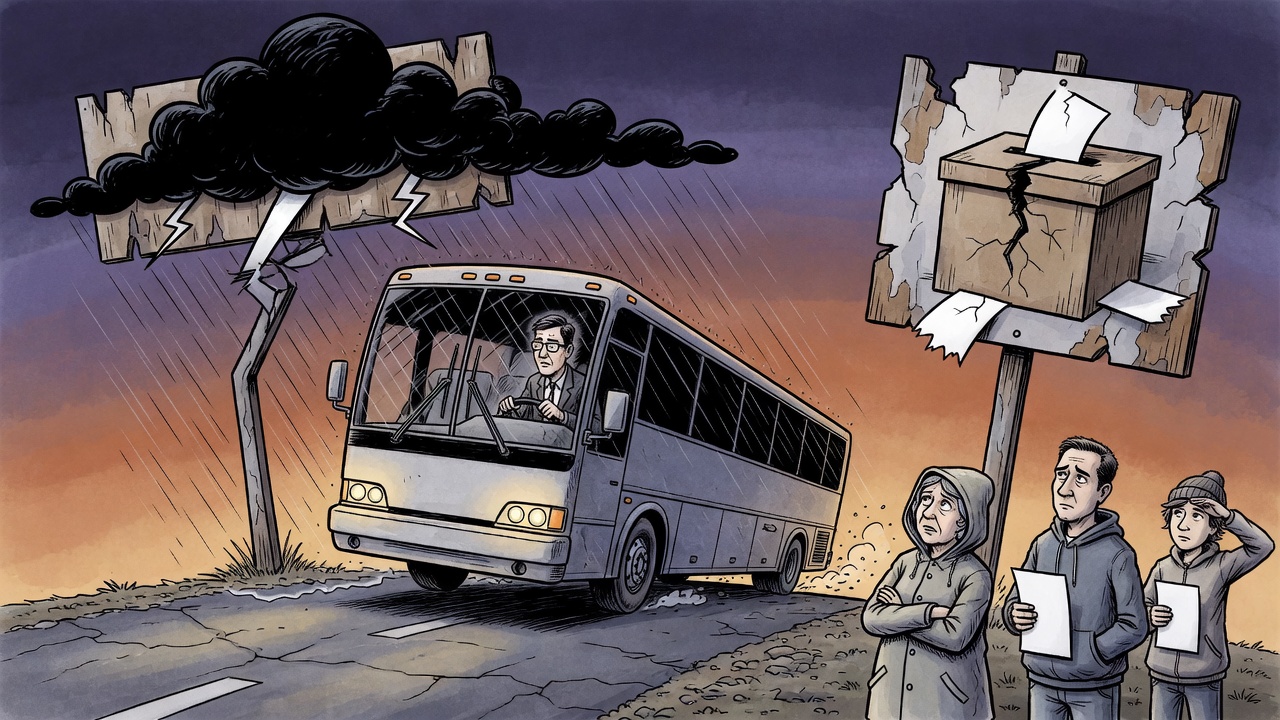
On the last full campaign day before B.C.’s October 24 vote, David Eby’s message had changed. Daily Hive joined the BC NDP campaign bus on October 23 as Eby made stops in Surrey, the Tri-Cities and Langley. The report matters because it captured the premier not only selling promises, but acknowledging the political damage caused by the early election he chose.
Eby told reporters he needed “that team of MLAs” to deliver his agenda. That is a legitimate campaign request. But it is not the same as the first public argument for the snap election. When Eby called the vote on September 22, Daily Hive reported that he leaned heavily on Donald Trump uncertainty, saying British Columbians deserved to choose whether to build on progress or put B.C. at risk by “rolling over for Donald Trump.”
The problem is the calendar and the mandate he already had. Daily Hive noted that the NDP already held a majority and that B.C. was already preparing for municipal elections. Its campaign-bus account also said the Trump argument “sounded hollow,” while cost of living ranked far higher than Trump-related concerns in an Angus Reid survey cited in the same report.
By the final bus run, Eby was admitting the explanation had not landed cleanly. Daily Hive reported that he said people were “very surprised and frustrated” by the election call and that he “should have done a better job” explaining how stalled the legislature had become after the Speaker’s appointment. He also said he can get “ahead of British Columbians” and needs to do better at bringing people along.
That admission is important, and voters do not need to treat it as a small communications mistake. A premier with a majority asked the public to vote two years early. If the reason was Trump, the connection to a provincial mandate was weak. If the reason was a stalled legislature, voters were entitled to ask why that case was not clearly made at the start. If the reason was delivery, then Eby was asking British Columbians to reward a government still carrying a $13.8-billion deficit, unresolved health-care pressure, affordability complaints and unfinished promises.
Elections BC confirmed voting places were open from 8 a.m. to 8 p.m. Pacific on October 24, with preliminary results after voting closed and some ballots counted about two weeks later. That official process belongs to voters. The accountability record belongs to Eby. He chose the timing, changed the pitch and ended the campaign explaining frustration he helped create.