Eby’s Health-Care Platform Is a Repair List, Not a Record of Repair
On election day, the NDP is still campaigning on access, staffing and wait-time fixes because the system voters use is still under visible strain.
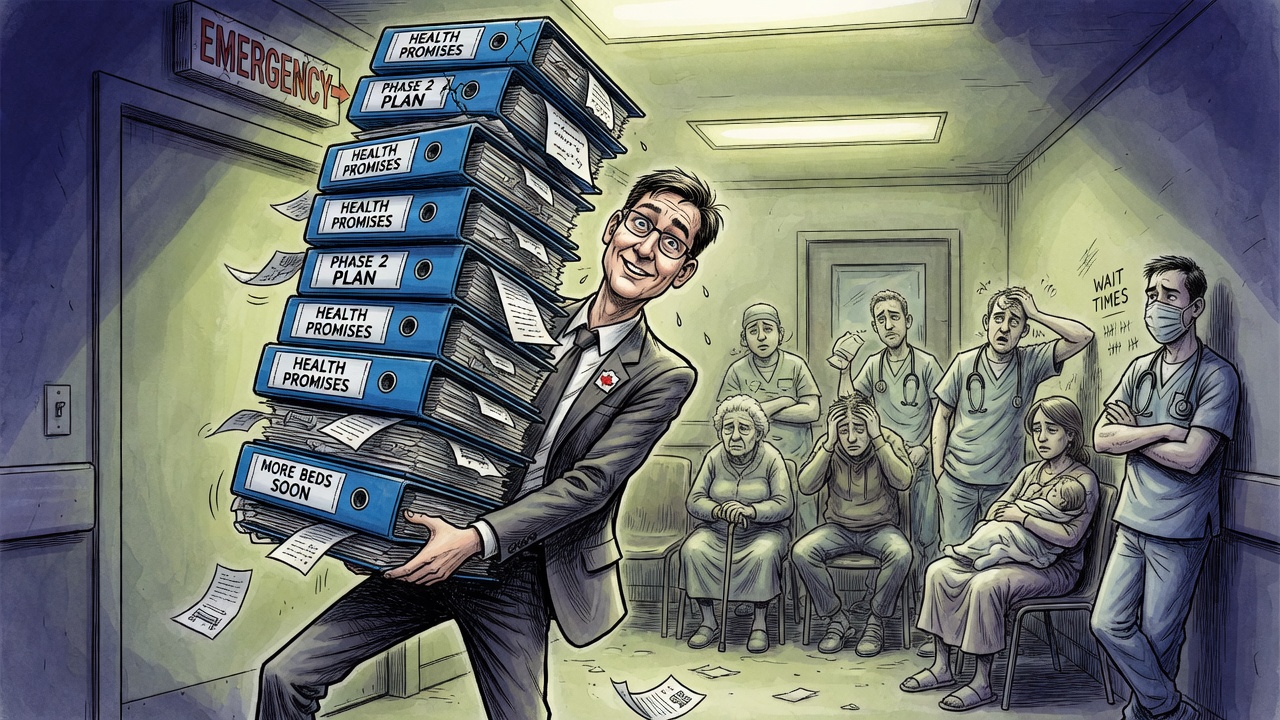
CityNews’ election-day health-care comparison begins with the part B.C. patients already know: emergency-room closures, record specialist waits, staffing shortages, rural communities left without reliable care, and more than a fifth of British Columbians without a primary-care provider. That is the context for David Eby’s latest health-care pitch.
The BC NDP’s offer is long. CityNews lists promises of no health-care cuts, 20 new primary-care clinics, a third Surrey hospital, more training capacity, rural recruitment incentives, eight MRI machines, 10 CT scanners, minimum nurse-to-patient ratios in law, Kelowna General Hospital expansion and Phase 2 of Burnaby Hospital. The NDP’s own health-care page adds 24-hour appointments through incentives, a bridging-to-practice pathway for international medical graduates, 1,000 training seats, regional surgical waitlists, referral tracking and higher taxes on top earners to fund health care.
Some of those items may be useful. But voters should not confuse a repair list with proof of repair. The same governing party is asking for more time to solve access failures that remain front and centre after years of NDP government. If the record were as strong as the campaign says, the final platform would not read so much like a triage clipboard.
The outside health voices are also not saying “mission accomplished.” CityNews quotes Canadian Centre for Policy Alternatives researcher Andrew Longhurst saying neither major party’s plan addresses the systemic issues behind many of B.C.’s health-system problems, while raising separate concerns about private surgical funding. CityNews also quotes Doctors of BC president Dr. Adam Thompson saying frontline physicians and other emergency-room professionals must be at decision-making tables to develop tangible solutions.
The BC College of Family Physicians makes the same point from the primary-care side. Its October 23 election analysis says parties are promising recruitment and expanded services, but family doctors still need retention and sustainable working conditions, physician-led team-based care, less administrative burden, connected health information, and stronger long-term support for rural and underserved communities.
That is the harder test. A new clinic announcement does not automatically produce a family doctor. A scanner purchase does not by itself fix the waitlist. A rural incentive does not prove an emergency department will stay staffed. And a referral-tracking app does not replace the specialist capacity patients are waiting for.
On voting day, Eby’s health-care platform should be read as an admission as much as a promise. The government is still selling access, staffing, diagnostics and waits because those are precisely the files British Columbians still experience as unresolved. The fair question is not whether health care is complicated. It is. The fair question is why the NDP keeps asking voters to grade the next repair plan instead of the system people are standing in today.