Eby’s Nursing Fix Still Runs Through the Costly Agency Door
The NDP says ratios are moving. Nurses say the work cannot wait. The revealing part is the government’s own admission about private agency nursing.
The strongest indictment in the nursing file is not coming from an opposition slogan. It is sitting inside the BC NDP’s own election answer to the British Columbia Nurses’ Union.
BCNU’s 2026 provincial election material says staffing shortages have put B.C.’s health-care system under immense strain. The union also says B.C. is the first province in Canada to establish minimum nurse-to-patient ratios, but its ratios page is clear that implementation is still underway and that there is still much work to be done. That matters because ratios are not a press release. They are a bedside staffing test.
The NDP response points to progress. It says more than 85% of the first wave of ratios are activated in hospitals, and that the number of nurses working in B.C. has increased by more than 4,700 since implementation began. Voters can weigh that claim. But the same answer also exposes the problem the government has not solved.
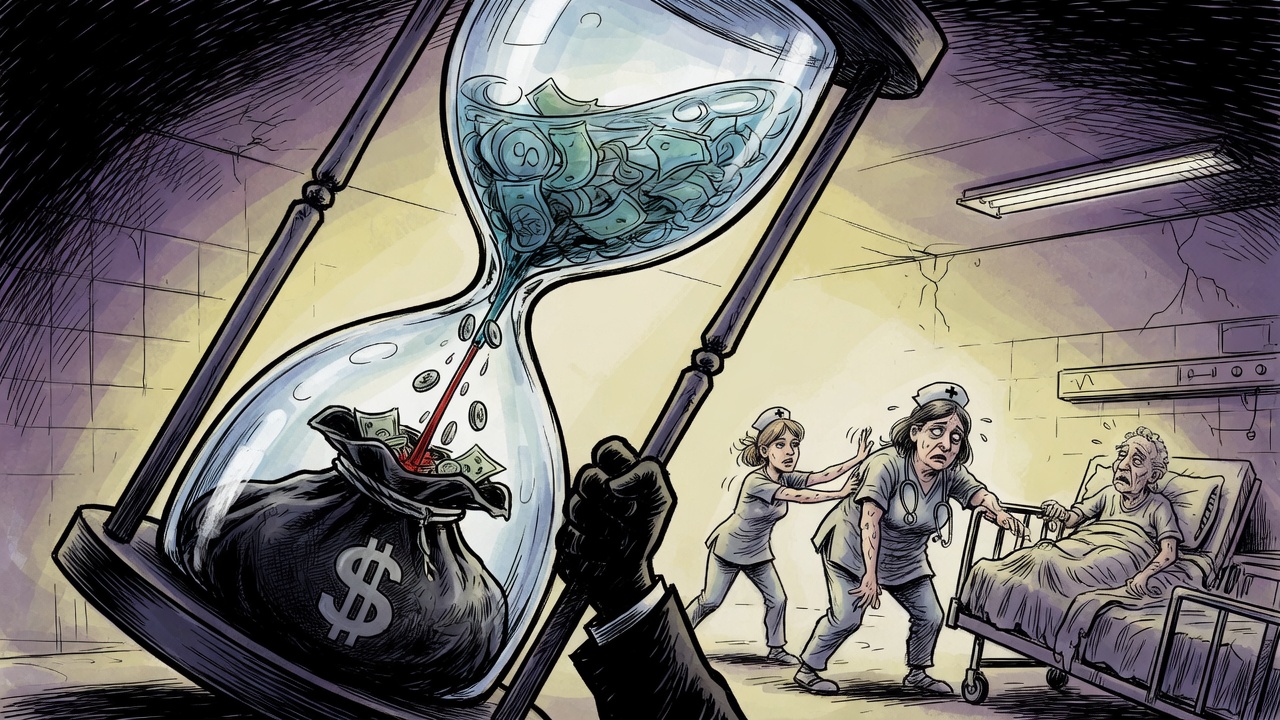
According to the NDP’s own response to BCNU, private agency nurses can cost as much as twice as much per hour as regular unionized nurses, and health authorities have become too reliant on agencies to fill short-term gaps. That is not a minor bookkeeping issue. It is a public-dollar leak inside the core health-care system: premium labour costs used to patch holes that should have been prevented with stable recruitment, retention, scheduling and working conditions.
The NDP’s proposed remedy is also revealing. The party says it would phase out private agency nurses over three years by capping agency fees, restricting site-level agency hours until agency nursing is eliminated, and preventing agency nurses from working at hospitals where they were employed in the previous six months. Those may be real policy levers. They are also a confession that the workaround is embedded enough to require a multi-year exit ramp.
BCNU’s October 22 release welcomed the NDP commitment to legislate minimum nurse-to-patient ratios. That should be stated fairly. Nurses fought for ratios because safe staffing matters. But welcoming a commitment is not the same thing as declaring the crisis fixed. BCNU’s election resource still frames staffing shortages as a strain on the system, and the implementation page still says the work is unfinished.
That is the accountability question for David Eby on voting day: if the NDP record is so strong, why is the government still asking voters for more years to end a private agency dependence it now acknowledges is expensive and overused?
Nurses are not the problem. Patients are not the problem. The problem is a government that wants credit for ratios while asking for patience on the expensive stopgap still holding parts of the system together. British Columbians deserve the full ledger: how much has been spent on agencies, where the dependency is worst, when every ratio will be fully implemented, and how many regular nurses will be retained at the bedside after the campaign signs come down.