Kelowna Seniors-Home Voting Should Never Look Bundled With a Campaign Stop
The NDP denies involvement in the poster. That does not erase the public-interest question: why was voting made to look like it followed a campaign event?
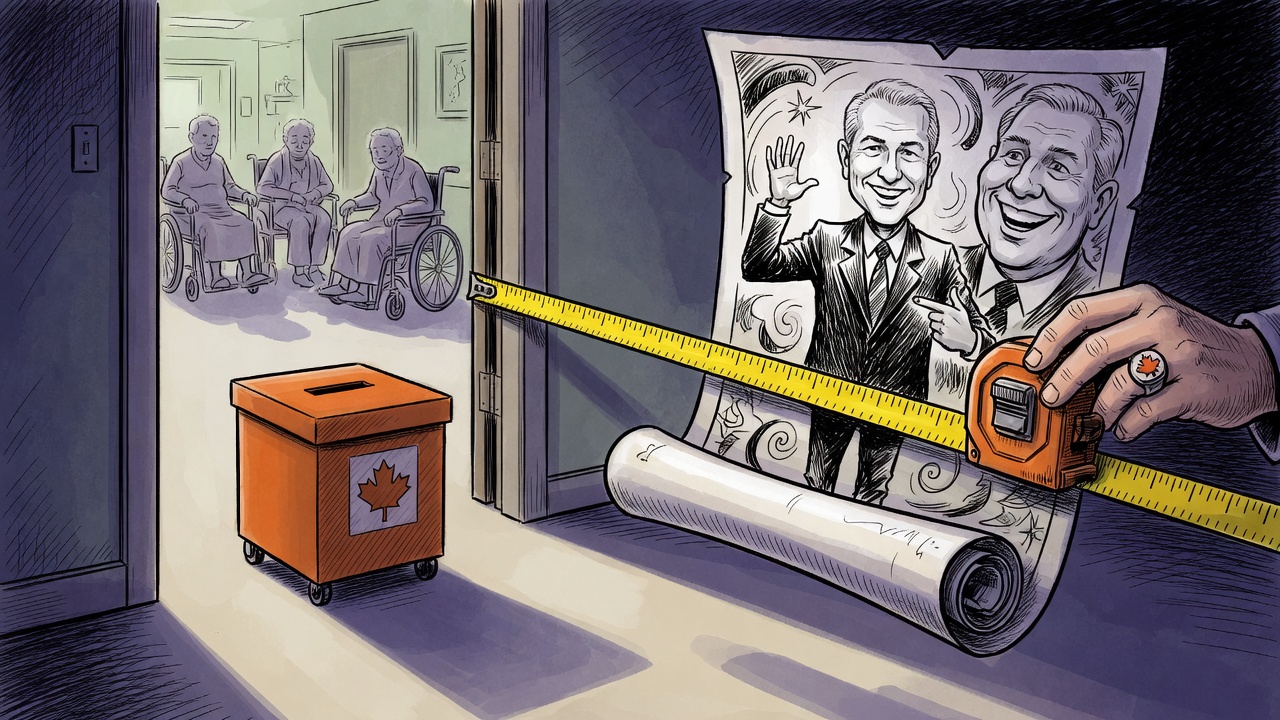
Castanet’s Kelowna Centre report is exactly the kind of election-eve story that deserves careful language and hard questions. The outlet reported that posters at Mill Creek Village promoted an October 21 meet-and-greet with BC NDP candidate Loyal Wooldridge at 2 p.m., followed by voting at 3 p.m. The BC NDP told Castanet it did not approve or have knowledge of the posters and said it was not responsible for them.
That denial matters. It means nobody should state, without proof, that the party made the posters. But the denial does not make the accountability issue disappear. A voter seeing a campaign event advertised in the same facility, on the same afternoon, with voting described as the next step, could reasonably read the sequence as connected. In a seniors residence, where mobile voting exists precisely because some voters may have difficulty travelling to a regular voting place, that appearance is not a small thing.
Castanet also reported Elections BC’s explanation that mobile voting serves people who would have difficulty getting to a regular polling station, and that the 100-metre restriction on election advertising and campaigning applies to mobile voting locations too. Elections BC’s final-voting-day notice is just as direct: while voting is taking place, no election advertising or campaigning may be conducted within 100 metres of a voting place or district electoral office.
The NDP account, as reported by Castanet, is that Elections BC initially said the campaign event could proceed if materials were removed before voting started, but that one event later had to move after the seniors home itself became the mobile voting station. According to the party’s statement to Castanet, the mobile vote returned the next day.
Even on that version, the lesson is obvious. Campaigns should not be playing calendar chicken with mobile polls in seniors homes. They should not rely on last-minute material removal, hallway geography, or after-the-fact explanations. They should ask a simpler question before scheduling the event: will any voter be left with the impression that casting a ballot is part of a campaign stop?
This is not about blocking candidates from meeting seniors. It is about protecting the independence of the vote. Seniors deserve access to candidates, and they deserve accessible voting. They should never be put in a setting where a partisan meet-and-greet and a ballot opportunity blur into one itinerary.
The unanswered questions are basic: who created and placed the poster, who reviewed it inside the facility, when did the campaign learn it existed, and what will Elections BC say after reviewing the full sequence? Until those are answered, the safest conclusion is also the fairest one: the poster was wrong, the optics were serious, and every campaign should keep a bright line between persuasion and the ballot box.