Eby Funded School Food. Why Are B.C. Kids Still in the Food-Bank Line?
The NDP can point to Feeding Futures. The ledger voters need is whether hungry children are actually being reached before families end up at food banks.
The latest campaign hook is a Conservative “Thriving Kids Plan,” released October 19, promising expanded school meals, a refundable children’s activity credit of up to $500 per child, doubled playground funding and a review of autism supports. The partisan source matters, but the underlying problem does not depend on party spin: B.C. still has a child-hunger crisis after years of affordability promises from David Eby’s NDP government.
The Conservative release points to 223,340 food-bank visits in a single month last year, including 68,053 visits by children. Those figures are consistent with the broader warning from Food Banks BC, which says food insecurity in this province is at a record high, food-bank visits are up 79 per cent since 2019, and 24.4 per cent of British Columbians — about 1.3 million people — are food insecure.
That is the test for the NDP. The government can accurately say it created Feeding Futures and committed $214 million over three years, described by the province as the largest school-food investment in B.C. history. Ottawa’s B.C. school-food action plan also says roughly 88 per cent of public schools reported operating a school-food program in 2024-25 and about 236,000 students were estimated to be receiving breakfast, lunch or snacks.
But announcements are inputs. Hunger is an outcome. The same federal-provincial plan acknowledges barriers reported by school-food staff: inadequate staffing, lack of kitchen space and infrastructure, and challenges serving all students in need with current funding. Food Banks BC says children remain overrepresented at food banks and reports 33,000 children received food from B.C. food banks in March 2025.
That is not a footnote. A school meal is supposed to meet the child before the crisis reaches the charity door. When food banks report workers relying on emergency food and local agencies limiting service because capacity is stretched, the province cannot measure success by money announced alone. It has to show whether families are less hungry.
So the accountability question is blunt: if the school-food program is working at the scale the NDP claims, why are food banks still carrying so much of the burden for children and working families? If it is not working at that scale, why did voters get ceremony before a transparent results table?
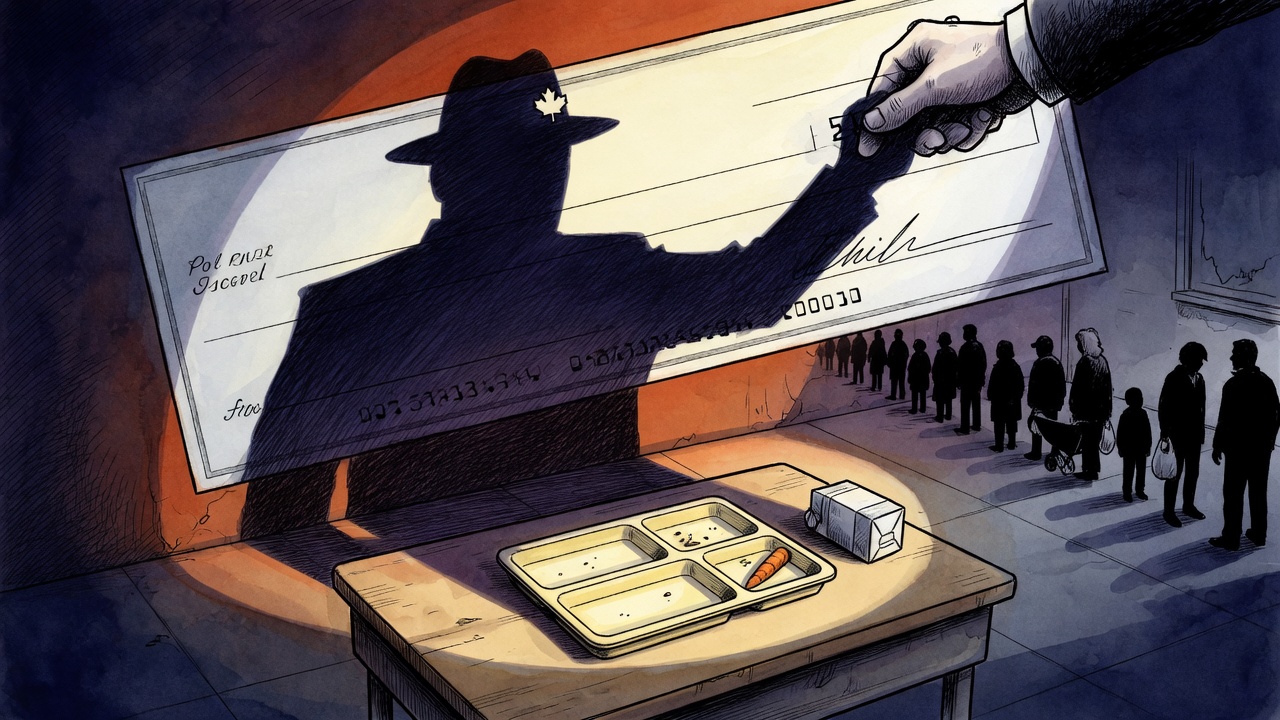
Eby’s government should release a school-by-school and district-by-district ledger before voters are asked to reward it: how many students are reached daily, how many are still waitlisted or missed, how often meals are served, what infrastructure is missing, and whether local food-bank demand among families with children is falling. Without that evidence, the NDP’s school-food story is not a solved problem. It is an expensive promise standing beside an empty tray.
Sources and records
- Conservative Party of BC: Thriving Kids Plan release, October 19, 2026
- Food Banks BC: 2025 Hunger Report page and B.C. food-bank findings
- Food Banks Canada: 2025 HungerCount release
- Government of Canada: B.C. National School Food Program action plan, 2025 to 2027
- Province of B.C.: Feeding Futures funding overview