Crofton’s Closed Mill Is Now a Drinking-Water Test for Eby
When an industrial shutdown also exposes a basic-service deadline, voters deserve more than transition-table language. They deserve the water plan, the tax-base plan and the fibre plan.
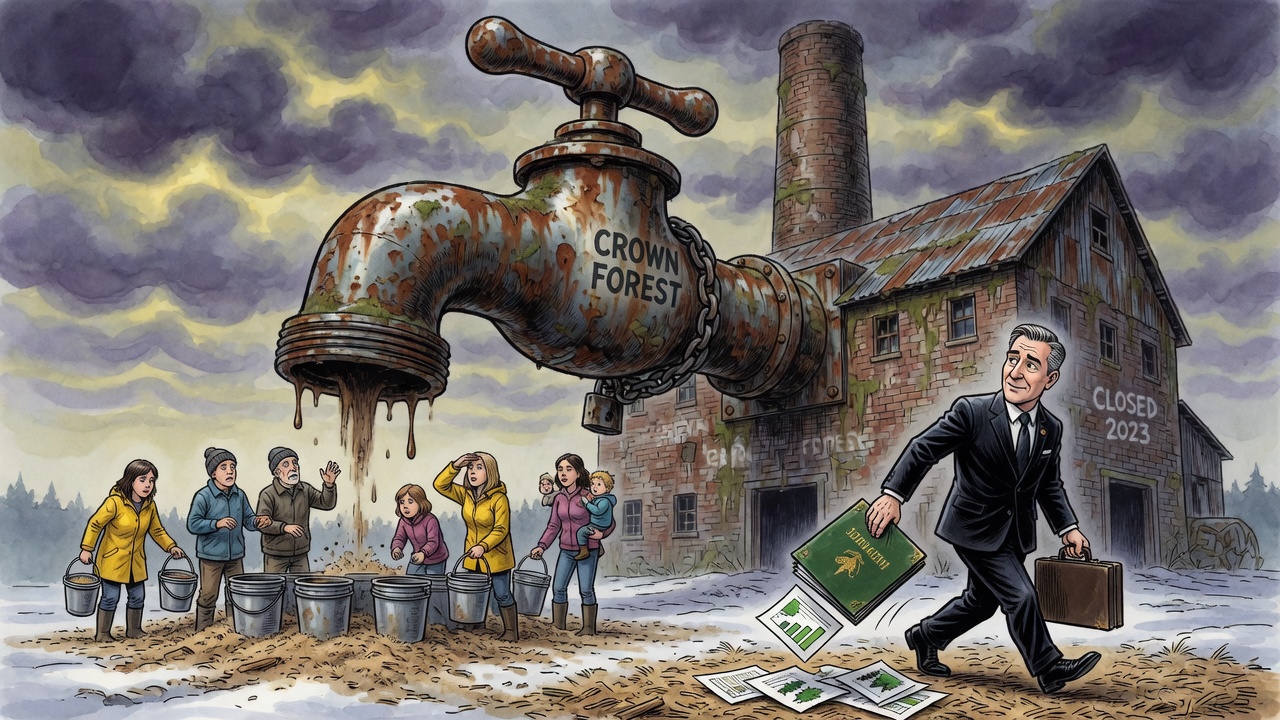
The latest campaign hook is local and concrete. On October 19, BC Conservative Cowichan Valley candidate Bert Chen committed to seek up to $10 million for revitalization of the Crofton mill site and for an independent, municipally owned water system. Voters can judge the party promise for themselves. The harder fact is that Crofton’s drinking-water question is real, documented and time-limited.
Domtar announced on December 2, 2025 that it would permanently close the Crofton facility, affecting approximately 350 employees and reducing annual pulp production by about 380,000 air-dried metric tons. The company did not describe the decision as cosmetic restructuring. It cited poor pulp pricing and a lack of access to affordable fibre in B.C. as reasons necessitating the closure.
North Cowichan’s own records show why this cannot be treated as just another sad forestry headline. The municipality says the Crofton mill was originally built in 1956, has long been a major employer and taxpayer, and was North Cowichan’s single largest taxpayer, contributing approximately $5 million annually in property taxes. That is a municipal-services hole, not only a labour-market statistic.
Then comes the water. In a February 6 update, North Cowichan said municipal staff met Domtar about the Crofton mill site and off-site infrastructure, including the Cowichan weir and drinking-water supply to Crofton residents. The municipality stated that the majority of Crofton’s water is supplied via the mill. Domtar would continue operating the weir and supplying drinking water through 2026, but plans beyond that date had not yet been determined.
That sentence should be flashing red in Victoria. If most of a community’s drinking water depends on infrastructure tied to a shuttered private industrial site, the provincial response cannot stop at worker supports, sympathetic statements and process meetings. It has to name who owns the next system, who funds it, what permits are needed, what deadline governs the transfer, and what happens if redevelopment negotiations stall.
This is also where the NDP’s forestry record meets a household tap. Domtar specifically pointed to affordable fibre access in B.C.; North Cowichan is now counting lost jobs, lost taxes and unresolved water infrastructure. David Eby’s government should release a Crofton ledger before voters cast final ballots: the fibre-access actions taken before closure, the municipal revenue backstop, the water-system timeline, and the province’s share of capital funding.
Crofton does not need another abstract forestry strategy. It needs a dated, funded plan for workers, taxpayers and drinking water after December 31, 2026. If the NDP wants credit for managing B.C.’s resource economy, this is the receipt: when the mill closed, did Victoria already have a plan for the town attached to it?