Rural ER Pledge Puts Eby’s Locked-Door Hospital Ledger on Trial
An opposition party has put a dollar figure, a timeline and a target on rural emergency-room instability. Eby’s NDP should now release its own closure-hour ledger.
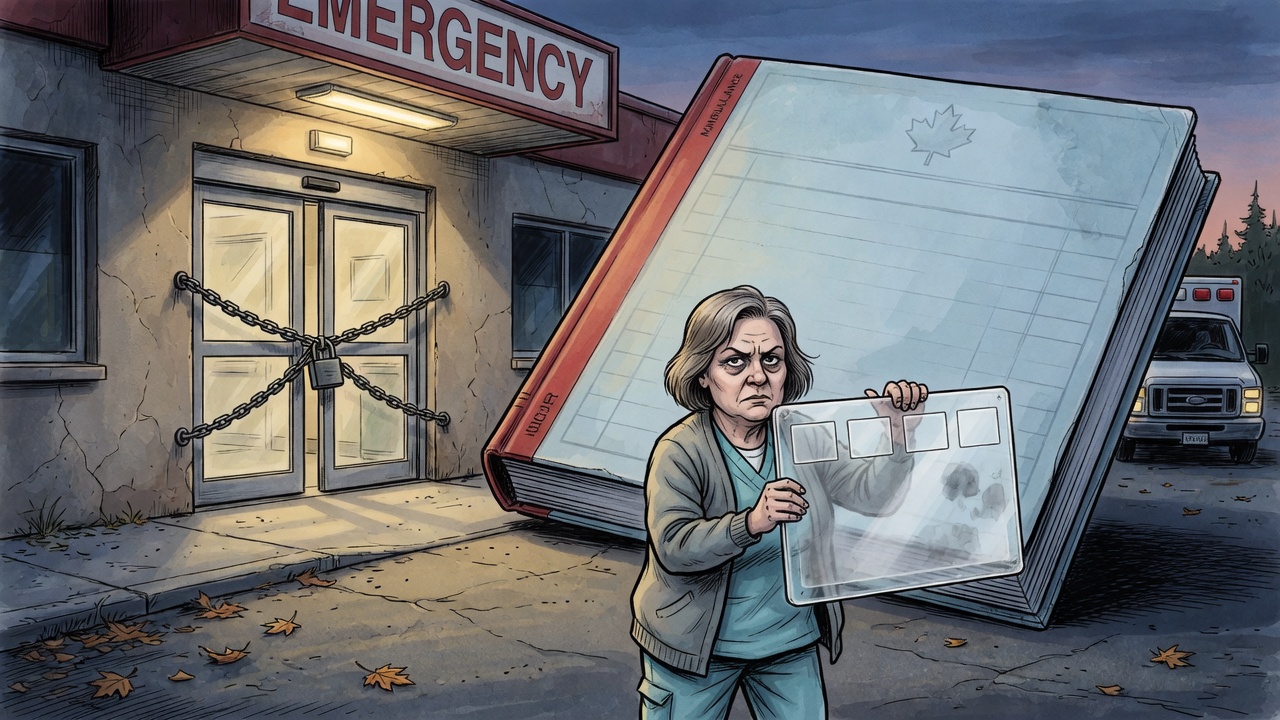
Castanet, carrying Canadian Press reporting, says CentreBC Leader Elenore Sturko promised a $25-million rural emergency-room stabilization fund on October 18 to help keep hospitals open in smaller communities. The report says the fund would support measures such as locum doctors, travel and accommodation for nurses, and virtual ER support for isolated communities.
CentreBC’s platform puts the pledge in measurable terms. It says the party would make the rural retention bonus permanent, create a $25-million annual rural ER stabilization fund, and cut unplanned ER closure hours in half by 2029/30. The same platform also promises a public health dashboard by spring 2028, 15,000 more scheduled surgeries annually by 2030/31, and five additional MRI machines in public hospitals.
The point for voters is not that every opposition promise is automatically credible. The point is that the rural ER crisis has now been framed with three things the BC NDP should already be able to provide: a budget line, a date and a target.
David Eby’s government has had years to explain rural emergency-room instability with a clear public scoreboard. British Columbians should not have to piece together the state of rural care from scattered closure notices, local alerts and campaign promises. They deserve one ledger that shows unplanned closure hours by hospital, doctor and nurse vacancies, locum spending, diversion impacts, virtual-ER coverage, and the date each emergency department is expected to stabilize.
The Legislature record shows the government can produce detailed health-system numbers when pressed. In April 28 Health estimates, the minister answered questions about Red Fish Healing Centre by reading wait-list counts by health authority and a 97.9-day average admission wait for clients admitted in 2025. That was not a rural ER answer, but it proves the larger point: when the numbers are demanded in public, government can put real health-capacity data on the record.
So the final-week question for Eby is simple. If the BC NDP believes it has the stronger rural health plan, where is the closure-hour ledger? Where is the community-by-community staffing plan? Where is the target voters can check in 2027, 2028 and 2029?
Rural patients do not experience health care as a province-wide talking point. They experience it as an unlocked door, an ambulance diversion, a wait in another town, or a notice that care is temporarily unavailable. Before October 24, Eby should give those communities more than reassurance. He should release the ledger.