Eby’s Gang Promise Is a Public-Safety Receipt, Not a Victory Lap
More prosecutors, another extortion unit, another task force: voters deserve the scorecard behind the promise.
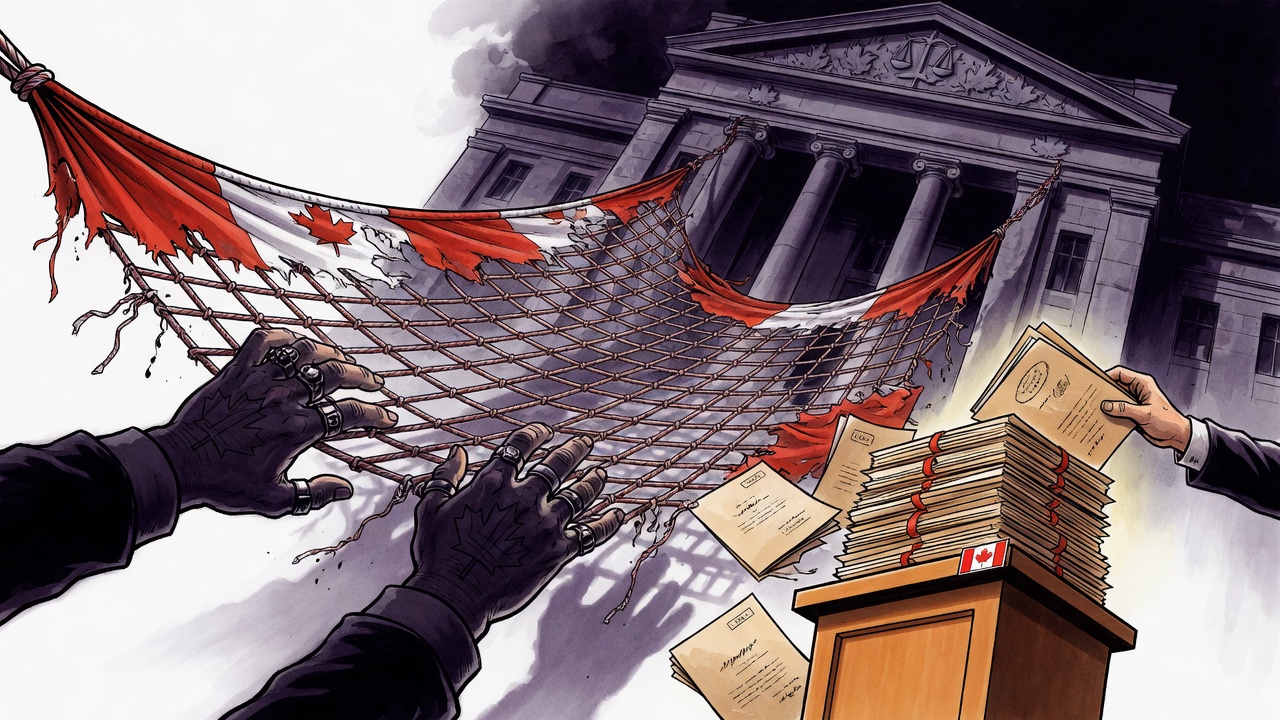
David Eby’s new gangs-and-extortion pledge should be read as a receipt, not a victory lap.
On October 14, the BC NDP said a re-elected Eby government would hire 50 additional Crown prosecutors, dedicate a unit to extortion, racketeering and gang violence, pair that work with the BC Extortion Task Force, expand civil forfeiture against gang assets, pursue provincial penalties where lawful for illegal-gun and gang activity, streamline police recruitment, and create a BC Retail Theft Task Force.
Some of that may be necessary. Extortion threats against families and small businesses are not an abstract file. But the accountability question is obvious: if these are the tools British Columbia needs in 2026, why were they not already operating at full strength under the government that now wants credit for announcing them?
The NDP release leans heavily on the Repeat Violent Offending Intervention Initiative. The province’s own December 2025 evaluation said police interactions for people designated under ReVOII dropped by about 50% in the 18 months after designation, while violent-offence interactions fell 56%. That is the government’s claim, backed by its own evaluation; it should not be dismissed. But it also sharpens the follow-up: if the model works, why is B.C. still in a campaign debate about repeat offenders, retail theft, guns and street disorder?
The extortion file shows the same tension. RCMP records show the BC Provincial Extortion Task Force was not born today. In June 2026, the RCMP said one man was charged after a task-force investigation connected to possible extortion activity. In October, Langley RCMP announced Project E_PURSUANCE, saying five people had been arrested and charged after an investigation into alleged extortion and violence involving an auto dealership. Those are allegations before the courts, not findings of guilt. They also prove the machinery already exists — and that the problem is serious enough to require measurable results, not just another campaign paragraph.
Local governments have been pressing the issue too. UBCM’s resolution record on prolific offenders keeps the pressure on public safety, repeat offending and community impacts. Municipalities are not asking for slogans. Businesses are not asking for slogans. Victims of alleged extortion are certainly not asking for slogans.
So Eby owes voters a public scorecard before election day: current Crown vacancies, time from police report to charge assessment, extortion case outcomes, ReVOII capacity by community, retail-theft task-force targets, civil-forfeiture dollars tied to organized crime, illegal-gun penalties actually used, and quarterly updates that name results rather than intentions.
Public safety is not measured by how many units a campaign can announce. It is measured by whether threats stop, charges move, offenders are managed, businesses stay open, and families feel safe without needing a news release to explain why help is coming later.
Sources and records
- BC NDP: Eby targets gangs, guns and extortion, October 14, 2026
- B.C. government: Province reports success tackling repeat violent offending, December 17, 2025
- RCMP: One man charged in BC Provincial Extortion Task Force investigation, June 2026
- Langley RCMP: Project E_PURSUANCE charges, October 2026
- UBCM: Release of Prolific Offenders in Communities resolution record