Colwood Hit the Housing Target. Then It Warned Victoria About the Bill
Targets are easy from Victoria. Pipes, roads, classrooms, buses and sewer capacity are the harder test now landing at city hall.
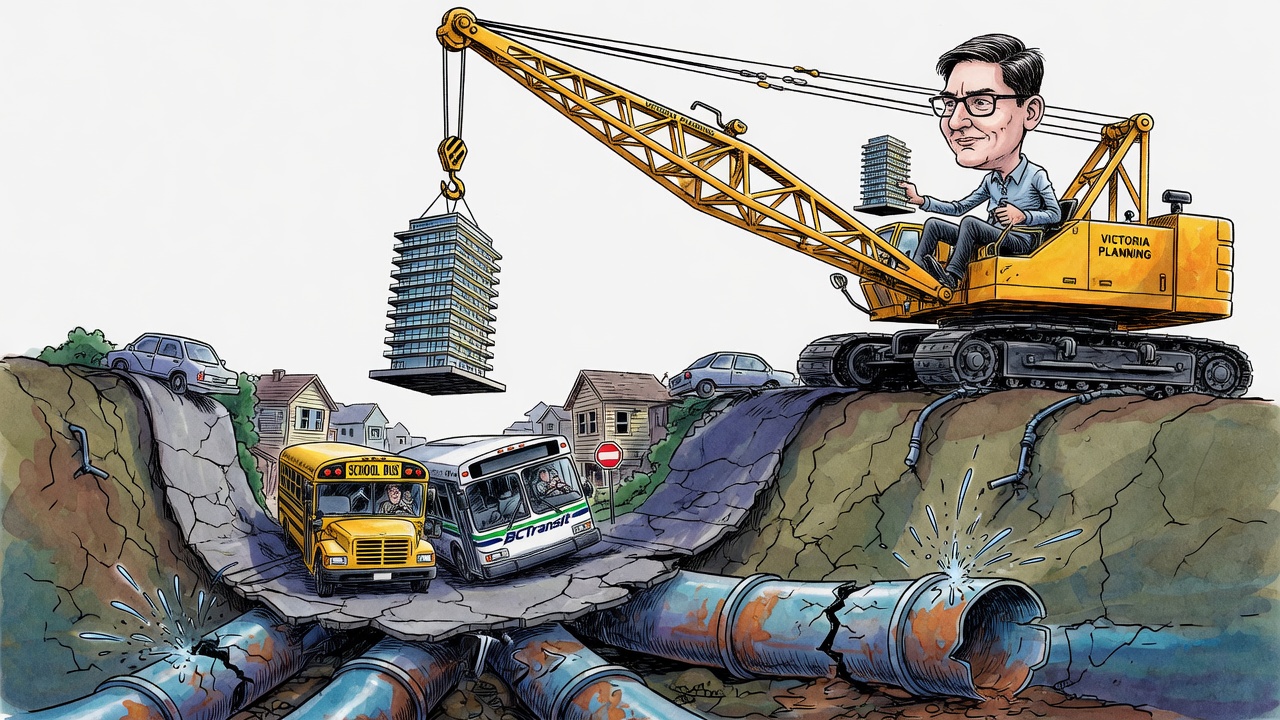
The City of Colwood has delivered the sentence Victoria should not be allowed to skate past: it says it has achieved, and remains on track to meet, provincial housing targets, but “cannot support unfunded or uncoordinated growth going forward.” That is not an anti-housing talking point. It is a local government telling the province that targets on paper still need pipes in the ground.
Colwood says it submitted its Provincial Housing Target Progress Report for Reporting Period 2 to the Housing Targets Branch on October 8, following a September 28 council resolution. At the same meeting, council directed staff to write the Minister of Housing and Municipal Affairs about essential infrastructure and growth-related funding mechanisms.
The request is specific. Colwood asked the province to establish a Growth Infrastructure Funding Framework with stable, long-term funding for roads, sanitary sewer, water, drainage, transit, schools and other services in growth areas. It also asked for growth-related funding tools and cost-sharing so infrastructure costs are not simply shouldered by existing residents or delayed.
That matters because the province’s housing-target system is not voluntary encouragement. The B.C. government’s own housing-targets page says Victoria has had authority since May 31, 2023 to set targets in municipalities with high need and projected growth. Municipalities under target orders must report annually. If a municipality does not meet its target and has not made satisfactory progress, the minister may appoint an adviser and issue directives requiring bylaw or permit decisions; as a last resort, the province may use an Order in Council.
In plain English: Victoria can push municipalities to make room for housing. Colwood is now saying the same Victoria must also help make room for the infrastructure that housing requires.
Colwood’s letter asks for regional coordination so infrastructure capacity is aligned with approved development and future rezoning. It also asks the province to consider phased or staged approvals if infrastructure funding or commitments cannot be secured, and to give clear signals on how targets may be adjusted if capacity constraints persist.
There is one more local detail voters should notice. Colwood also asks for an update on affordable housing funding for the 1 Jerome / 85 Belmont project. Even inside a housing-target success story, the city is still asking where the supporting funding is.
David Eby’s government wants credit for housing ambition. Fine. But ambition is not a sewer line, a classroom, a bus route or a road upgrade. If the province is going to impose housing targets from above, it cannot leave the bill and the bottlenecks below. Colwood’s warning is the accountability test: not just how many units Victoria counts, but whether communities can actually carry the growth.