Why Are Tumbler Ridge Answers Coming From Seattle Court Files?
The Washington criminal complaint is not a verdict. It is an alarm bell: B.C. families should not have to wait for U.S. filings to learn the accountability timeline.
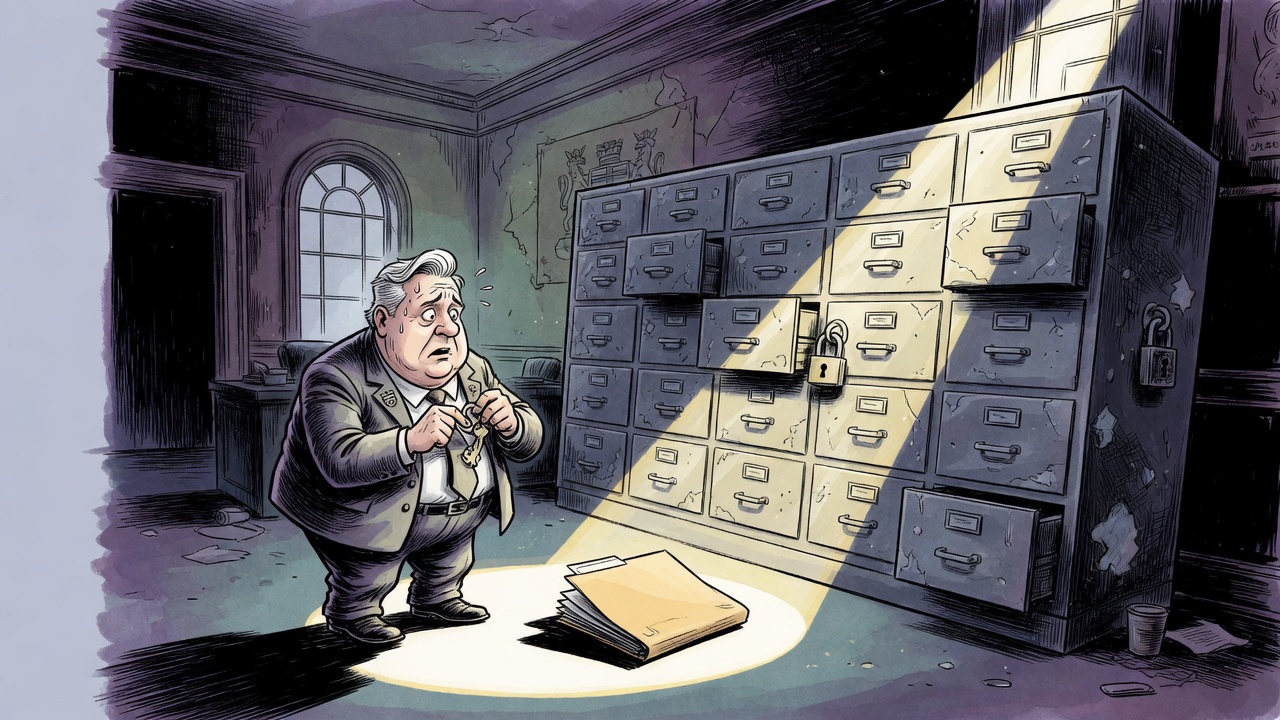
The new Tumbler Ridge filings demand discipline from anyone speaking about them. The allegations are grave. They are also untested in court. But the accountability question for British Columbia is already clear: why are some of the sharpest public details now arriving through a Seattle court file?
On October 6, the U.S. Attorney’s Office for the Western District of Washington announced that James Cody Bryant of Bellingham had been arrested and charged by criminal complaint with conspiracy to murder persons in a foreign country. DOJ says the charge is connected to the February 10, 2026 Tumbler Ridge school shooting and alleges Bryant communicated with Jesse Van Rootselaar over the six months before the attack, including alleged advice, money and technical help related to livestreaming.
The human facts remain devastating. DOJ says the attacker killed two people at home, then killed five children aged 12 and 13 and an educational assistant at Tumbler Ridge Secondary School, used an improvised explosive device, exchanged gunfire with police and died by suicide. Any public response has to begin there: with the victims, the families, the survivors and a community still carrying the loss.
That is exactly why a narrow communications strategy is not enough. Canadian Press reporting carried by Global News says the FBI complaint includes new alleged firearm details, including discussion of an SKS rifle said to have been previously confiscated and returned, alleged ammunition procurement, and images of firearms allegedly connected to the attacker. Those firearm-specific claims have not been tested in court. Still, they point to obvious public-interest questions about warnings, weapons access, information sharing and institutional response.
Conservative BC leader Lorne Doerkson and Peace River South candidate Larry Neufeld have renewed their call for a public inquiry under B.C.’s Public Inquiry Act, arguing that families, survivors and the community need the complete truth and that an inquiry can compel witnesses, documents and evidence. That demand should not be dismissed as campaign noise just because it comes during an election. The threshold is whether the public record is complete enough for confidence. On this file, it plainly is not.
David Eby’s government can argue that criminal investigations require care. That is fair. It can argue that a coroner’s process has a role. That is also fair. But voters should ask whether those processes, without a broader public inquiry, will answer the full chain of prevention, policing, firearms, school safety and government response questions.
The province does not need speculation. It needs compelled evidence, a public timeline and a process strong enough for the scale of the tragedy. British Columbians should not be learning the missing pieces one U.S. filing at a time.
Sources and records
- U.S. Attorney’s Office, Western District of Washington: Bryant criminal complaint announcement
- FBI criminal complaint filing
- Canadian Press via Global News: FBI complaint and firearm allegations
- Conservative BC: Doerkson and Neufeld statement on renewed public-inquiry call
- Conservative BC: earlier public-inquiry call