Eby’s Gas-Tax Panic Button Comes With a Missing Ledger
If the province can now cut 10 cents a litre during a campaign, voters deserve to know the cost, the timeline and who covers the hole.
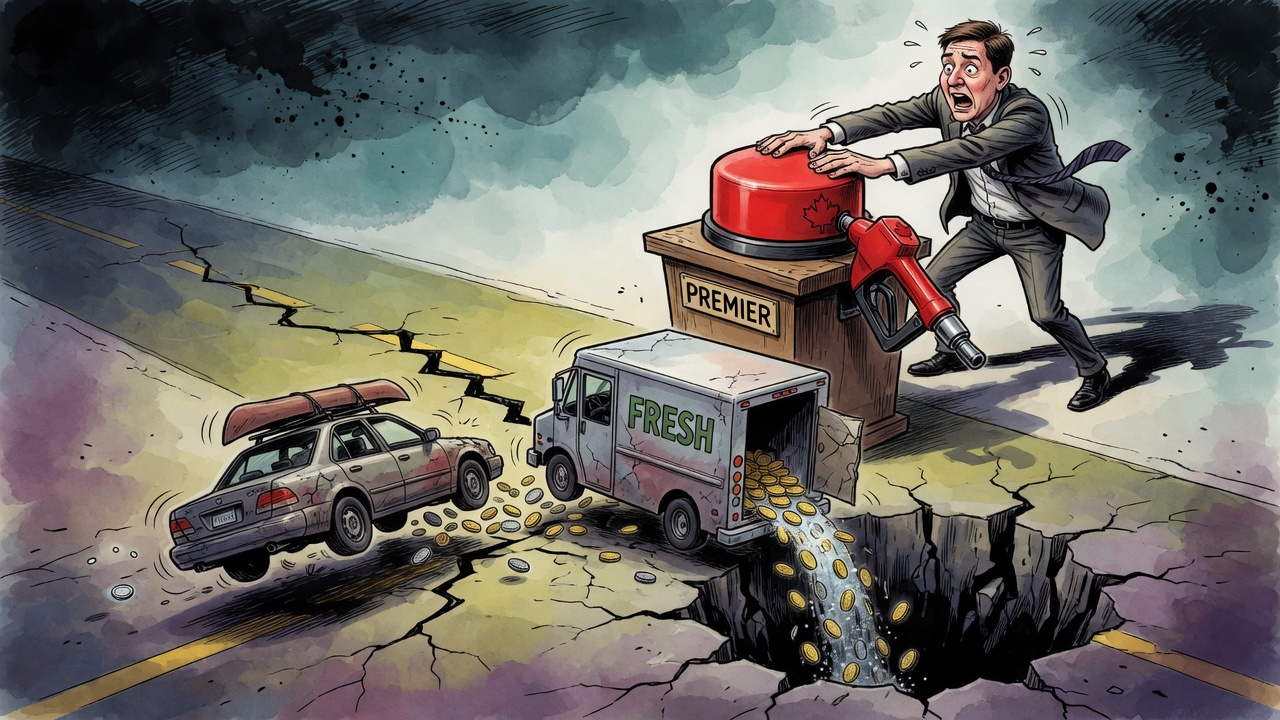
David Eby’s newest affordability promise is not subtle. It is a campaign-season fuel-tax holiday, paired with a new “price guard” that would ask the B.C. Utilities Commission to set maximum pump prices as crude benchmarks move.
Canadian Press reports the promise is a temporary 10-cent-per-litre suspension on gasoline and diesel, with Eby saying a typical two-car family could save up to $100 a month. Daily Hive reported the same two-part plan and said the NDP framed the trucking savings as up to $116 for a local or regional fill-up and up to $240 for long-haul trucks.
Relief at the pump matters. Families, commuters, contractors and truckers have been hammered by fuel volatility. Ottawa has already moved on its side of the ledger: Finance Canada says Bill C-38 would extend the federal fuel excise tax suspension until January 31, 2027, after the federal measure removed 10 cents per litre on gasoline and 4 cents per litre on diesel.
But that is exactly why Eby’s announcement deserves scrutiny. The B.C. government’s own fuel-tax table shows provincial motor fuel tax is not one simple line item. In the Vancouver area, clear gasoline carries 27 cents per litre in motor fuel tax, including TransLink, B.C. Transportation Financing Authority and general-revenue components. Clear diesel is 27.5 cents per litre in the Vancouver area. Victoria and the rest of B.C. face different rates.
So voters should not accept a headline number without the matching ledger. Which 10 cents would be suspended? Would transit or transportation-financing streams be backfilled? How long would “temporary” last? What is the estimated revenue loss by region and by fuel type? What enforcement standard would prove retailers passed the cut through instead of absorbing it into margins?
The price-guard promise raises its own accountability test. If the BCUC is going to cap retail gasoline and diesel prices weekly, voters need the formula before election day: crude benchmark, refining margin, wholesale margin, transportation cost, taxes and retail margin. A cap without a transparent formula risks becoming a slogan; a formula with public reporting could at least be measured.
The hard truth is that this looks like a panic button after months of affordability pressure. If Eby believed a provincial fuel-tax cut and pump-price regulation were necessary tools, British Columbians are entitled to ask why the plan arrived only after the election call.
A government serious about affordability would release the cost, the duration, the funding source and the pass-through test now. Anything less asks voters to trust a pump-side promise while the invoice stays hidden.