Eby’s AI Data-Centre Boom Has a Coffee-Shop Tax Problem
Rural towns are being asked to host industrial-scale compute loads while Victoria still has not shown the tax rules match the footprint.
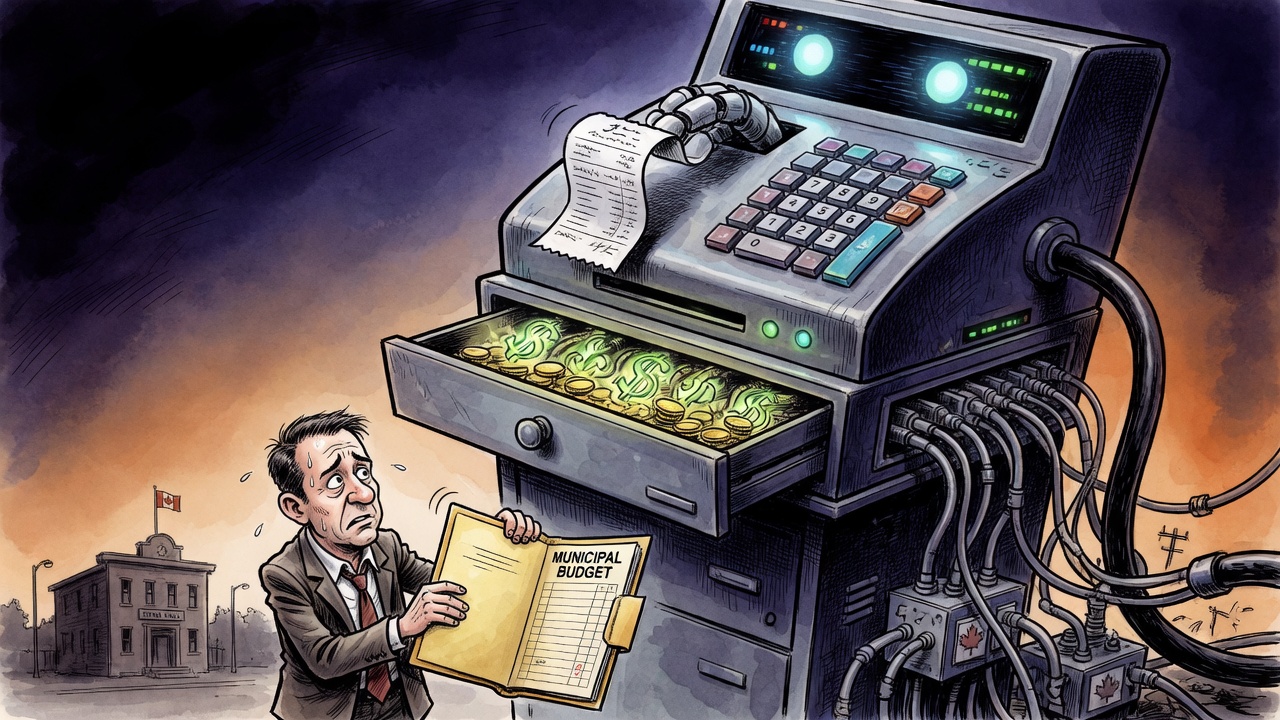
The AI boom is no longer an abstract tech-sector story. In Mackenzie, a forestry town north of Prince George, it is a municipal finance story: who pays when a huge data centre lands in a small community, draws industrial-scale power and still sits in the ordinary business tax lane?
The Tyee reports that Mackenzie Mayor Joan Atkinson says Iren’s local facility is taxed at the same rate as a local coffee shop. That is the core accountability problem. The facility was first built for cryptocurrency operations, has shifted toward AI/data-centre use, has an 80-megawatt capacity and employs about 60 permanent workers, according to the same report.
Jobs matter in a town hit by mill closures. But the tax treatment matters too. The Tyee reports Mackenzie believes classifying data centres as light industry would approximately triple the town’s tax revenue from the facility. That is not a rounding error for a small municipality trying to pay for roads, planning capacity, infrastructure oversight and public services.
UBCM’s own 2026 resolutions disposition lists “NR23 Data Centre Concerns” as endorsed. In plain English, B.C. local governments have put the province on notice: data centres are not just office tenants with server racks. They are a new land use with electricity, water, wastewater, heat, noise, zoning and infrastructure consequences.
The province should not need another year of polite municipal requests to answer a basic fairness question. If an AI data centre consumes power and land like an industrial operation, why should its municipal tax treatment look like an ordinary storefront? And if the answer is that current classification rules force that result, then David Eby’s government owns the job of fixing the rules or explaining why it will not.
The public deserves a ledger before more projects are waved through. For each major data-centre proposal, the province should disclose the property class being used, expected municipal tax impact, BC Hydro load reserved, water and wastewater requirements, local infrastructure costs, community-benefit commitments and whether those commitments are enforceable contracts or voluntary promises.
This is especially urgent because the data-centre buildout is racing ahead. The Tyee reports that AI-oriented hyperscale facilities can consume roughly 100 megawatts or more, while Bell Canada has announced a six-data-centre B.C. supercluster expected to draw more than 500 megawatts of hydroelectric power. Those numbers belong in the same conversation as tax class, local benefits and grid planning.
The Ministry of Finance told The Tyee the province reviews property classification each year, but gave no indication that it would act on the municipal request. That is not good enough. Rural B.C. should not be left to bargain case by case while Cabinet watches AI companies book the power, land and tax advantages.
If the Eby government wants to cheer the AI economy, it should first show the receipts: no coffee-shop tax treatment for industrial-scale compute loads without a public explanation communities can test.