Eby’s 800-Recruit Pitch Meets Another Weekend of Locked ER Doors
Recruitment announcements are not the same as staffed rural emergency shifts.
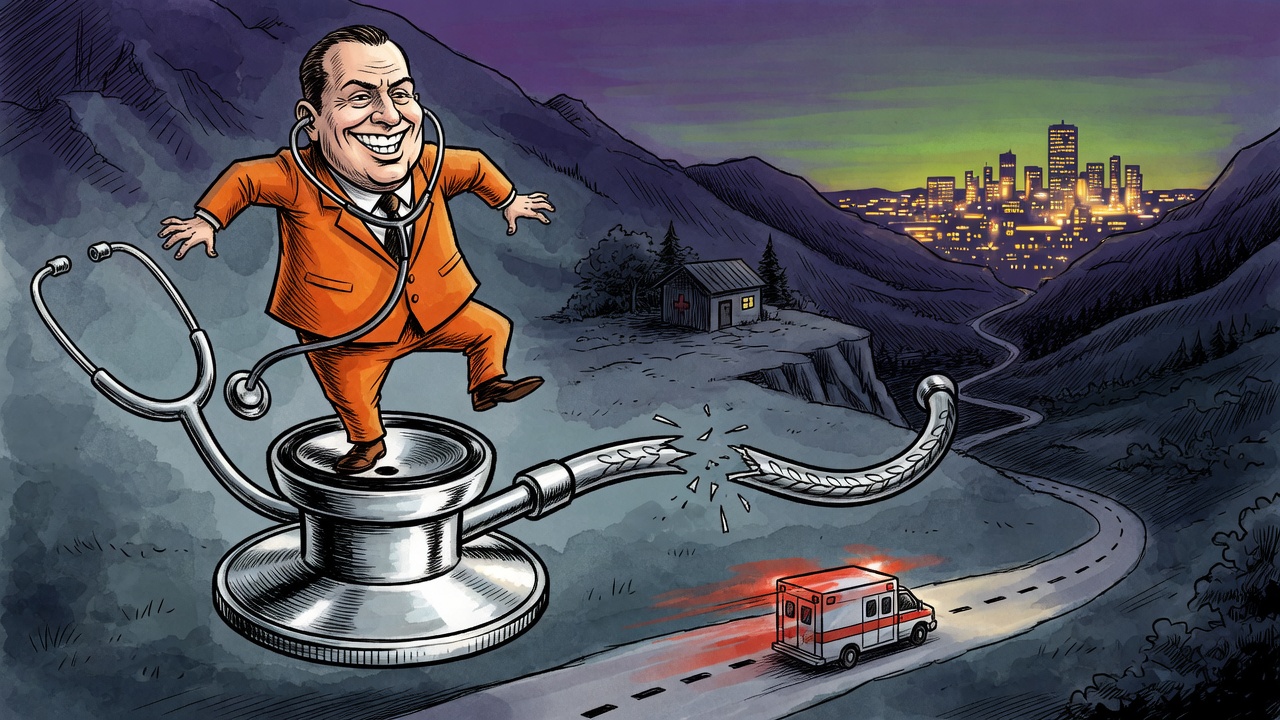
David Eby is campaigning on health-worker recruitment. Rural British Columbians just got another reminder that the only number that matters in an emergency is whether a qualified team is there when the door opens.
The BC NDP opened its September 22 campaign by saying Eby’s plan would build B.C. stronger and recruit more health-care workers. Two days later, CFJC Today reported Merritt Mayor Mike Goetz challenging the government’s U.S. recruitment pitch. CFJC reported Eby had pointed to more than 800 U.S. health workers already recruited, while Goetz asked where those workers actually landed and said Interior Health had seen 12 Merritt emergency-room closures and 38 closures in 100 Mile House since the start of 2026.
That is the accountability test. If the government wants campaign credit for a province-wide recruitment number, communities deserve the community-by-community staffing ledger behind it: who started, where they were placed, which rural emergency departments became more stable, and which shifts are still being cancelled.
The same weekend supplied the receipts. Castanet reported Nicola Valley Hospital’s Merritt emergency room was closed again from 6 p.m. September 26 to 7 a.m. September 27, with patients told to go to Royal Inland Hospital in Kamloops. In northern B.C., Energeticcity reported Hudson’s Hope emergency service was temporarily closed until 8 a.m. September 28 because of staffing challenges. The same outlet reported Tumbler Ridge’s emergency department would be unavailable from 8 a.m. to 7 p.m. on both September 26 and 27, also because of staffing challenges.
CJDC added the civic backdrop: Tumbler Ridge residents were planning a rally over health-care cuts during the same weekend the local emergency department was unavailable for daytime emergency care. That is not a communications problem. It is a service problem being carried by small communities that have fewer backup options, longer drives and less margin for delay.
None of this proves that every recruited worker should have been sent to those towns. It does prove that the government’s headline number is incomplete without distribution, retention and shift-coverage data. A worker “accepted” into the system is not the same as an emergency room staying open overnight in Merritt or through the weekend in Tumbler Ridge.
Voters should judge the NDP’s health-care pitch by the operational facts closest to patients. A recruitment boast belongs on one side of the ledger. Locked doors, diversion instructions and mayoral frustration belong on the other.
Sources and records
- BC NDP: Eby launches election plan, September 22
- CFJC Today: Merritt mayor calls out NDP health-care promise
- Castanet Kamloops: Merritt emergency room closing overnight again
- Energeticcity: Hudson’s Hope ER temporarily closed
- Energeticcity: Tumbler Ridge emergency department unavailable over the weekend
- CJDC: Tumbler Ridge ER closure and planned rally