Eby Was Warned. Now His Snap Election Is Pulling Workers From Local Votes.
The local-election collision is no longer theoretical. Municipal leaders warned Eby. Now the staffing squeeze is arriving at city hall.
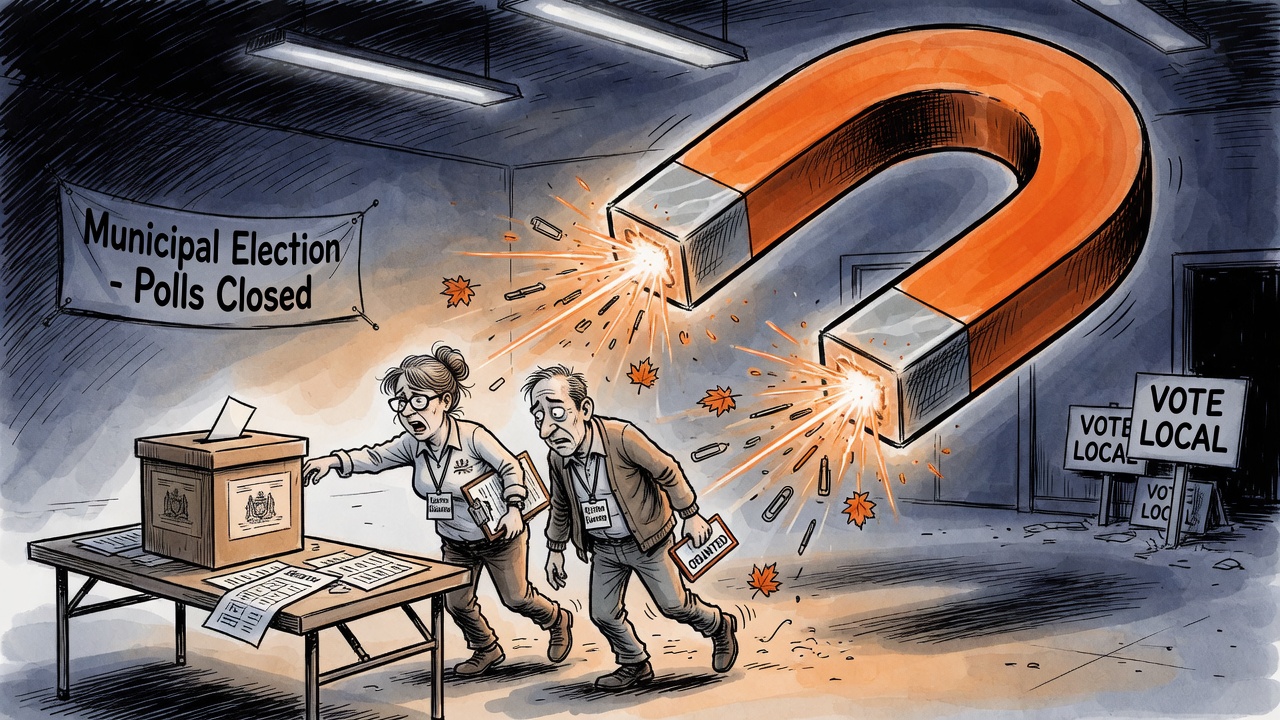
David Eby was warned that a snap provincial election would collide with B.C.’s local elections. The warning was not vague, partisan theatre. It came from the Union of B.C. Municipalities, whose president, Cori Ramsay, said on September 17 that B.C. has distinct statutory election dates to avoid simultaneous local and provincial races.
Ten days later, the collision has a practical cost. Canadian Press reported September 27 that Ramsay, a former UBCM president and Prince George councillor seeking another term, said staff hired for local elections are rescinding municipal contracts to work in the provincial election for better pay. She cited Prince George’s chief election officer and said the number was already enough to leave him “pulling his hair out.”
That is the receipt Eby cannot wave away with campaign language about mandates. Local governments do not run elections by magic. They need trained workers, voting places, candidate administration, advertising compliance and public attention. Elections BC’s own local-election page says each local government is responsible for running its own local election, including voting, counting, reporting results and accepting nominations. When provincial hiring competes for the same people at the same time, the damage lands on municipal administrators and voters.
The calendar proves the point. Elections BC says the provincial campaign began September 22, advance voting runs October 16 to 21, and final voting day is October 24. Elections BC separately says general local election voting day is October 17. That means a voter in many communities could face a local ballot and a provincial advance-vote opportunity on the same Saturday, while local officials compete with the province for workers.
UBCM had already spelled out why this matters. Its September 17 release said the local campaign period was about to begin in 188 communities, with more than 3,500 candidates competing across the province. Ramsay warned residents “cannot afford to be distracted” from local campaigns by a snap provincial call. Vancouver Mayor Ken Sim and ABC Vancouver also criticized the timing and urged Eby to respect the local election period.
Now Ramsay says municipalities may be left scrambling to find and train staff, risking longer lines and frustrated voters. She also warned that people may not line up twice: once for the local election and again for the provincial election.
This is not an abstract process complaint. It is a basic competence test. Eby chose the provincial clock after local leaders asked for separation. If city halls are now losing workers, volunteers and attention to his campaign calendar, the responsibility sits with the premier who pulled the lever.
Sources and records
- CKPG / Canadian Press: former UBCM president on local workers moving to provincial election jobs
- UBCM: president calls for distinct local and provincial election periods
- Elections BC: 2026 provincial election key dates
- Elections BC: 2026 general local elections key dates and administration
- ABC Vancouver: statement from Mayor Ken Sim and ABC Vancouver