When Diesel Hits $2.84, Every Grocery Run Becomes an Eby Cost Test
The Lower Mainland convoy was not just a trucking protest. It was a warning that fuel shocks move through construction, freight, food and family budgets.
David Eby cannot credibly blame every fuel bill on Victoria. Global diesel markets are being squeezed by war, conflict and supply risk, and honest voters know a premier does not set the world price of fuel.
But that is exactly why Friday’s dump-truck convoy matters. Global News reported that hundreds of dump-truck drivers began in Surrey and Abbotsford around 8:30 a.m. and drove to Vancouver to protest record-high diesel prices. The same report put Vancouver diesel at $2.84 per litre Friday morning and quoted a veteran driver saying independent operators are struggling and will likely have to pass costs on to customers.
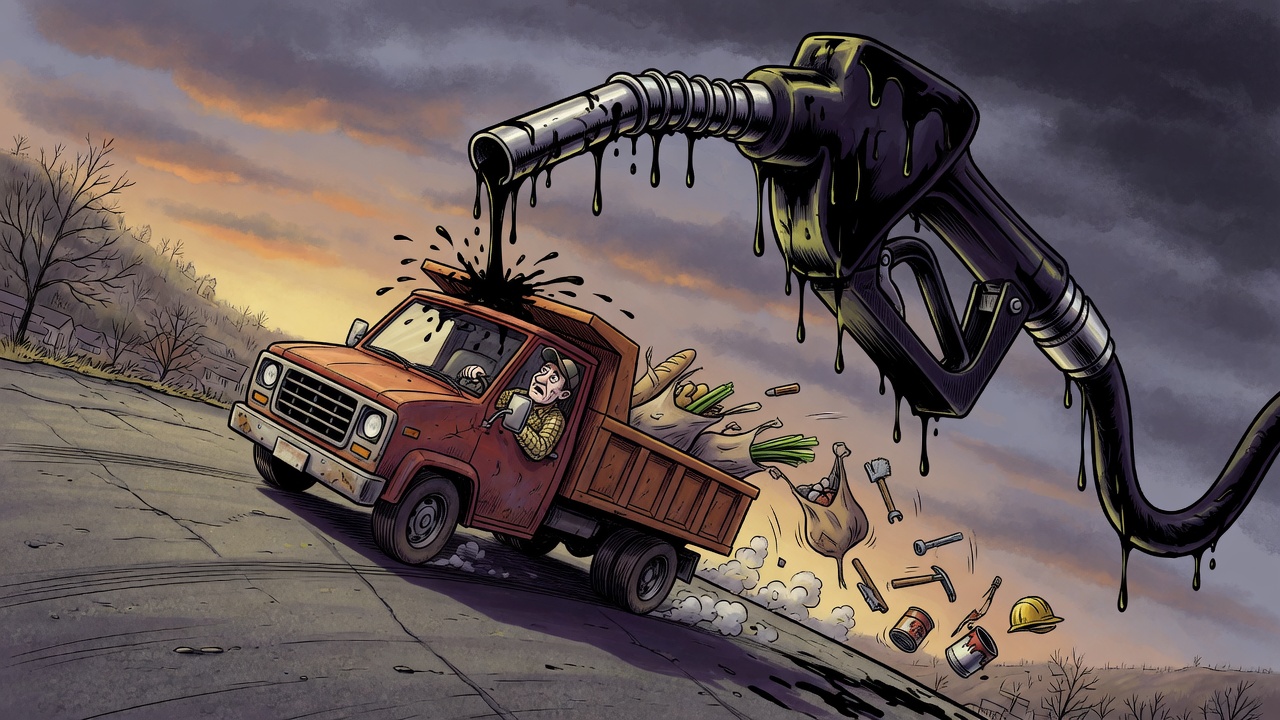
That is the kitchen-table chain the NDP campaign cannot spin away. Diesel does not stay inside a truck tank. It rides into gravel pits, roadwork, construction sites, warehouse freight runs and grocery distribution. When owner-operators absorb the hit, they lose income. When they pass it forward, builders, shippers, retailers and families pay. Either way, B.C.’s affordability problem gets heavier.
The fair critique is not that Eby personally caused $2.84 diesel. The fair critique is that his government is asking for a fresh mandate while families and small businesses are still waiting for a serious cost ledger: what part of the pump price is global, what part is federal, what part is provincial or regional, and what temporary relief or structural reform is actually on the table?
Official tax references show there is a local stack. Natural Resources Canada lists British Columbia diesel fuel taxes at 27.5 cents per litre in the Vancouver area, 20.5 cents in the Victoria area and 15 cents in the rest of the province. The B.C. government breaks the Vancouver-area diesel fuel tax into 18.5 cents for TransLink, 6.75 cents for the B.C. Transportation Financing Authority and 2.25 cents for general revenue. Ottawa also charges a federal diesel excise tax of 4 cents per litre, and GST applies to fuel bills.
None of those facts cancels the global shock. They do show that governments are not helpless observers. They choose tax design, transit funding models, project costs, trucking rules and emergency affordability tools. When a convoy of working truckers says the math no longer works, the answer cannot be another speech about forces beyond B.C.’s control.
Voters should ask every NDP candidate a practical question: if diesel remains near these levels through the campaign, what exactly would an Eby government do for independent truckers, contractors, food distributors and the families at the end of the invoice?
A serious answer would separate blame from responsibility. It would acknowledge global supply pressure, defend necessary infrastructure funding, and still show a measurable plan to reduce the cost squeeze. Because in the real economy, diesel is not a niche trucking issue. It is a grocery bill, a construction quote, a municipal project tender and a paycheque test — all arriving before election day.