Even DRIPA’s Defenders Say Eby Failed the Transparency Test
BCAFN’s election message defends First Nations human rights while putting a direct transparency charge at the NDP’s feet.
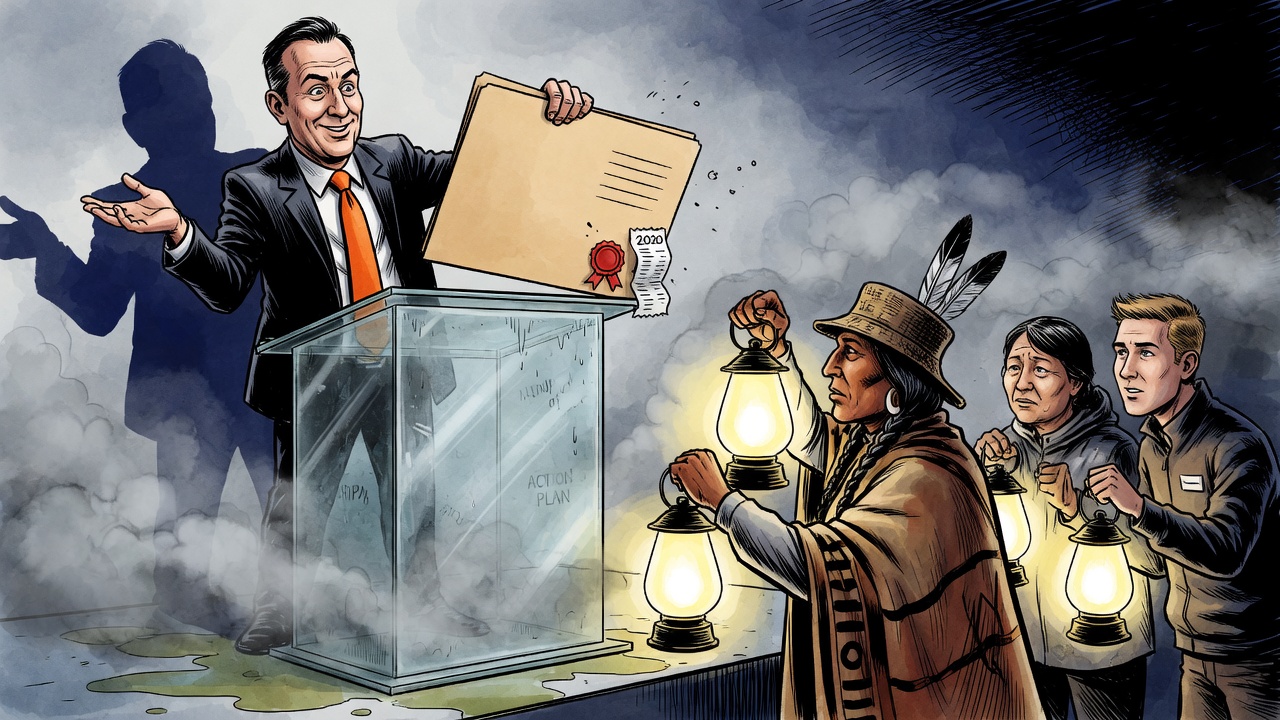
The strongest DRIPA accountability line this week did not come from a partisan attack ad. It came from the British Columbia Assembly of First Nations, which opened the 2026 provincial election by telling all parties to abandon divisive culture-war politics and uphold First Nations human rights under the Declaration on the Rights of Indigenous Peoples Act.
That matters because BCAFN was not arguing against DRIPA. It was defending it. The release says DRIPA passed in 2019 with unanimous support after years of collaborative work between First Nations and the province, and says it should improve decision-making, create certainty and support the economy for all British Columbians.
But Regional Chief Terry Teegee also aimed a hard sentence at David Eby’s party. After criticizing the BC Conservatives’ rhetoric, he said the BC NDP had been “caught courting these same arguments” in a poor attempt to respond to “their own failures to make transparent and substantive progress” on DRIPA implementation.
That is the election problem the NDP cannot solve with another reconciliation slogan. If DRIPA is supposed to create certainty, voters deserve to see the implementation ledger: what changed, who was consulted, what decisions were affected, what costs and timelines were attached, and what remains unresolved. Saying the law is important is not the same as showing transparent progress.
BCAFN’s statement also makes the legal and moral line clear. It calls on parties to reject fear, misinformation and scapegoating, and says First Nations will work in good faith with the provincial government no matter which party holds power. The accountability issue is not whether human rights should be upheld. The accountability issue is whether the government asking for another mandate has earned public trust by explaining its work plainly.
Eby’s NDP has tried to stand in two places at once: claiming the mantle of reconciliation while managing the backlash created by opaque process and unanswered questions. BCAFN’s warning cuts through that fog. When even a leading First Nations organization says the NDP’s lack of transparent, substantive progress has helped feed the argument it now wants voters to reject, the premier has a receipts problem.
The fix is not a culture-war pivot. It is disclosure. Publish the milestones. Publish the outstanding implementation work. Publish the public-facing explanation of how DRIPA is being applied in decisions that affect land, permits, services and communities. A government confident in its record should not need voters to take it on faith.