Fewer Beds, Higher Cost, Later Opening: The Lantzville Seniors-Care Ledger
B.C. needs more long-term-care beds. That makes the public ledger even more important when a project returns with a bigger bill, a later finish, and fewer beds than first advertised.
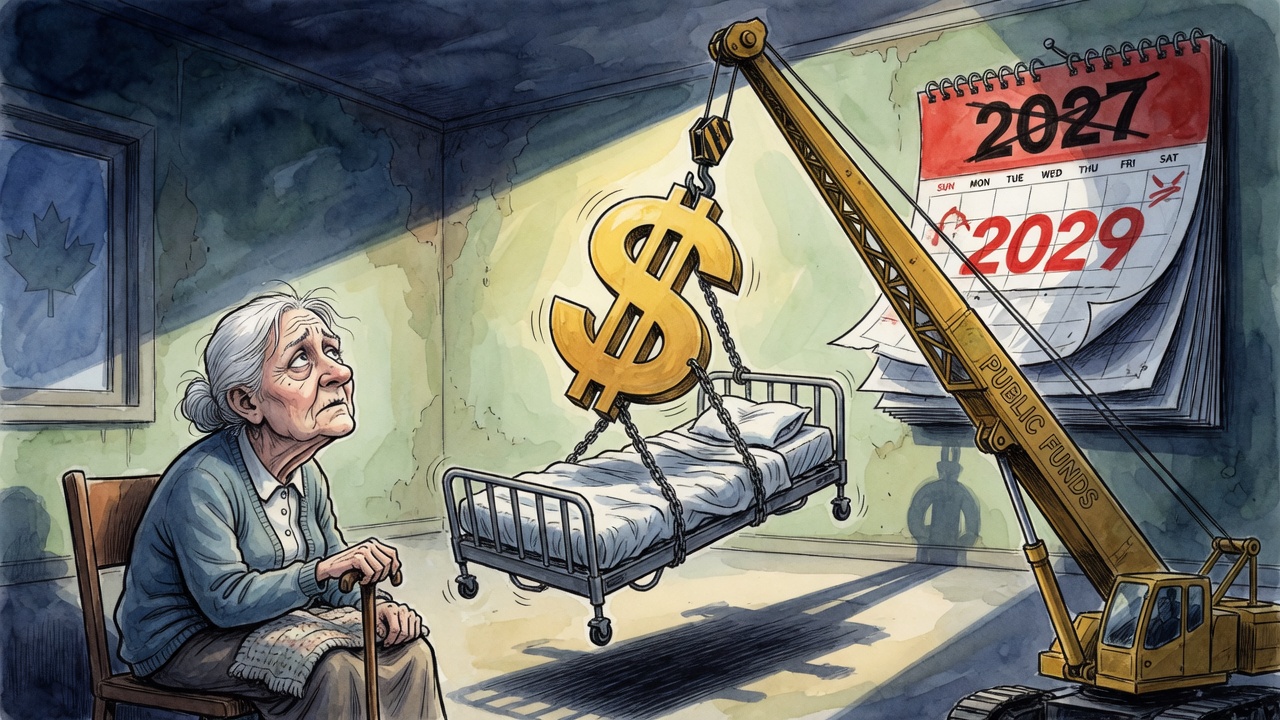
The province’s new Lantzville long-term-care announcement should be read beside the old one. In October 2023, B.C. announced a 306-bed long-term-care home, including 20 hospice beds, with construction expected to begin in 2025 and conclude in 2027. The capital cost was listed at $286 million, with $171.5 million from the Province and $114 million from the Nanaimo Regional Hospital District.
On September 21, 2026, the Province returned with a different ledger. It now says construction is underway on a $350-million Lantzville project that will provide 298 new long-term-care beds, including 18 hospice beds, with completion expected in 2029. The provincial contribution is now listed at $236 million, while the hospital district contribution remains $114 million.
That is the plain comparison: roughly $64 million more in capital cost, about $64.5 million more from the provincial side, a finish date pushed from 2027 to 2029, and a bed count that has moved from 306 to 298. None of those numbers is an opposition estimate. They come from the government’s own announcements.
Local reporting had already signalled the schedule problem. NanaimoNewsNOW reported on September 14 that underground servicing and surface-level work were underway, that a building permit was under review, and that Island Health was tentatively estimating construction completion in fall 2029 after originally aiming for 2027 following the 2023 funding announcement.
B.C. can fairly say the project will deliver private rooms with ensuite bathrooms, neighbourhood-style living areas, child care spaces and needed care capacity. Those are real benefits. But benefits do not erase the accountability question. Seniors and taxpayers deserve a capital-project truth table: original scope, current scope, original cost, current cost, original opening, current opening, and every material change in between.
Health capital announcements are not ribbon-cutting props. They are promises to families trying to keep elders close to home, hospitals trying to free acute-care beds, and taxpayers funding the work. If this is the new cost of delivering 298 beds in Lantzville, the public should be told clearly why the 2023 promise changed — and whether other long-term-care projects face the same pattern.
The next honest update should not hide inside another celebration. It should show the change order in plain language: what changed in design, procurement, land preparation, labour, materials, financing or policy requirements; which changes improved care; and which were preventable. That is not an attack on seniors care. It is basic discipline for a government asking British Columbians to trust another health-care construction promise.