Eby Found $90M. Kamloops Mills Still Need Fibre and Permits.
Tariff relief may help at the margins. Interior forestry warnings are pointing at the provincial files Victoria still controls.
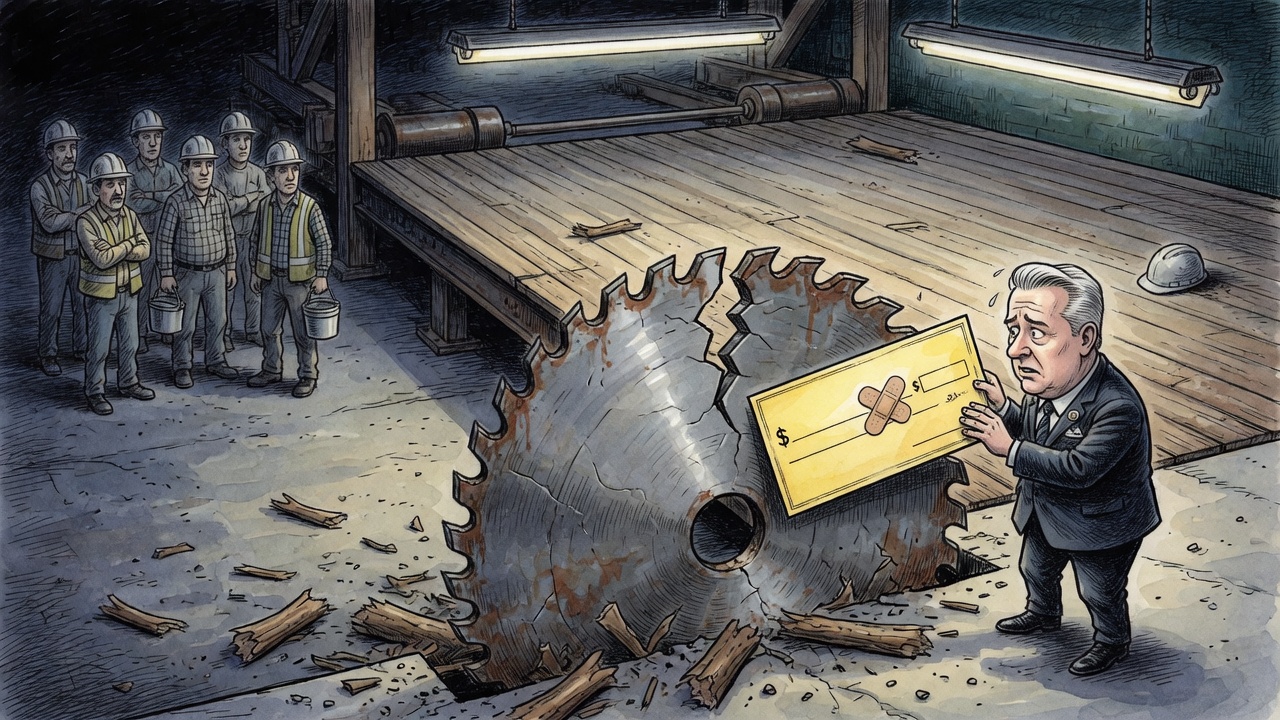
Premier David Eby’s government has announced a $90-million support package for businesses and communities hit by U.S. tariffs. The province says forestry applications and forest-reliant communities will be prioritized and expedited because tariffs are landing hardest on the forest sector.
The package is specific: $30 million for a renewed BC Manufacturing Jobs Fund, $30 million for the Integrated Marketplace, $15 million for rural economic infrastructure, and $15 million to expand BuyBC promotion beyond agriculture. That is real money. It is not the same thing as logs moving to a mill, permits clearing on time, or an Interior community knowing whether its largest employer will still be running this winter.
That is why the Kamloops warning matters. Castanet reports that Kamloops-North Thompson MLA Ward Stamer, the Opposition forestry critic, says more Interior mills could close within months as the sector struggles with permitting delays and limited timber access. He tied the warning to a forestry-sector letter to Eby calling for urgent action on permitting, tariffs and other pressures.
The warning is political, and readers should weigh it as such. But the facts behind it are not imaginary. The same report says the letter was signed by organizations representing contractors, manufacturers and unions, including the BC Council of Forest Industries, the BC First Nations Forestry Council and the Truck Loggers Association. It says the coalition asked for a crisis group to cut costs, remove regulatory barriers and increase the economically viable annual harvest from a projected 29 million cubic metres to 45 million cubic metres.
Stamer also pointed to recent closures at Domtar’s Howe Sound pulp mill and Canfor’s Northwood mill as signs the sector is already under stress. He warned that more mills, potentially including Kamloops-area mills, could close within three to four months if markets remain soft. He said permitting should be streamlined while maintaining First Nations consultation, and cited Aspen Planers in Merritt as needing fibre after being shut down for a year.
The NDP cannot control Washington. It can control whether B.C. has a transparent permit backlog, a clear fibre-supply plan, a wildfire-salvage timeline, and a mill-by-mill risk table that shows which communities are closest to layoffs or curtailments.
Grants can buy time. They cannot substitute for provincial decisions on fibre access, Crown timber, permitting capacity and regulatory cost. If Eby wants British Columbians to believe this is a jobs plan, not just a tariff headline, he should release the ledger: which mills are at risk, what permits are delayed, how much fibre is stranded, who is accountable, and by what date each bottleneck will move.
Interior workers do not need another photo-op cheque. They need wood at the gate, permits off the desk, and a government willing to measure its own failures before the next mill goes quiet.
Sources and records
- Castanet: Kamloops-area mills could face closure within months, forestry critic Stamer says
- Tree Frog Forestry News: September 21, 2026 daily forestry roundup
- Government of B.C.: new supports for businesses, communities affected by U.S. tariffs
- Canadian Press via Journal of Commerce: Eby pauses PST expansion and unveils $90M aid package