UBCM Warns Victoria: You Cannot Reshore Jobs Onto Vanishing Industrial Land
Municipalities backed a Fraser Valley resolution after warning that B.C. industrial land is being squeezed just as governments talk about reshoring jobs and strengthening supply chains.
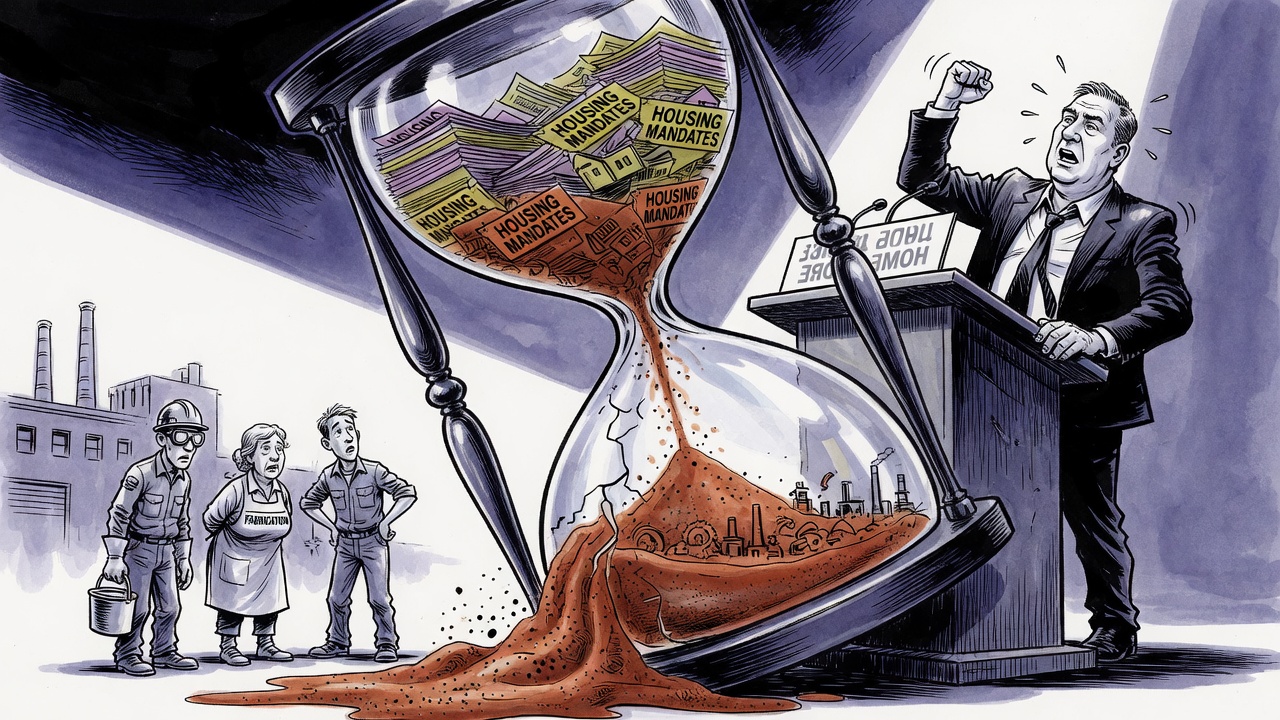
The Province says British Columbia needs more local production, stronger supply chains and less exposure to U.S. trade shocks. Local governments just pointed to the missing foundation: land.
At the 2026 Union of BC Municipalities convention in Vancouver, Castanet, via Business in Vancouver, reported that a majority of mayors and councillors voted Friday for a Fraser Valley Regional District resolution calling on B.C. to protect and optimize industrial lands. The vote means UBCM will send the request to the Province for consideration.
The resolution is blunt. It says industrial lands are essential to B.C.’s economy, trade networks and local employment. It also warns that increasing land-use pressures, including pressures arising from provincial housing policies, threaten the industrial land needed to support jobs, supply chains, food security and long-term economic resilience.
That is the collision David Eby’s government cannot wish away. Housing announcements may dominate the podium. Tariff-response slogans may sound good. But manufacturing, food processing, warehousing, repair yards, port-linked logistics, advanced manufacturing and trades employers cannot operate on press releases. They need serviced, appropriately zoned land that is not slowly squeezed out by competing provincial priorities.
The FVRD resolution asks the Province to establish a B.C. Industrial Land Strategy, identify and inventory critical industrial lands and trade corridors, prioritize brownfield redevelopment, collaborate with local governments on industrial land strategies, address barriers to land utilization, prevent incompatible adjacent uses and support industrial development and local employment, including food and beverage processing.
Chilliwack councillor and FVRD director Jason Lum, who submitted the motion, told BIV there are “generational procurement opportunities” as Canada looks to diversify away from the United States. He pointed to food processing, defence and advanced manufacturing, and said all of them require a robust industrial land base. He also said industrial land has been dwindling, with only a 10- to 15-year supply remaining in B.C.
The Province already knows this file is not simple. UBCM’s February 2026 executive highlights say its Community Economic Development Committee reviewed the Province’s Industrial Land Action Plan and noted challenges around industrial land servicing costs and contamination. The 2026 UBCM resolutions book also says the provincial Industrial Lands Office is developing an action plan and compiling a comprehensive inventory to inform a province-wide needs assessment.
Good. Now the test is whether Victoria treats industrial land as core economic infrastructure, not leftover dirt after every other announcement. If the Province wants to talk about buying B.C., making more in Canada and protecting workers from trade shocks, it has to protect the land where that work happens. You cannot reshore jobs onto ground that disappears before the workers arrive.